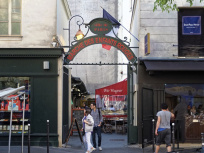
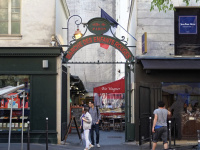
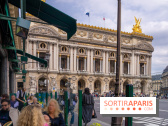
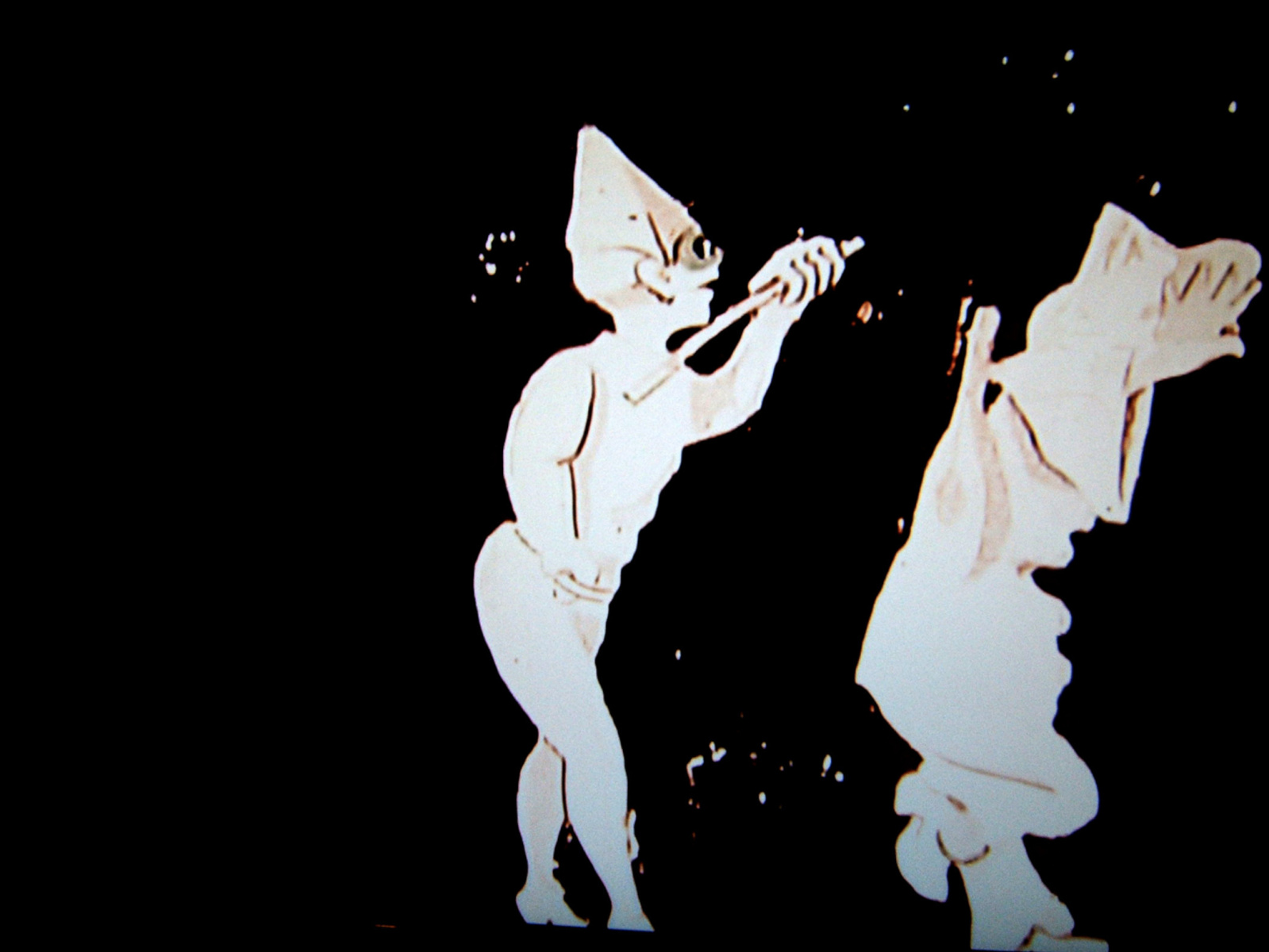
On screen, Pierrot courts Colombine, a client orders a beer and dogs perform their routine. This 28 octobre 1892, visitors to the musée Grévin, on Boulevard Montmartre, witness a spectacle with no real equivalent. The inventor Émile Reynaud himself operates a strange device dubbed the Théâtre optique, capable of unfurling before the audience long sequences of drawings painted by hand. The characters move, the action unfolds and a story is told: something that looks strikingly like a cartoon is making its first appearance in Paris.
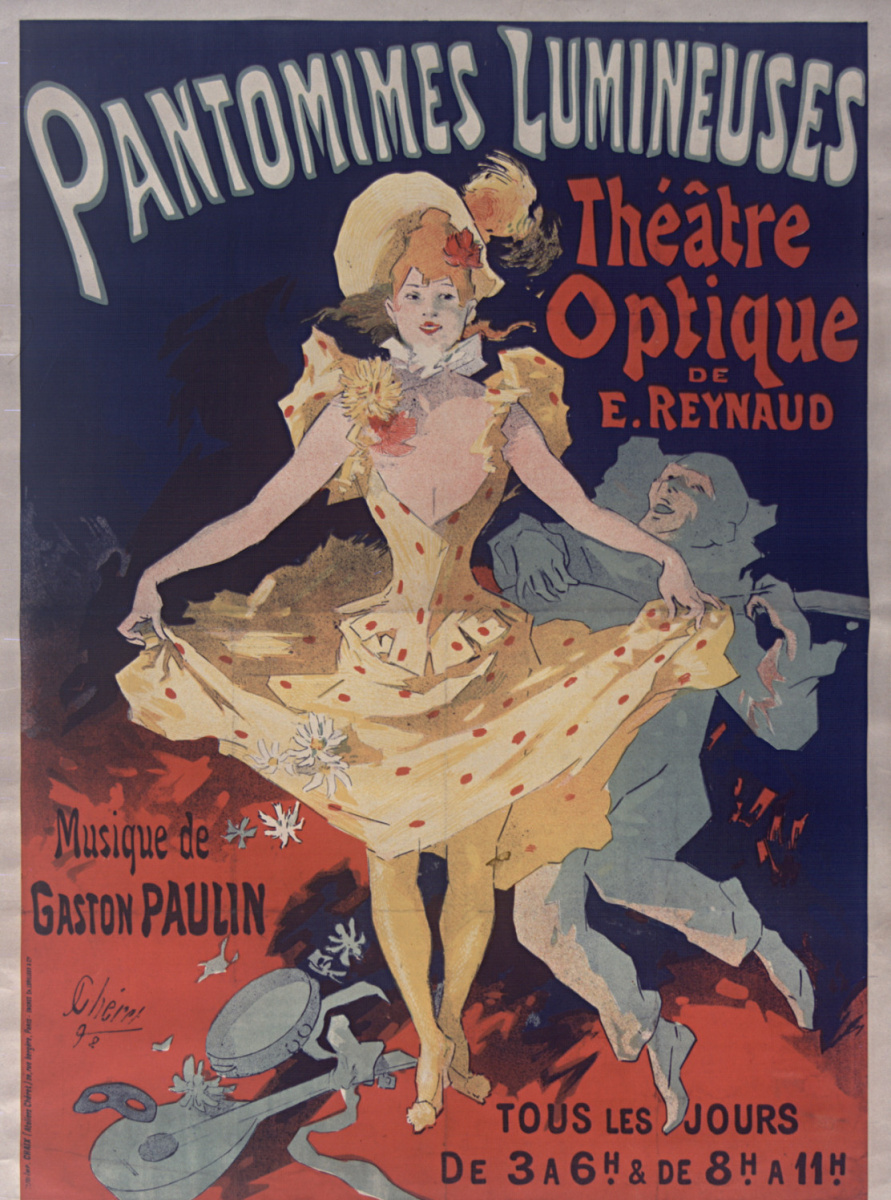
The next day, Le Figaro described a spectacle "absolutely unprecedented" and stressed the lifelike impression produced by the characters. The paper then cites three pieces: Pauvre Pierrot !, Un bon bock and Le Clown et ses chiens, accompanied by music composed by Gaston Paulin. The documents preserved from the first weeks of operation show a few dating differences for each of the reels, but all place the public debut of the Pantomimes lumineuses at the Grévin Museum on 28 October 1892.
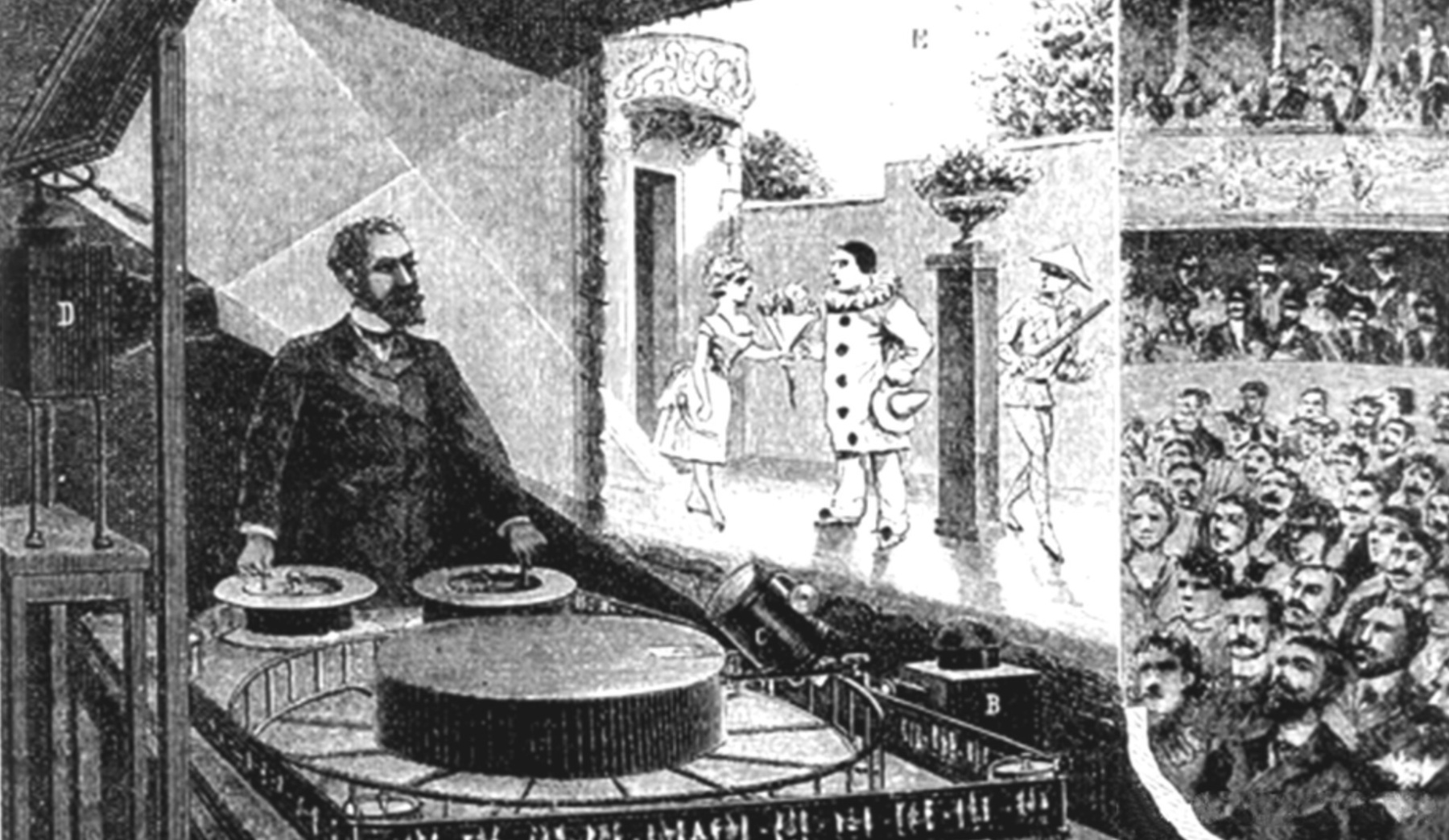
Émile Reynaud has long been working on the illusion of movement. Born in 1844, this former precision mechanic, photographer and optics enthusiast developed in 1877 the praxinoscope, a device using a set of mirrors to give the impression that a sequence of drawings comes to life. The principle works, but the movements remain short and loop. Therefore, Reynaud wants to go further: he aims to tell real stories in front of several spectators.
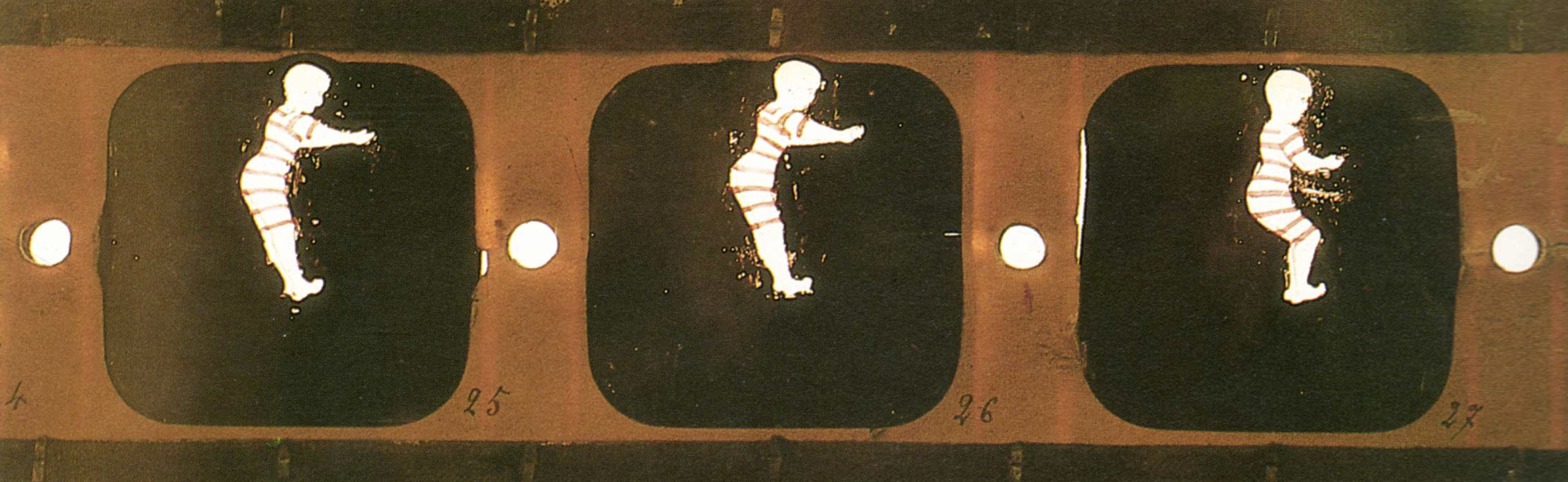
In 1888, he filed the patent for his Optical Theater. His invention relies on a long flexible strip bearing hundreds of individually painted images. Perforations guide the strip through the mechanism, while a system of mirrors and lanterns projects the figures onto a fixed backdrop. Unlike the toy lenses that merely loop a handful of images, Reynaud can advance, slow down, go back or repeat a gesture in response to the audience’s reactions! He thus becomes, in effect, both projectionist, director and animator of his own show.
The amount of work behind this is enormous! A solid block contains about 700 painted images on a 50-meter strip (!), for a screening lasting between 12 and 15 minutes, while Pauvre Pierrot uses about 500 on 36 meters. Each performance, therefore, has a duration and a fluidity unusual for the era, far from the few seconds of repetition offered by the early optical toys!
The show even has its own soundtrack, though not yet recorded. Gaston Paulin performs the music live, specially composed to accompany the action. Reynaud, for his part, handles his reels behind the device. The image and the music thus respond to one another before the audience, just as in the silent cinema halls a few years later.
But cinema does not yet exist in the form that will soon dominate! When the Lumière brothers stage their famous public, pay-per-view screening at the Grand Café’s Indian Salon, on Boulevard des Capucines, on December 28, 1895, their images were photographically recorded on film. Reynaud’s characters, by contrast, are entirely drawn and hand-painted. His Théâtre optique thus still belongs to the world of pre-cinema while already signaling the rise of animated cinema.
The CNC presents Reynaud as one of the founding fathers of animation, while UNESCO regards his Pantomimes lumineuses as having anticipated and helped shape the cinematic spectacle, and has placed them in the Memory of the World register in 2015. Moreover, since 2002, the date October 28 has been chosen to celebrate the World Animation Day, precisely in memory of Reynaud’s first public screening at the Grévin Museum!
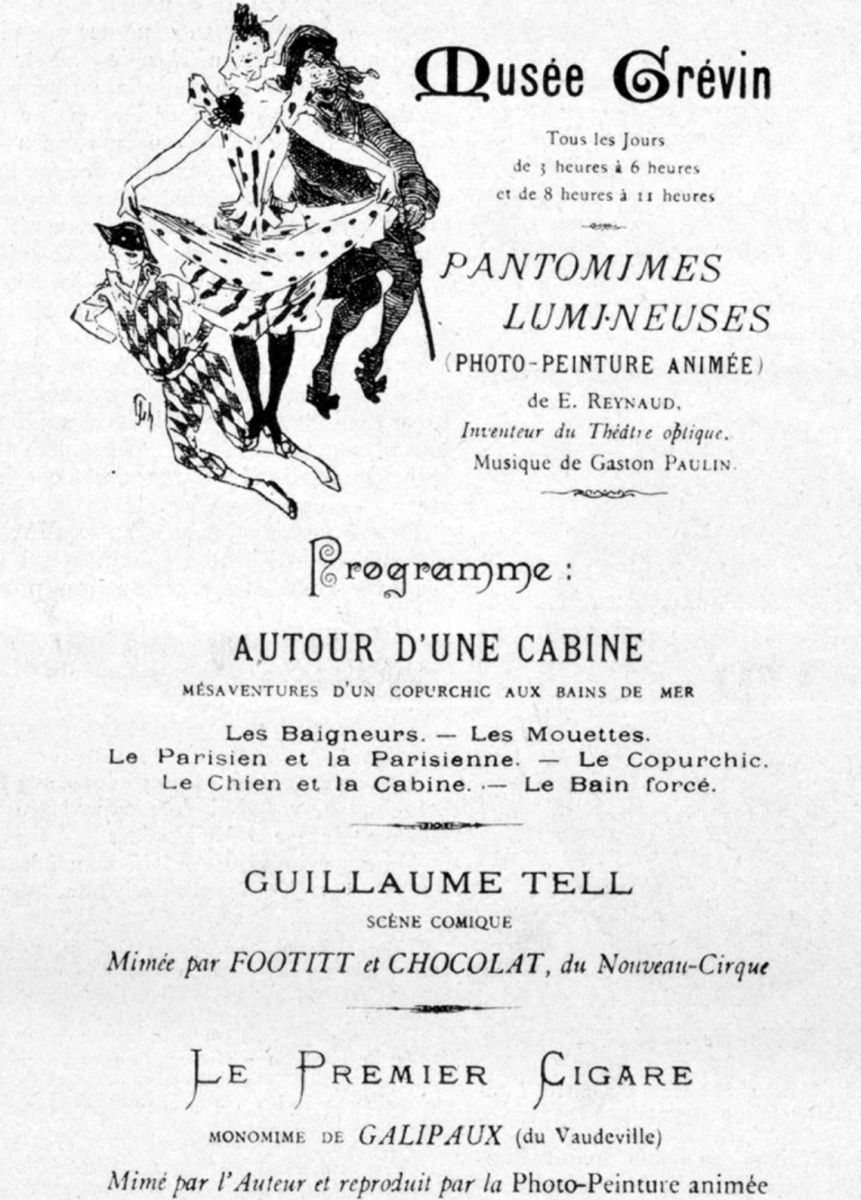
The success of Emile Reynaud's Pantomimes lumineuses lasts until 1900. The performances multiply at the Grévin Museum, sometimes up to a dozen a day on Sundays and holidays. The Association française du cinéma d’animation estimates that more than 500,000 spectators discover Reynaud's creations during these years. Of the various reels he produced, only two have survived: Pauvre Pierrot and Autour d’une cabine.
Further reading:
The Musée Grévin, the wax statue museum where you can meet stars in Paris
The Musée Grévin has a lot to offer the whole family. The famous museum on Boulevard Montmartre awaits you with its ever-growing roster of stars. The constantly redesigned scenography offers an enriched, modern and more interactive visit than ever before. [Read more]
This page may contain AI-assisted elements, more information here.
Dates and Opening Time
On October 28, 2026
Location
Musée Grévin
10 boulevard Montmartre
75009 Paris 9
Route planner
Accessibility info
Access
Metro Richelieu-Drouot or Grands Boulevards
Official website
www.grevin-paris.com
















 The Musée Grévin, the wax statue museum where you can meet stars in Paris