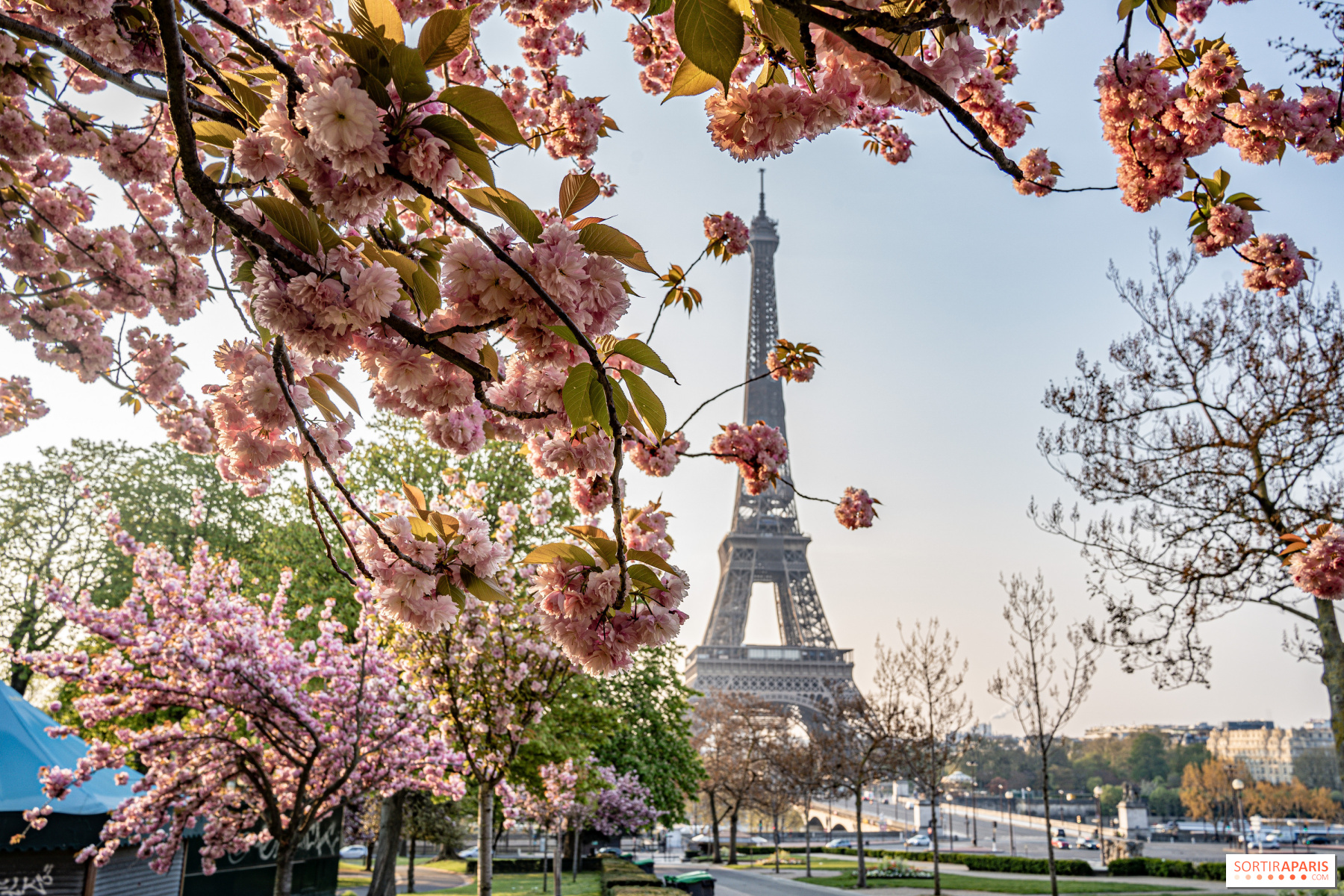
Japanese culture can be found here and there in Paris, through secret addresses and places steeped in history. From the bend of a street to the heart of a soothing garden, Japan invites itself into the capital, bringing in its wake a certain idea of relaxation and calm.
The links between the capital and Japan date back to the second half of the 19th century, when Japonisme, a poetic cultural movement, influenced the greatest French artists, from Monet to Van Gogh, Degas and Debussy, all of whom drew their inspiration from Japanese prints.
In the 60s, as the Land of the Rising Sun opened up to the outside world, many Japanese chose to settle in the French capital. The result was a period ofJapanese emulsion in Paris, with the opening of numerous shops, grocery stores, bookshops and restaurants.
Discover Japanese heritage and places in Paris.
LA MAISON DE LA CULTURE DU JAPON A PARIS
101 bis Quai Jacques Chirac, 75015
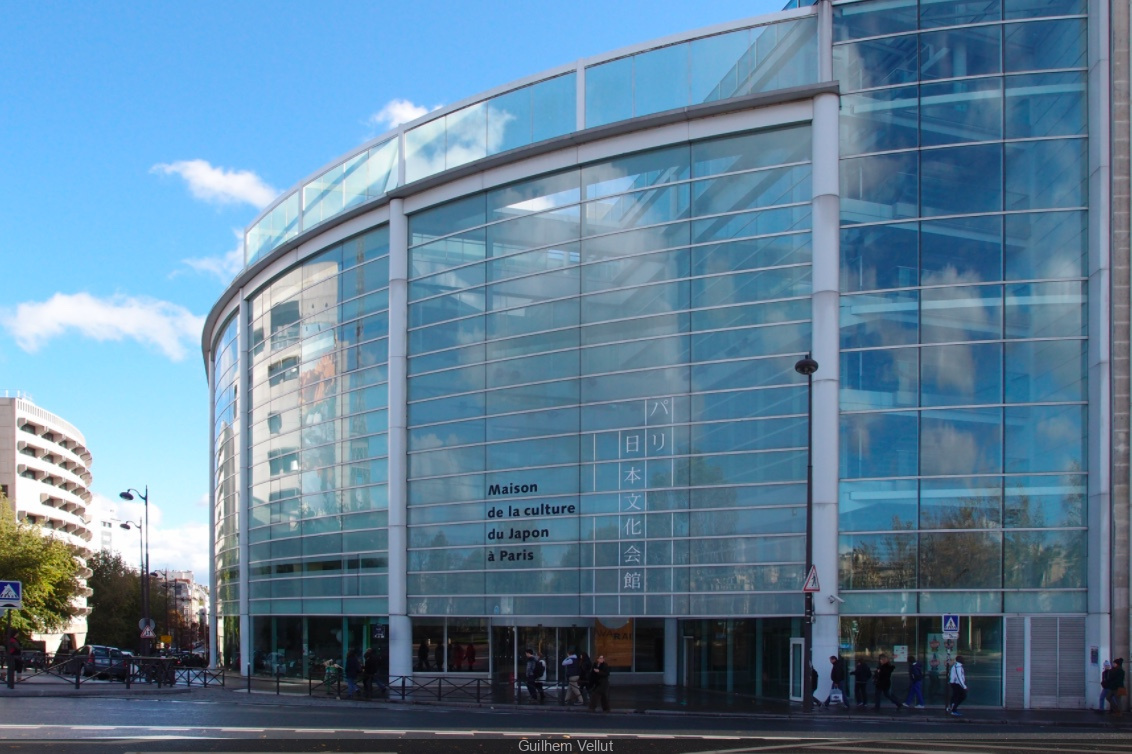
Behind this imposing glass and steel façade, facing the Seine and the Eiffel Tower, lies the Maison de la Culture du Japon in Paris. Inaugurated in 1997 at the instigation of François Mitterand and Japanese Prime Minister Zenko Suzuki, this cultural center is the work of architects Kenneth Armstrong and Masayuki Yamanaka. Spanning 7500m2, the Maison de la Culture du Japon houses several movie theaters, a library filled with 20,000 books on Japanese culture in French, Japanese and English, and a video library with 800 cassettes.
Throughout the year, the center unveils a cultural program featuring traditional and contemporary performing arts, Japanese cinema, the art ofikebana, the art oforigami, the art of calligraphy, Japanese language learning, manga and martial arts, through workshops, initiations and courses open to young and old alike. As for the tea ceremony, this is shown in a traditional wooden tea pavilion, complete with tatami and fusuma.
THE GUIMET MUSEUM
6 Place d'Iéna, 75016
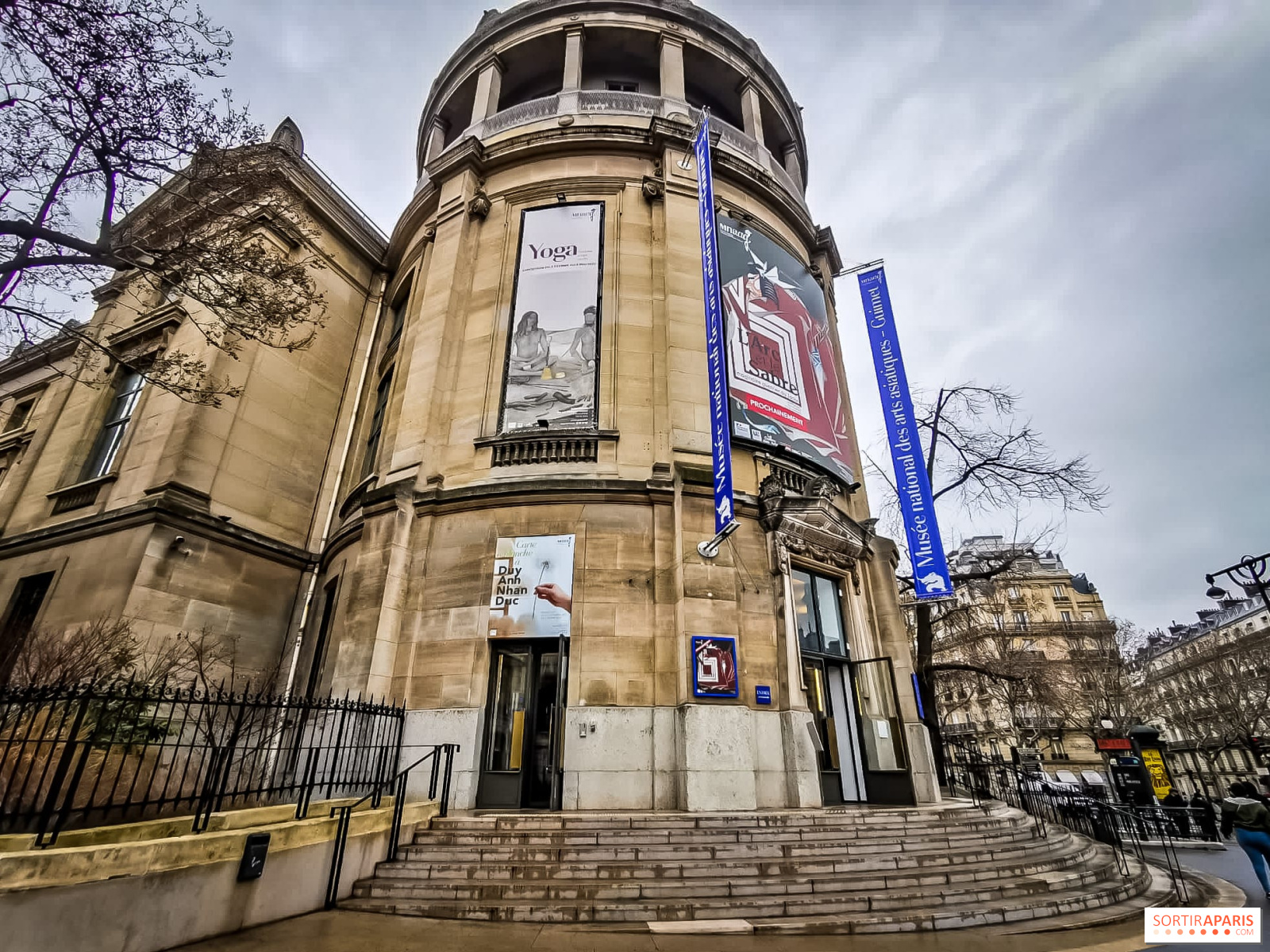
Created on the initiative ofÉmile Guimet, an industrialist and scholar from Lyon, the Musée Guimet, subtitled the "Musée national des Arts asiatiques" (National Museum of Asian Arts), focuses on Far Eastern arts, including the art of the Land of the Rising Sun. On display are some 11,000 Japanese works dating from the birth of Japanese art to the Meiji era.
It was during his travels to Egypt, Greece, India, China and Japan that Emile Guimet built up his extensive art collection. Initially displayed in Lyon, his Asian objects were eventually moved to the Musée Guimet, built by Jules Chatron and inaugurated in 1889. The museum now houses the largest collection of Asian art outside Asia.
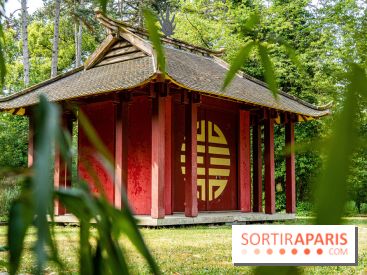
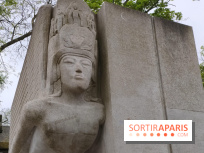
Prints, sculptures, silk paintings, porcelain ceramics, lacquerware and screens from the 16th to the 19th century are just some of the historic works on display in the museum, which hides another surprise on the outside, which we'll tell you about below.
THE CERNUSCHI MUSEUM
7 Avenue Velasquez, 75008
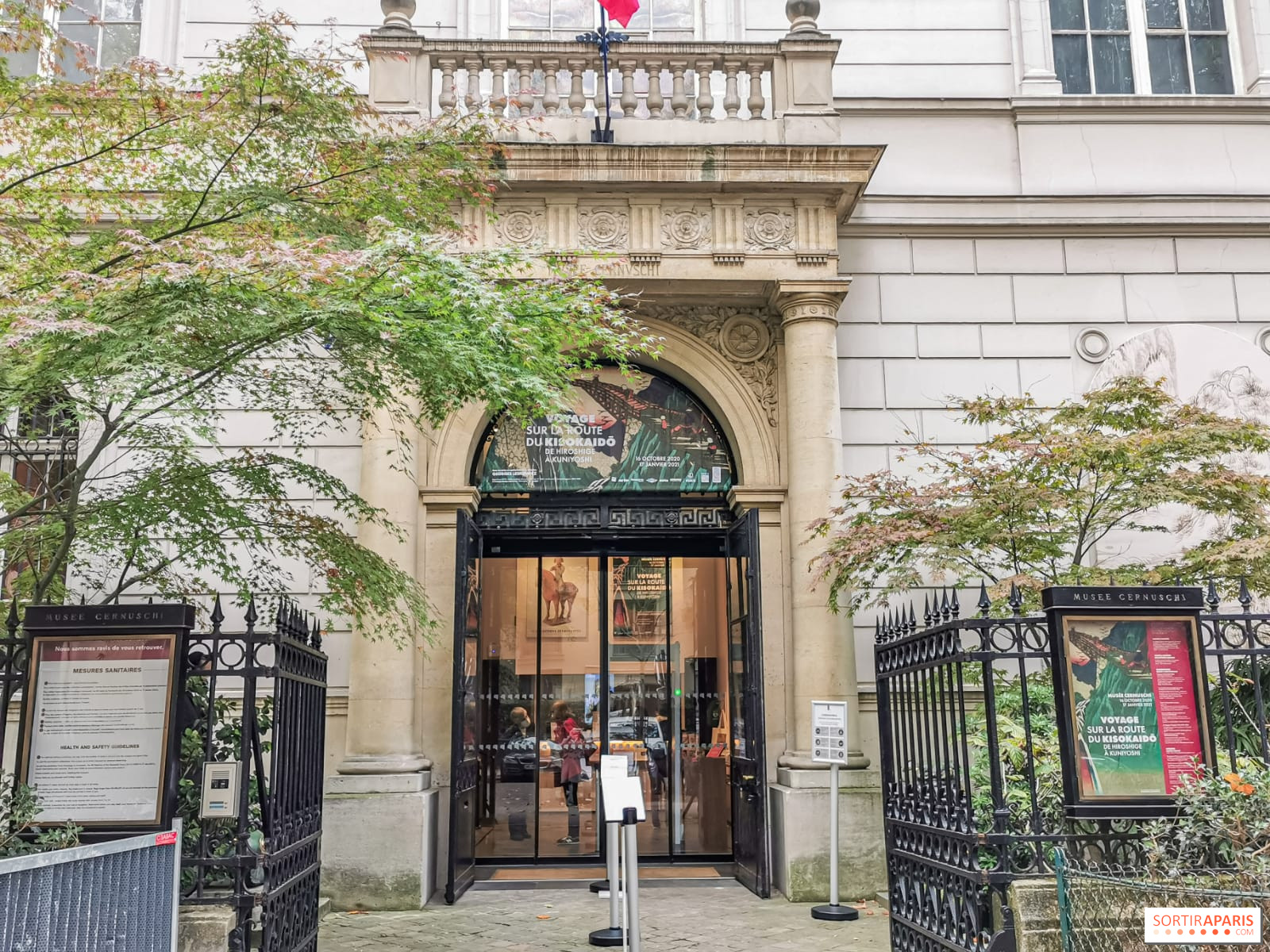
Since 1898, the Musée Cernuschi - Musée des Arts de l'Asie de la Ville de Paris has been housed in a private mansion a stone's throw from the Parc Monceau. Alongside works from China and Korea, it boasts a Japanese collection of over 3,600 works, including 2,000 bronzes and 1,600 ceramics, mainly from the Edo period.
The city owes this collection ofgraphic and decorative art objects, the largest ever presented in France, to 19th-century financier and collector Henri Cernuschi, who brought the pieces back from his travels in Asia in 1871 and 1872 and installed them in his private mansion.
Among the Musée Cernuschi's must-see pieces are the statue of Amitābha, the institution's emblem, fragments of an Ogata Kenzan screen donated to the museum by the painter Umehara Ryūzaburō, and a period dōka.
THE NOGUCHI JAPANESE GARDEN - UNESCO
7 Place de Fontenoy, 75007 Paris, France

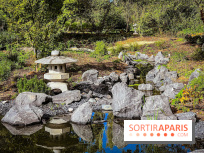
Created in 1957, the Unesco Garden is a well-guarded treasure. With a surface area of 1700m2, this green space was designed by sculptor Isamu Noguchi according to the traditional codes of the Japanese garden, while integrating contemporary elements and works of modern art. Divided into two parts, the garden features a lake, a small bridge and floating slabs spanning a stream, as well as a multitude oftrees and shrubs imported from Japan.
A small patio provides a view of this beautiful space, where harmony and serenity are the watchwords. Also take a look at the Peace Fountain by sculptor Nogushi, an 8-ton granite rock on which the artist has engraved theJapanese ideogram 'Peace'; hence the nickname of the Unesco garden, also known as the Garden of Peace.
LE JARDIN JAPONAIS DU MUSEE ALBERT KAHN
2 Rue du Port, 92100 Boulogne-Billancourt, France
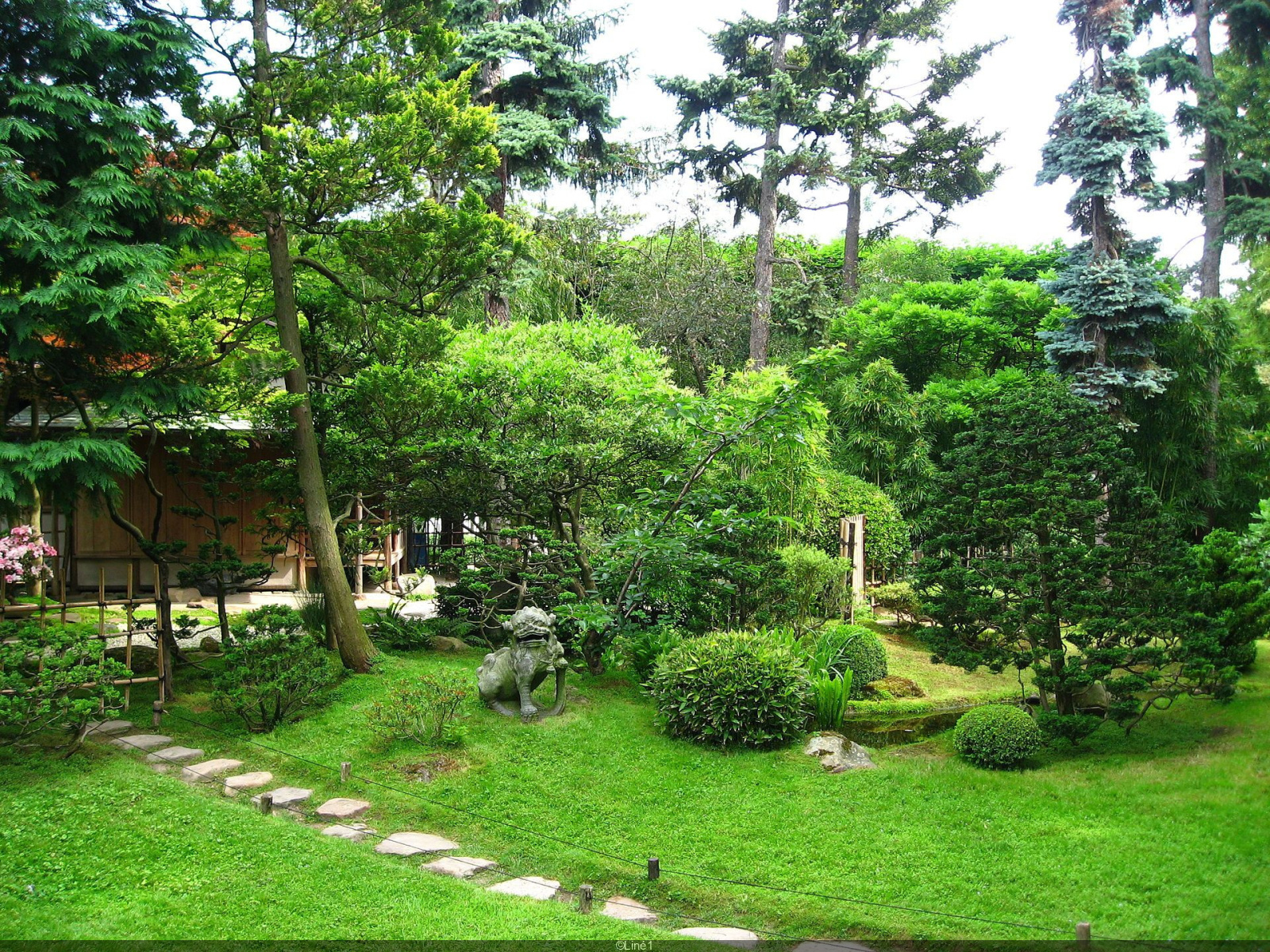
On his return from a trip to Japan in 1898, banker, traveler and philanthropist Albert Kahn, overwhelmed by the beauty of Japanese customs and landscapes, decided to set up a veritable Japanese village in the Paris suburb of Boulogne-Billancourt. To achieve this, Albert Kahn called on landscape architect Fumiaki Takano to design a garden where calm and serenity prevail, based on three essential values: life(yang), death(yin) and the feminine-masculine axis.
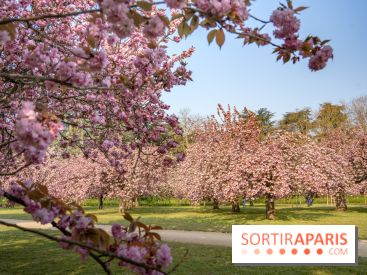
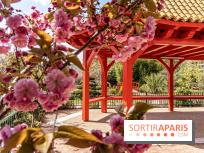
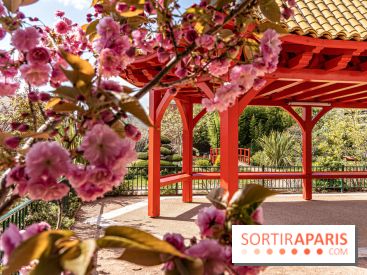
Step over the threshold of the Albert Kahn garden to discover a unique landscape, characterized by a multitude of plants, trees and flowers, including apple, plum and maple trees, as well as bamboo from Japan, cherry trees in bloom as soon as the sun comes out, and colorful azaleas. Cross the little red bridge to discover a pond full of koi carp, a small waterfall with a relaxing splash and two traditional houses.
LE JARDIN JAPONAIS DU PANTHEON BOUDDHIQUE
19 Avenue d'Iéna, 75016
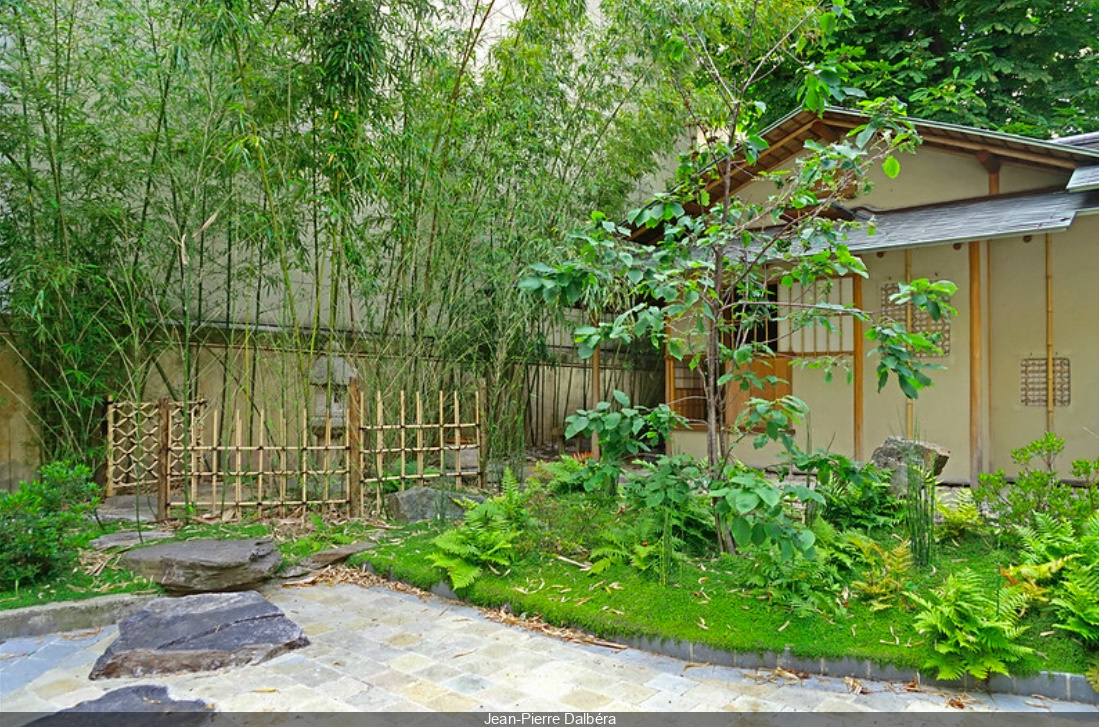
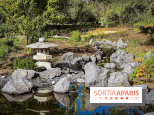
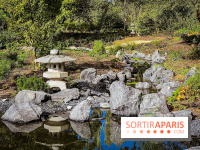
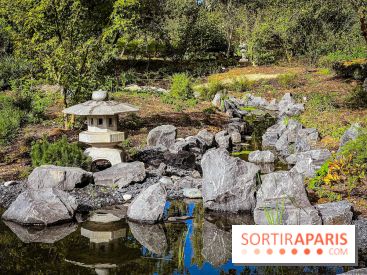
Did you know that behind the Musée Guimet lies a fabulous secret garden, the Jardin du Panthéon Bouddhique? Housed in theHeidelbach mansion, which itself houses the museum,this Zen garden is a veritable haven of peace. Less well known than the Albert-Kahn garden, this 450m2 green space in the heart of the 16th arrondissement has all the hallmarks of a traditional Japanese garden, with its small stream, wooden bridge, bamboo andazalea plantations and, of course, its spring-blooming cherry trees.
Free and open to all, the Buddhist Pantheon Garden is the work ofFranco-Japanese architect Agnès Latour-Kurashige and art historian Jean-Sébastien Cluzel. The tea house overlooking the garden, designed byarchitect Nakamura Masao, is the setting for the tea ceremony, which is performed with the greatest respect for Japanese customs.
MAISON DU JAPON, CITE INTERNATIONALE UNIVERSITAIRE DE PARIS
7 Boulevard Jourdan, 75014
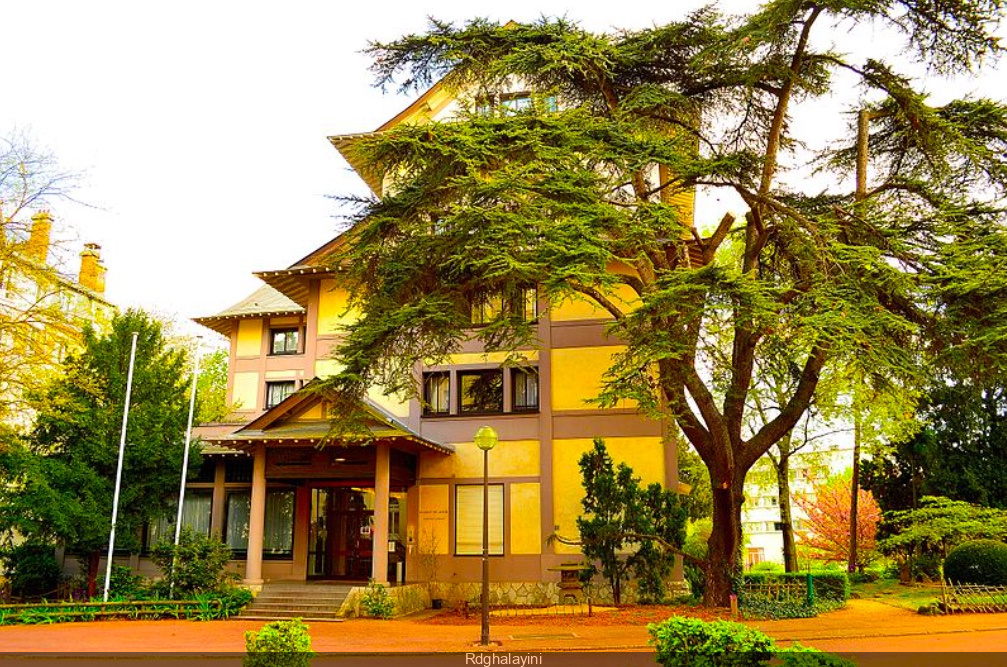
In the heart of the Cité Internationale Universitaire, a stone's throw from the Fondation Danoise and the Collège d'Espagne, the Maison du Japon has been in operation since 1927. When it opened, the 60 rooms of this building with its Japanese curves were intended to accommodate the most deserving Japanese students. Since then, the Maison du Japon has been fostering dialogue between students and researchers at the Cité Universitaire de Paris.
The building, whose foundation stone was laid by Prince Ri, Emperor Hirohito's brother-in-law, was designed byarchitect Pierre Sardou. The elevated Maison du Japon is inspired by Japanese architecture, with its pretty porch adorned with a carved wooden panel depicting the rising sun. Inside, the large living room, which opens with sliding windows in the style of traditional houses, contains two murals by Foujita, L'Arrivée des occidentaux au Japon and Les Chevaux.
LA MAISON DE KISO
6 Avenue du Mahatma Gandhi, 75016
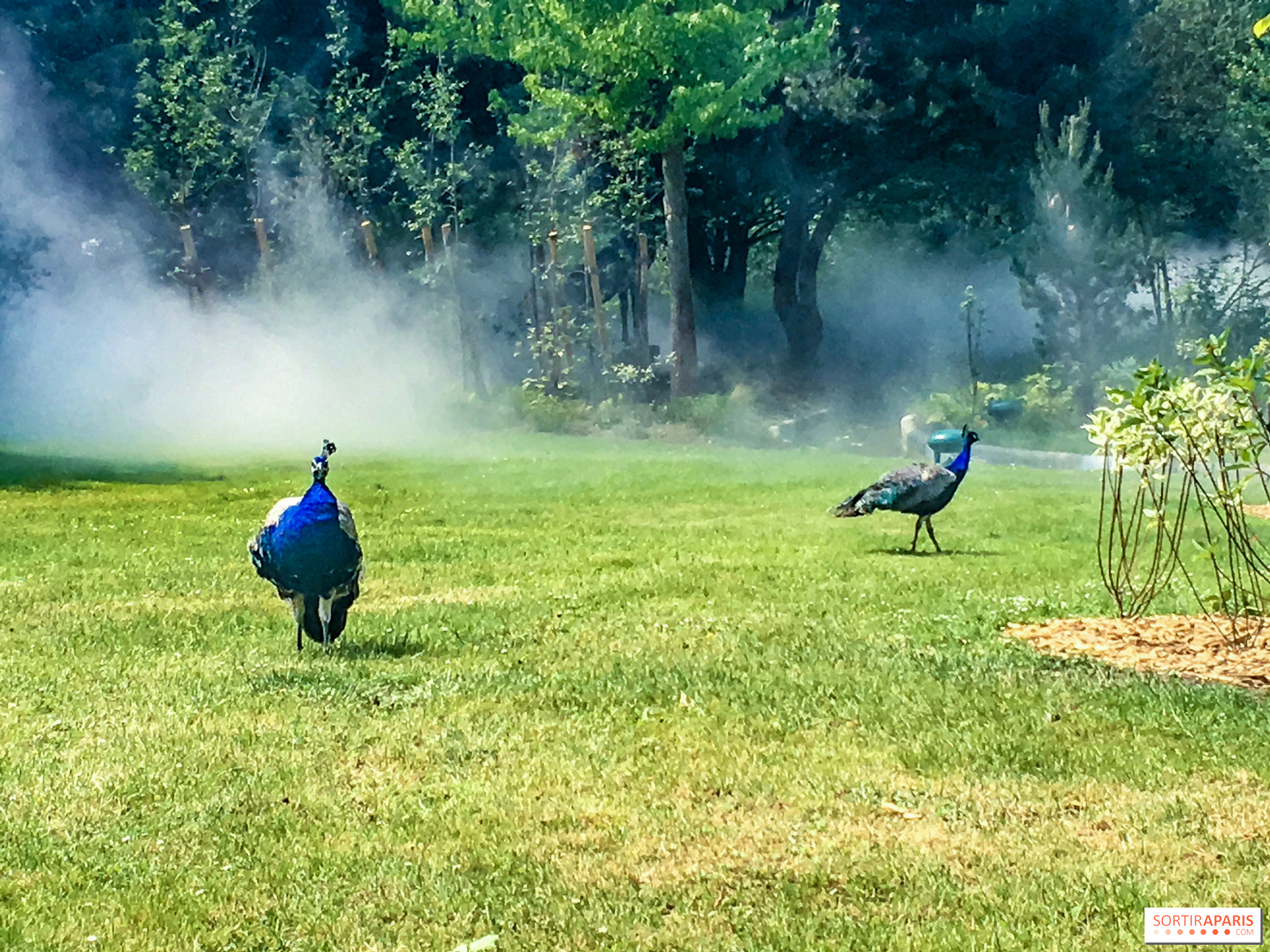
Installed in the heart of the Jardin d'Acclimatation since 2001, the Maison de Kiso is an authentic Japanese house, built in 1861 on the model of the minka, the ancient dwellings of 19th-century peasants, craftsmen and merchants. Arriving in France in 1999 as a gift to ethnologist Jane Cobbi, the Kiso house was preserved by the Museum d'Histoire Naturelle before being restored by architect Makoto Furihata and a team of carpenters from Japan.
Built using ancestral methods, the Kiso house is made of wooden pillars, carved stone blocks and a softwood shingle roof. Inside, you'll find a living room and a bedroom, separated by sliding doors, as well as a former stable.
LE JARDIN DE LA PAGODE
57 bis rue de Babylone, 75007 France
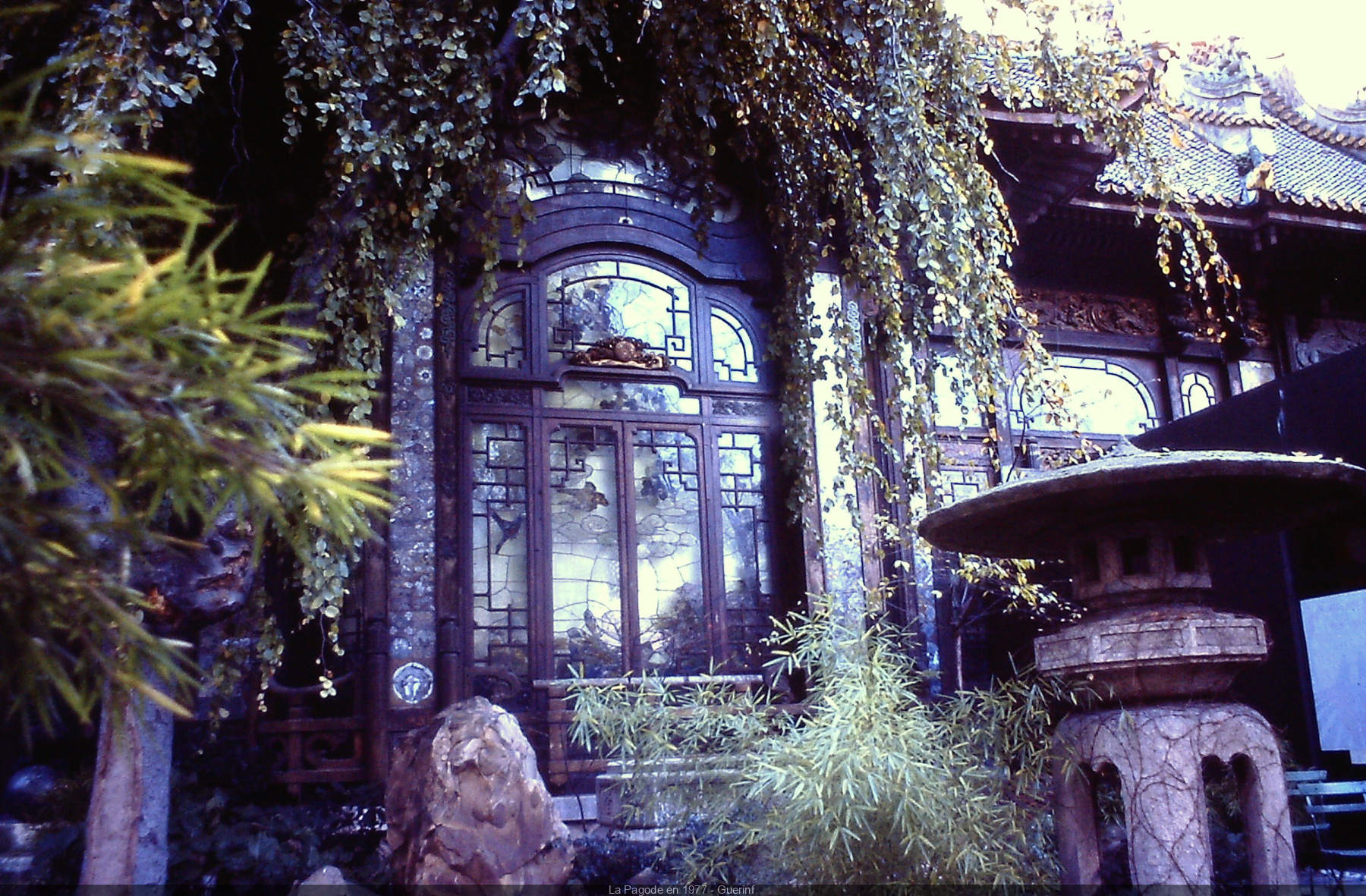
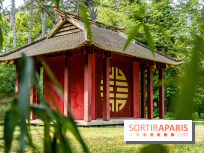
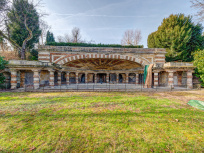
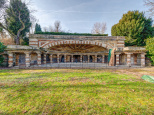
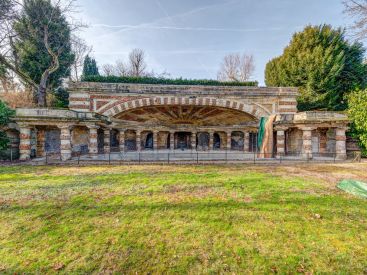
It was a Japanese venue of indescribable charm. La Pagode, the legendary art-house cinema opened in 1931 in a Japanese pavilion built in 1896 by architect Alexandre Marcel for François-Émile Morin, then director of Le Bon Marché, and his wife, a lover of Japanese culture, has seen its destiny changed forever by an American businessman.
In 2020, the latter decided to completely restore the building - a perfect replica of a Japanese pagoda , even though it is listed as a historical monument- and its charming, intimate garden, by felling the centuries-old trees, an imposing Ginko, a chestnut and a weeping beech.
THE JAPANESE LIBRARY JUNKU
18 Rue des Pyramides, 75001
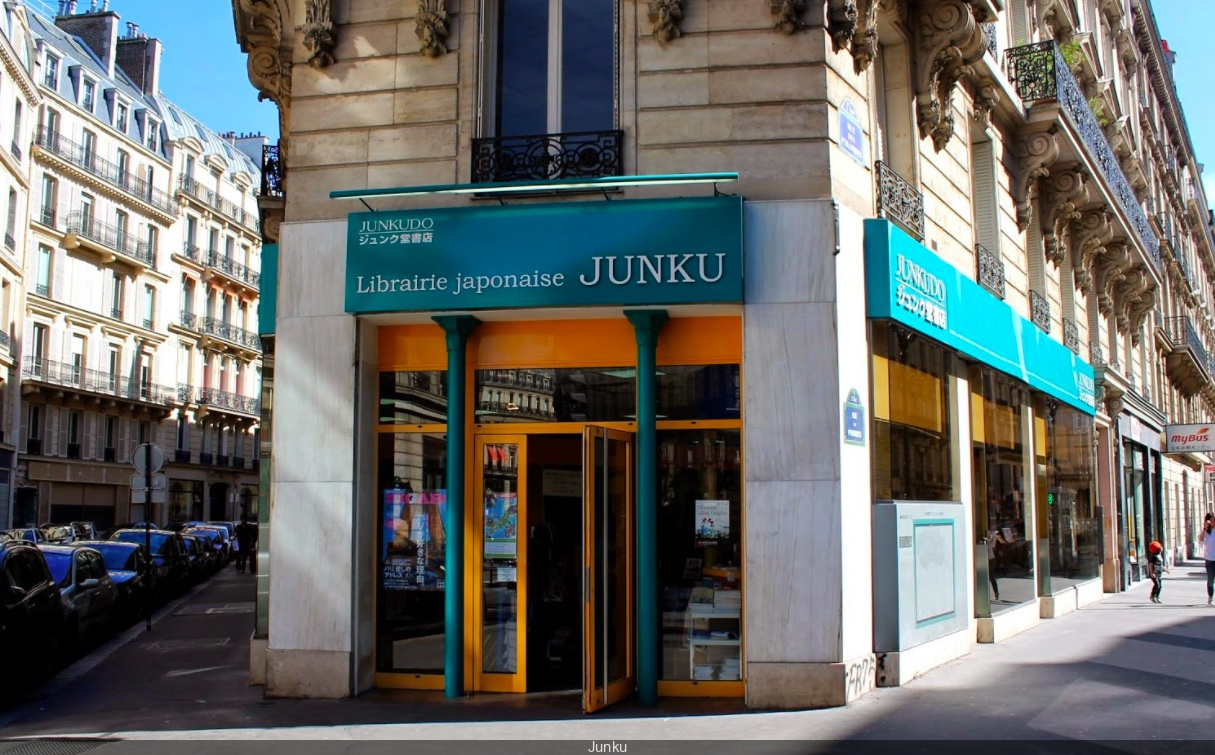
If you want to immerse yourself in Japanese culture, a trip to Junku, the Japanese bookshop in Paris, is a must. Among the books, most of which are in Japanese, you'll find manga, of course, but also a fine selection of magazines, children's books, works on Japanese culture and economics, and Japanese language manuals.
THE SAINTE-ANNE NEIGHBORHOOD
In the triangle Avenue de l'Opéra/rue du Quatre Septembre/rue Richelieu
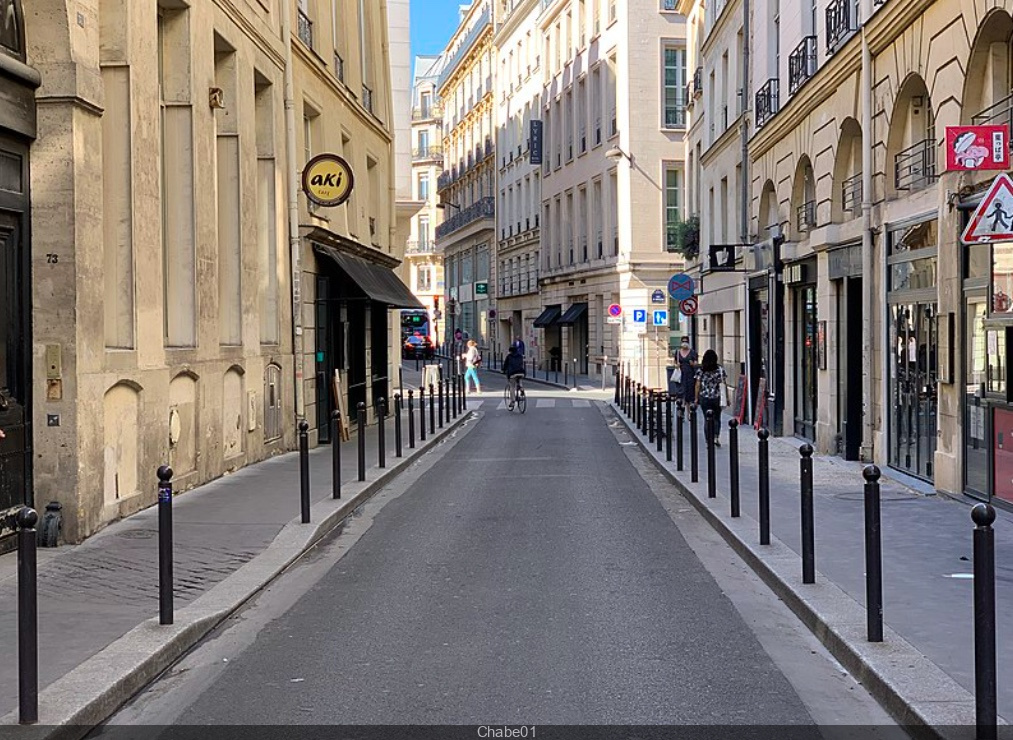
It's impossible to paint a picture of Japanese culture in Paris without mentioning the Sainte-Anne district, a true neighborhood dedicated to Japanese culture and gastronomy, located in a triangle bounded by Avenue de l'Opéra, Rue du Quatre-Septembre and Rue Richelieu.
Originally a hotbed of homosexual encounters, with the opening in the late 60s of prestigious party venues frequented by famous writers, actors and couturiers, such as Le Sept, Le Bronx and Le Colony, the district was transformed over the following decades with the opening of the first Japanese shops and restaurants, initially catering to the Japanese who stayed for business in the hotels near the Louvre. Today, the Sainte-Anne district is the place to go for a good ramen, scorching udon or expertly prepared sushi.
LA MAISON DU SAKÉ
11 Rue Tiquetonne, 75002 France
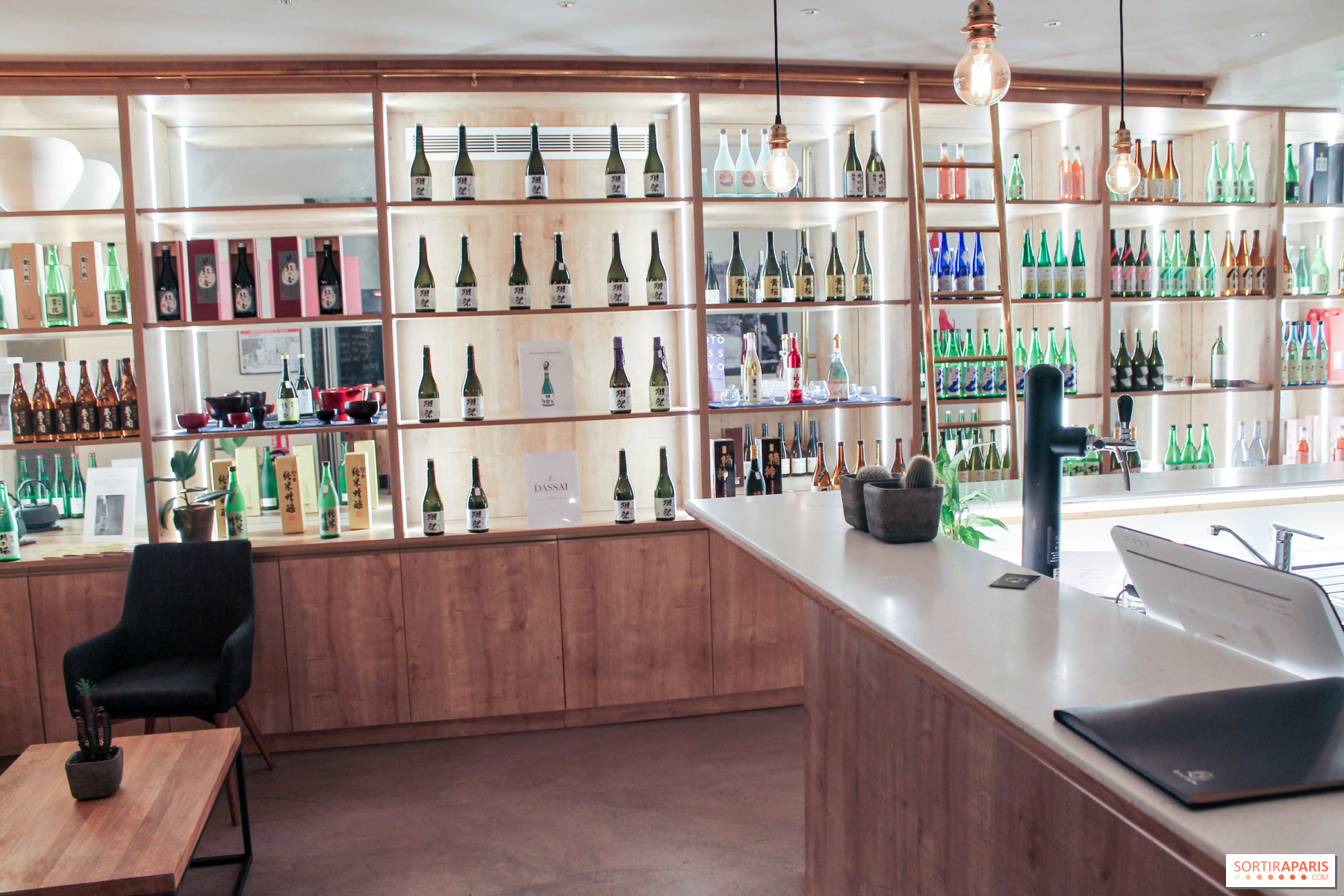
Japan'sflagship beverage for centuries, sake can now also be enjoyed in France. At La Maison du Saké, this rice alcohol is revealed to the curious and the connoisseur alike, through over 6,000 references from the four corners of the archipelago, from the most famous vintages to the smallest Japanese houses.
At La Maison du Saké, all sakes are junmai, with no added distilled alcohol. Modern sakes with a more wine-like taste, traditional sakes with their beautiful rice fragrances, or plain sakes, all fine discoveries to accompany Japanese tapas, as this wine shop doubles as an izakaya.
LA MAISON DU MOCHI
39 Rue du Cherche-Midi, 75006 France
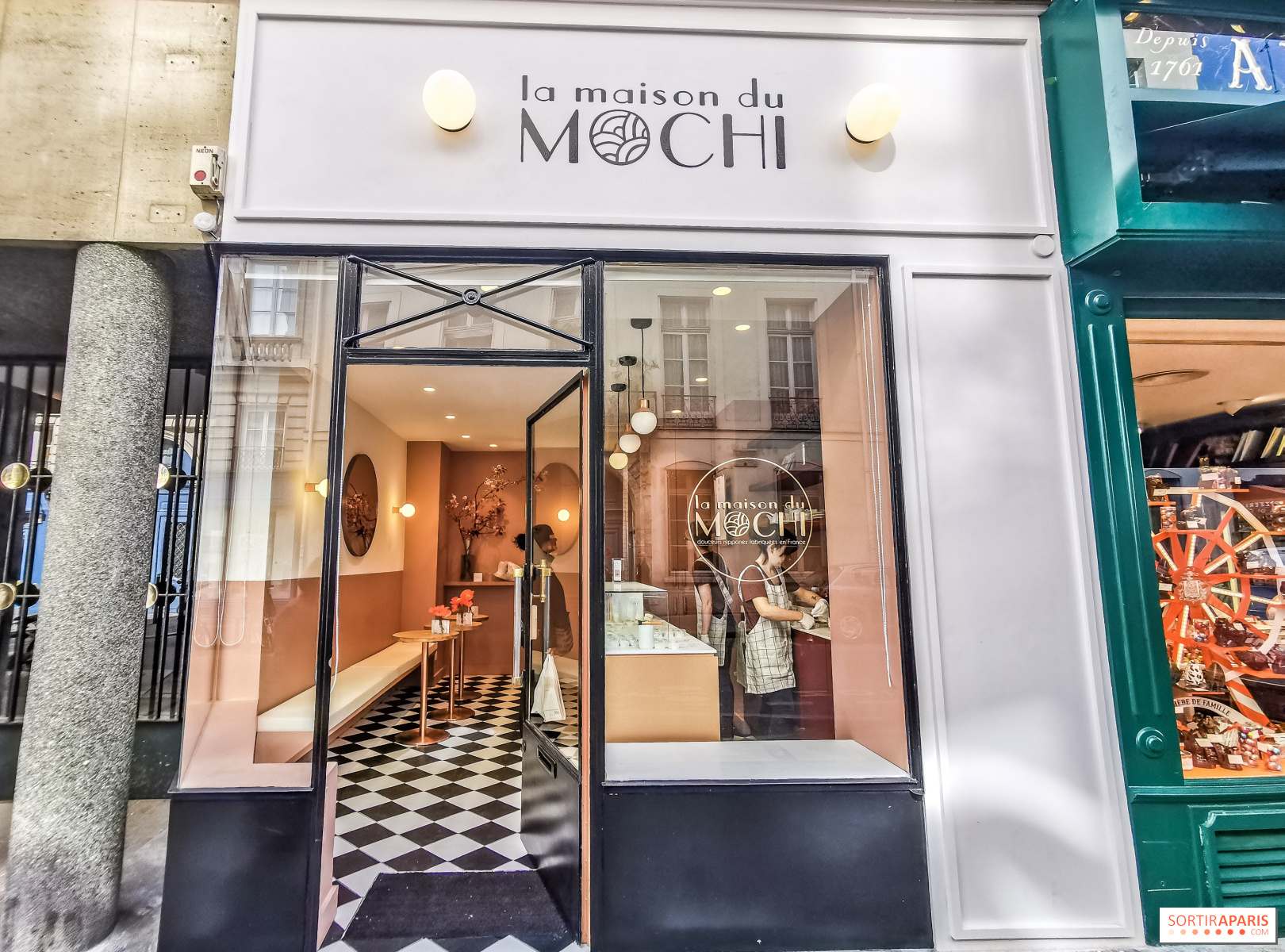
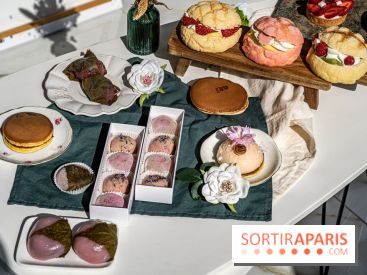
Created in 2016 by Mathilda Motte following a trip to Japan, where she was introduced to mochi-making, La Maison du Mochi offers an infinite number of variations on this traditional pastry. Made with glutinous rice, this small gluten-free, 100% vegetable and fat-free ball can be enjoyed with tea or an infusion.
Traditionally made with a heart of azuki, the famous red bean paste, mochi is available at La Maison du Mochi in yuzu, matcha or black sesame versions. Building on its success, a second Maison du Mochi has opened on the Right Bank.
LE MANGA CAFÉ KONBINI
61 Rue des Petits Champs, 75001 France
After a first establishment, then a V2 a stone's throw from the Bibliothèque François Mitterand, also a victim of its own success, a third Manga Café Konbini has opened its doors in Paris. But whereas the previous addresses showcased an incredible collection of manga, from the most popular to the most independent, this third spot is, for its part, a veritable grocery store of Japanese products, unveiling over 400 references directly imported from Japan.
Sweets, cakes, snacks, drinks, ramen, mochi and doriyaki fill the shelves of this well-stocked boutique. A concept-store section also offers bento boxes, kawaii kitchen utensils and a wide range of stationery and decorative items, ideal for creative arts enthusiasts.
LE SPA SUISEN
7 Rue de Thorigny, 75003

The first ryokan in Paris, Suisen invites you to relax with the help of shiatsu, an age-old tradition combining well-being and health benefits. A veritable inn dedicated to relaxation, this Japanese spa showcases the art of living and Japanese craftsmanship, using materials from the archipelago: the cedar kumiko was made in Toyama prefecture, the bamboo blinds and ceiling come from Kyoto, as do the tea set, futons and Imabari linen.
Owner Sandra Kasparian, a shiatsu practitioner, offers four treatments featuring rhythmic pressure, percussion, stretching and effleurage for deep physical, mental and emotional relaxation.
KIMONOYA
11 Rue du Pont Louis-Philippe, 75004
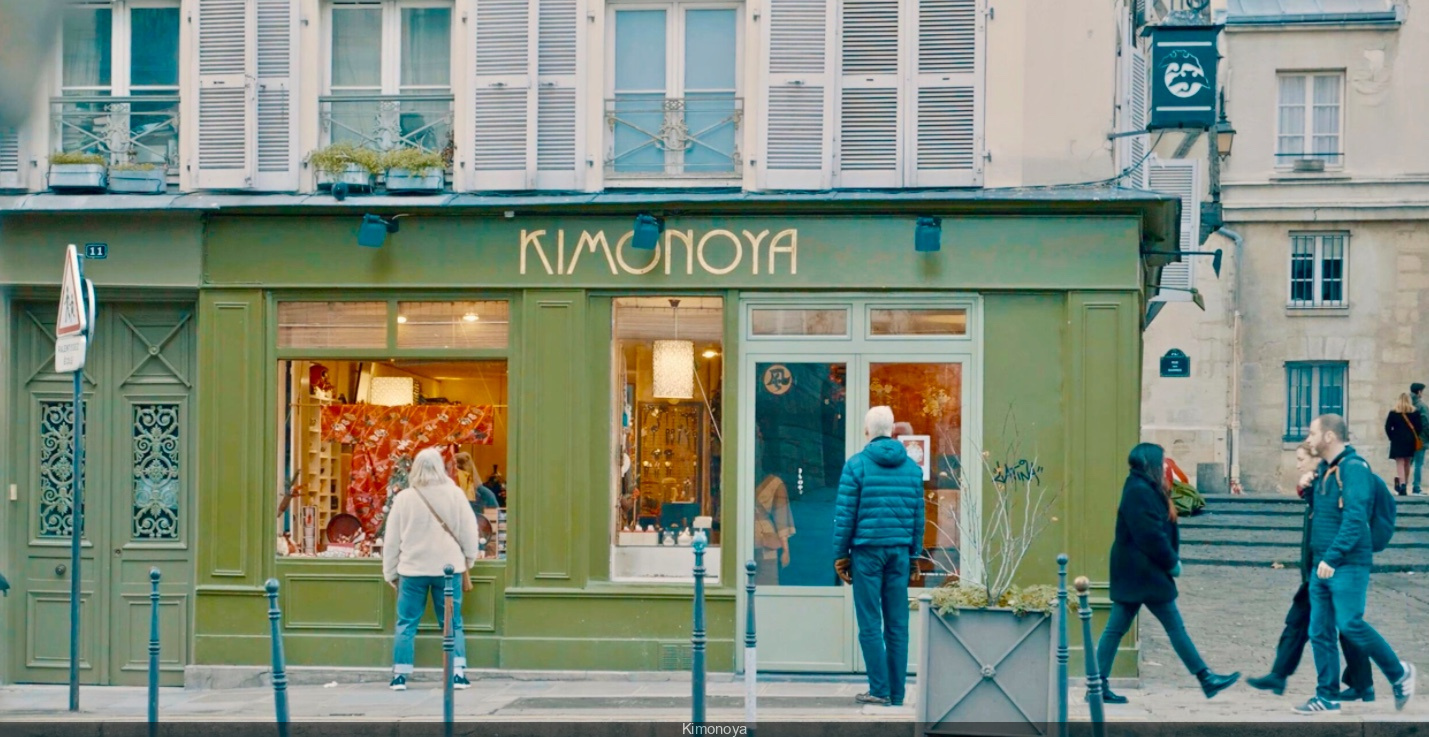
This pretty boutique, opened in 1981, is the oldest in Paris dedicated toJapanese art. The ideal place to find products related to traditional Japanese arts and crafts, such as calligraphy,ikebana - flower arranging - and the tea ceremony. Kimonoya also boasts a magnificent selection of traditional kimonos and yukatas.