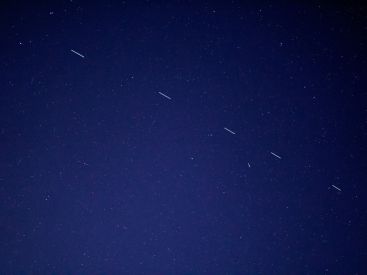
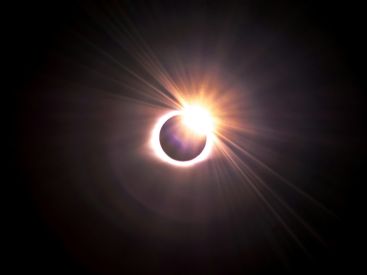
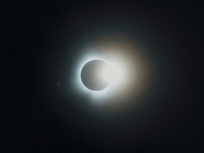
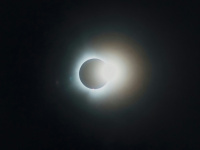
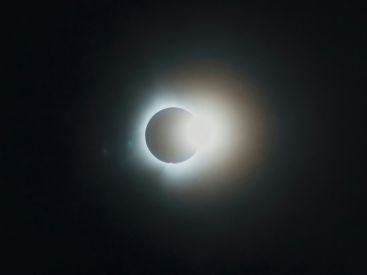
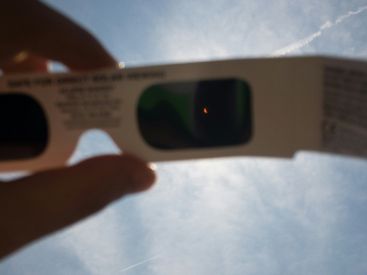
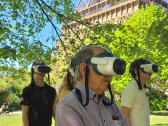
The Sun will ultimately be only the opening act of the spectacle. On Wednesday, August 12, 2026, Paris and the Île-de-France region will experience a remarkably astronomical day: after a partial solar eclipse obscuring more than 92% of the Sun in the capital, eyes will turn skyward again a few hours later in hopes of catching a glimpse of the Perseids, the famous meteor shower of August. The eclipse will begin over Paris at 7:22 p.m. and reach its maximum at 8:17 p.m., according to the French Astronomical Association (AFA).
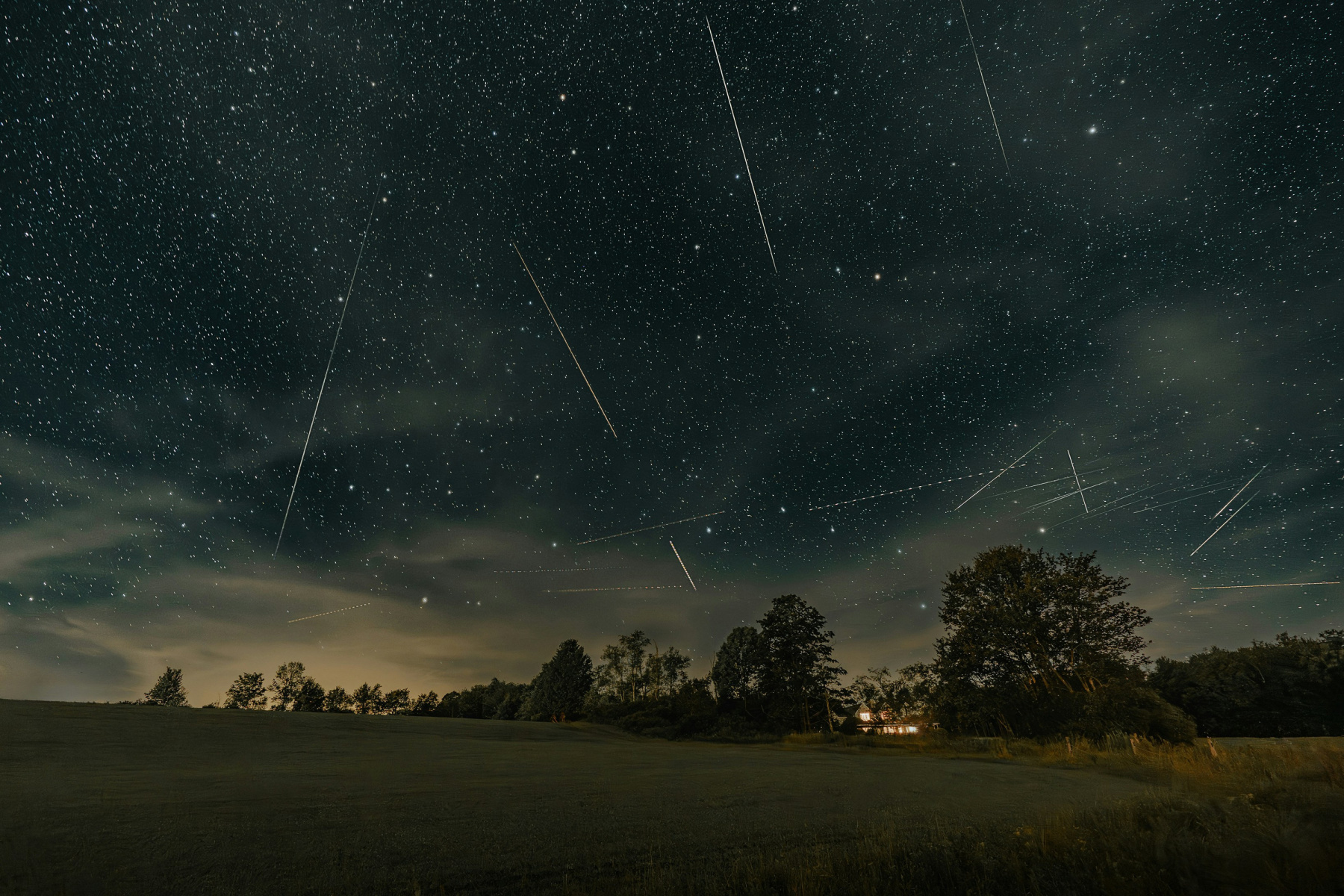
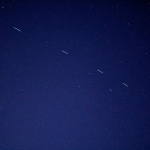
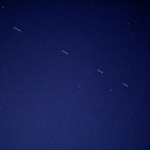
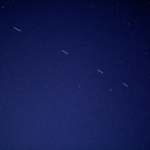
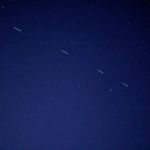
A particularly delightful celestial coincidence: August 12 falls right within the Perseids’ peak activity. These shooting stars light up the sky every summer, typically from mid‑July to late August, as the Earth moves through a cloud of dust left along its orbit by comet 109P/Swift-Tuttle.
And this year, conditions are especially favorable. The night of August 12–13 falls on a new Moon: no bright lunar disk to wash out the faint meteors. The International Meteor Organization notes that the conditions are ideal for observing the Perseids in 2026.
One essential question remains: after admiring the eclipse, what time will we need to roll out the deck chair again to watch the shooting stars in Paris?
No need to wait for a precise moment for some mysterious celestial switch to trigger the meteor shower. The Perseids are already underway, and meteors can blaze across the sky as soon as darkness falls.
In Paris, the first Perseids can therefore be sought once night has fallen, after the eclipse and twilight. But to maximize your chances, you’ll want to be prepared to stay up a bit — or even quite late. According to information released by the AFA for the evening organized at the Cité des sciences, the peak of Perseid viewing is expected between 2:00 a.m. and 4:00 a.m., on the night of Wednesday, August 12 to Thursday, August 13.
This nighttime window is particularly promising because the radiant of the Perseids—the patch of the sky from which the meteors appear to originate—lies in the direction of the constellation Perseus. As Perseus climbs higher in the sky over the course of the night, conditions for spotting a lot of meteors typically improve.
That said, don’t fixate on Perseus alone. Meteor showers can streak across large swaths of the sky: it’s best to keep your field of view as wide as possible and let your eyes adjust to the darkness.
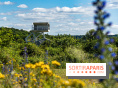
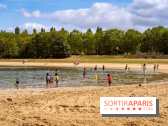
Perseid Peak: where to watch the meteor shower in the Paris region on August 12?
The Perseids reach their peak on the night of August 12–13, 2026. In Paris and across the Île-de-France region, here are the best spots to try to catch a glimpse of the famous meteor shower. [Read more]
On paper, the Perseids look generous. The International Meteor Organization cites a zenithal hourly rate of up to about 100 meteors per hour. But beware of reading this as a guarantee you'll see exactly 100 shooting stars per hour from a Paris balcony.
This rate assumes unusually favorable theoretical conditions. In practice, the number of meteors you can actually see hinges on many factors: light pollution, sky transparency, clouds, field of view, and even the radiant’s elevation. And when it comes to this terrain, Paris starts with a small handicap: its thousands of streetlights, shop windows, buildings, and illuminated monuments are far less romantic to astronomers than they are to postcard makers.
To boost your chances, it’s best to get as far away from light sources as possible. In Île-de-France, rural areas and spots with an unobstructed horizon will naturally be more favorable than the center of the capital.
This page may contain AI-assisted elements, more information here.




 Perseid Peak: where to watch the meteor shower in the Paris region on August 12?