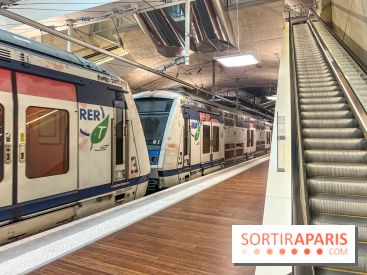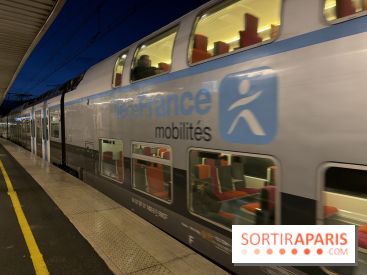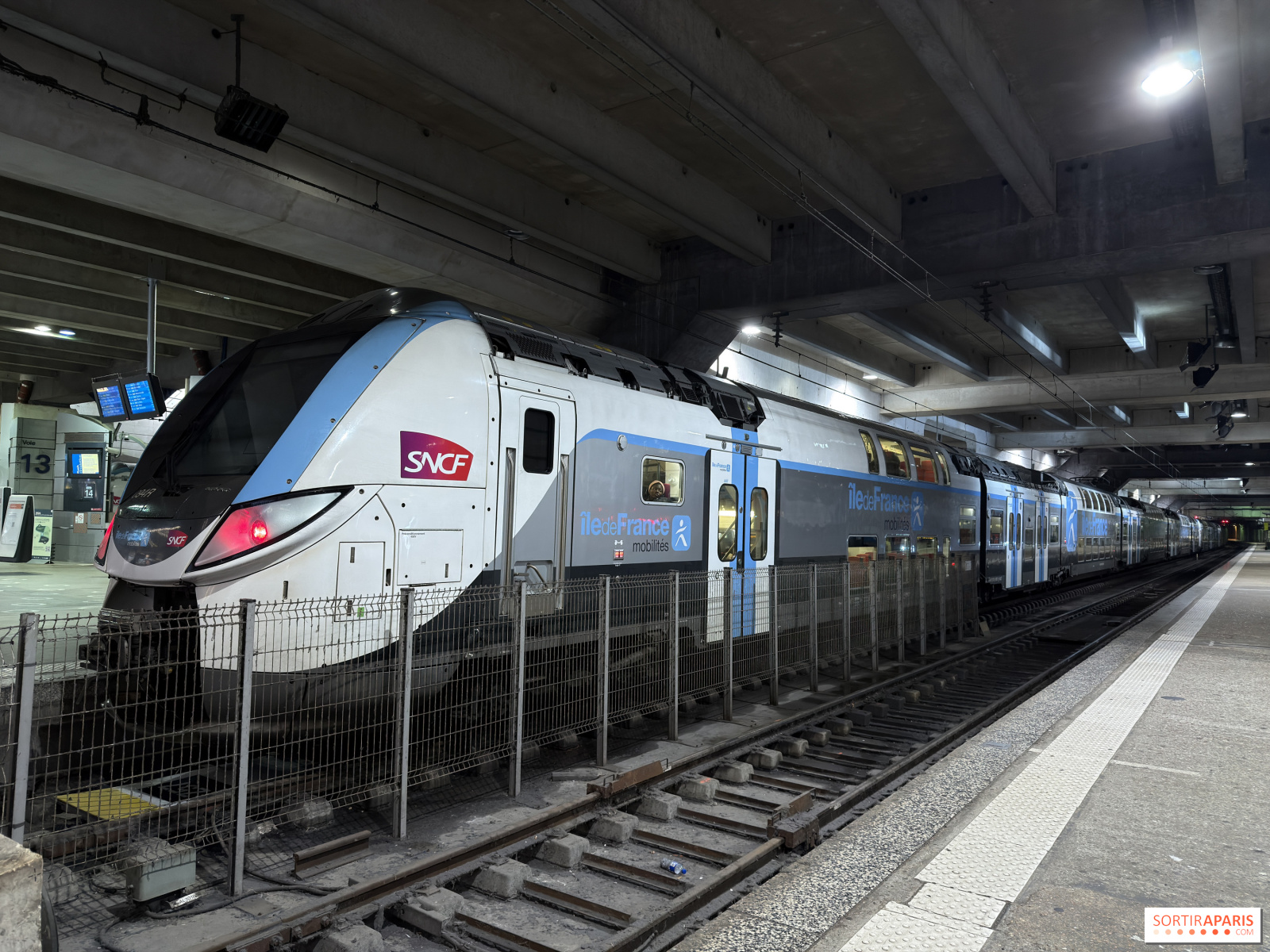
If you regularly travel on certain branches of the RER B, RER C, and RER D within Île-de-France, you might soon be eligible for a refund after numerous delays experienced last year. Île-de-France Mobilités (IDFM) has announced that five railway lines will qualify for compensation for their passengers, as their punctuality remained below 80% for much of 2025. The application platform opened this Wednesday, March 11, 2026.
In practice, the affected travelers are those using the Aulnay-sous-Bois - Mitry-Claye and Aulnay-sous-Bois - CDG2 lines on the RER B, covering the Seine-Saint-Denis and Val-d'Oise areas. On the RER C, the disruption affects the Dourdan - La Norville line in Essonne. Lastly, the RER D is impacted along two of its branches: the northern segment between Creil and Goussainville, and the southern segment connecting Vigneux-sur-Seine to Corbeil-Essonnes.
Since 2021, IDFM has implemented an automatic compensation scheme for frequent commuters on lines with a punctuality rate that remains below 80% for at least three months within a year. As of 2025, only two routes initially met this criterion: the Aulnay - Mitry-Claye branch of the RER B, which experienced five months below the threshold, and the Dourdan - La Norville line of the RER C, which was below for four months.
However, an analysis of annual performance revealed that several other lines posted results just above the minimum threshold, with service levels deemed inadequate. As a result, IDFM has chosen to ease its criteria and expand the refund campaign to include three additional routes: the Aulnay - CDG2 branch of RER B, and the two termini of the RER D.
This refund campaign is only available to holders of certain Navigo subscriptions. Eligible applicants include users with a Annual Navigo pass, Senior, Imagine R Student and School passes, as well as Monthly Navigo (including passes for Discover and Smartphone), and the 50% Reduced-Price Monthly or the 75% Solidarity Monthly passes. Single-journey tickets are not eligible for this program.
The amount of compensation typically depends on the type of subscription held and the number of months during which the account remained below the required punctuality threshold. In previous campaigns, payouts ranged from a few euros to several dozen euros, depending on individual circumstances.
The dedicated refund platform is now live on the Île-de-France Mobilités website. Affected users can log in with their Navigo account and follow the outlined process to request their reimbursement.
In brief, if you are among the thousands of commuters impacted by disruptions on RER B, C, and D in 2025, don’t miss this compensation campaign starting in early March. It’s a welcome gesture to make amends for the numerous inconveniences experienced on these Île-de-France lines, which still struggle to regain their former punctuality. Stay tuned for more details in the coming days on Île-de-France Mobilités’ website and on IDFM’s Twitter/X account, where transportation authorities regularly share updates.
Recommended age
For all