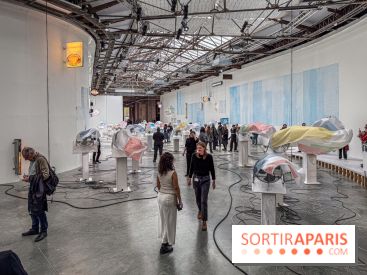
At the Palais de Tokyo in Paris, Benoît Piéron presents the exhibition Vernis à Ombres running from April 3 to September 13, 2026. Created for the spaces of the contemporary art center, the route brings together sculptures, installations and participatory environments around care, waiting and vulnerability. Fueled by the artist’s personal experience, marked by long stays in hospital, the show draws on medical and hospital imagery to offer a sensitive reading, through « des représentations autres des espaces, des corps et des affects qui y sont liés ». It thus transforms images and situations often tied to constraint into a more contemplative whole, where the body, time and the imagination take center stage.
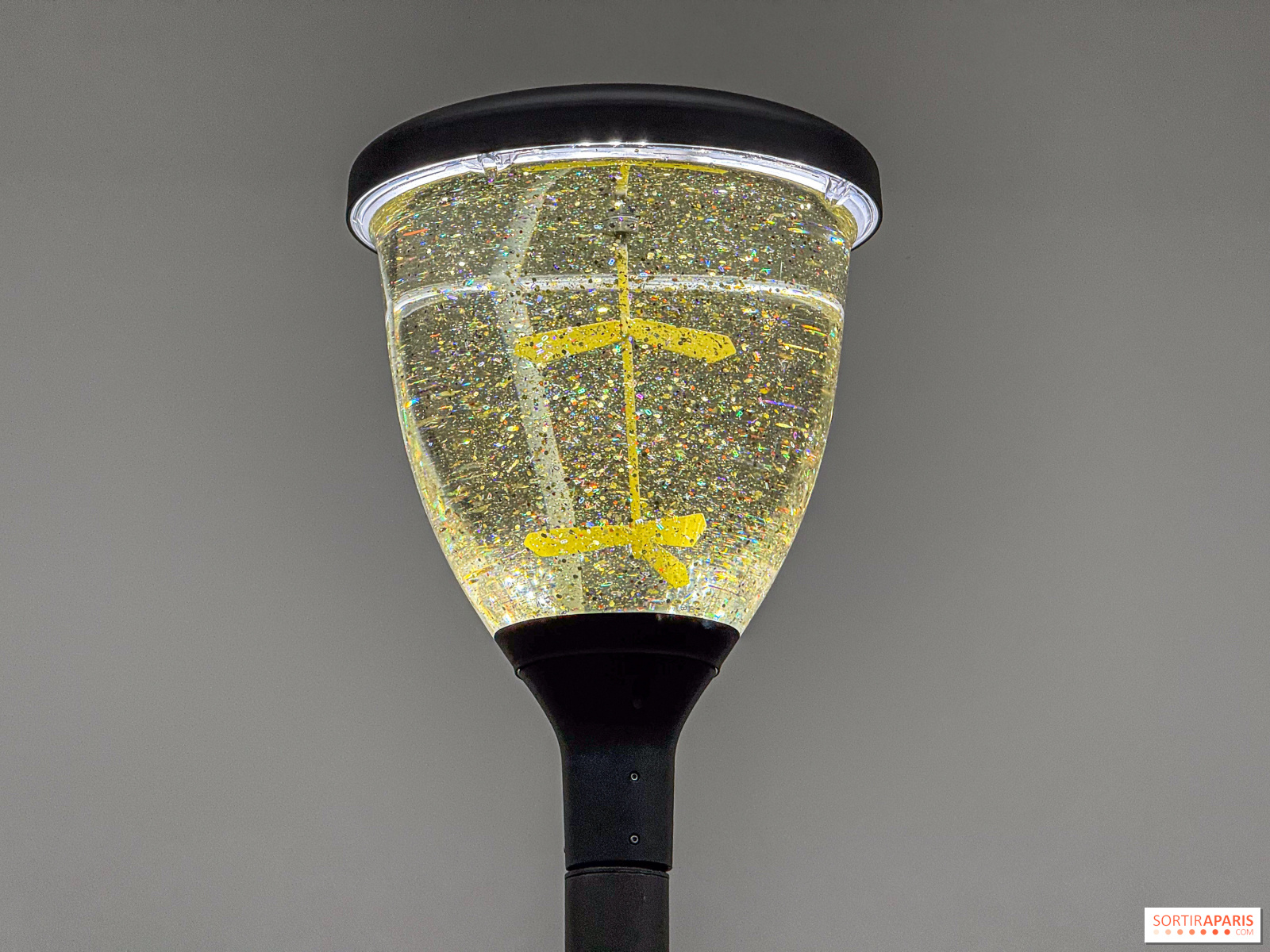
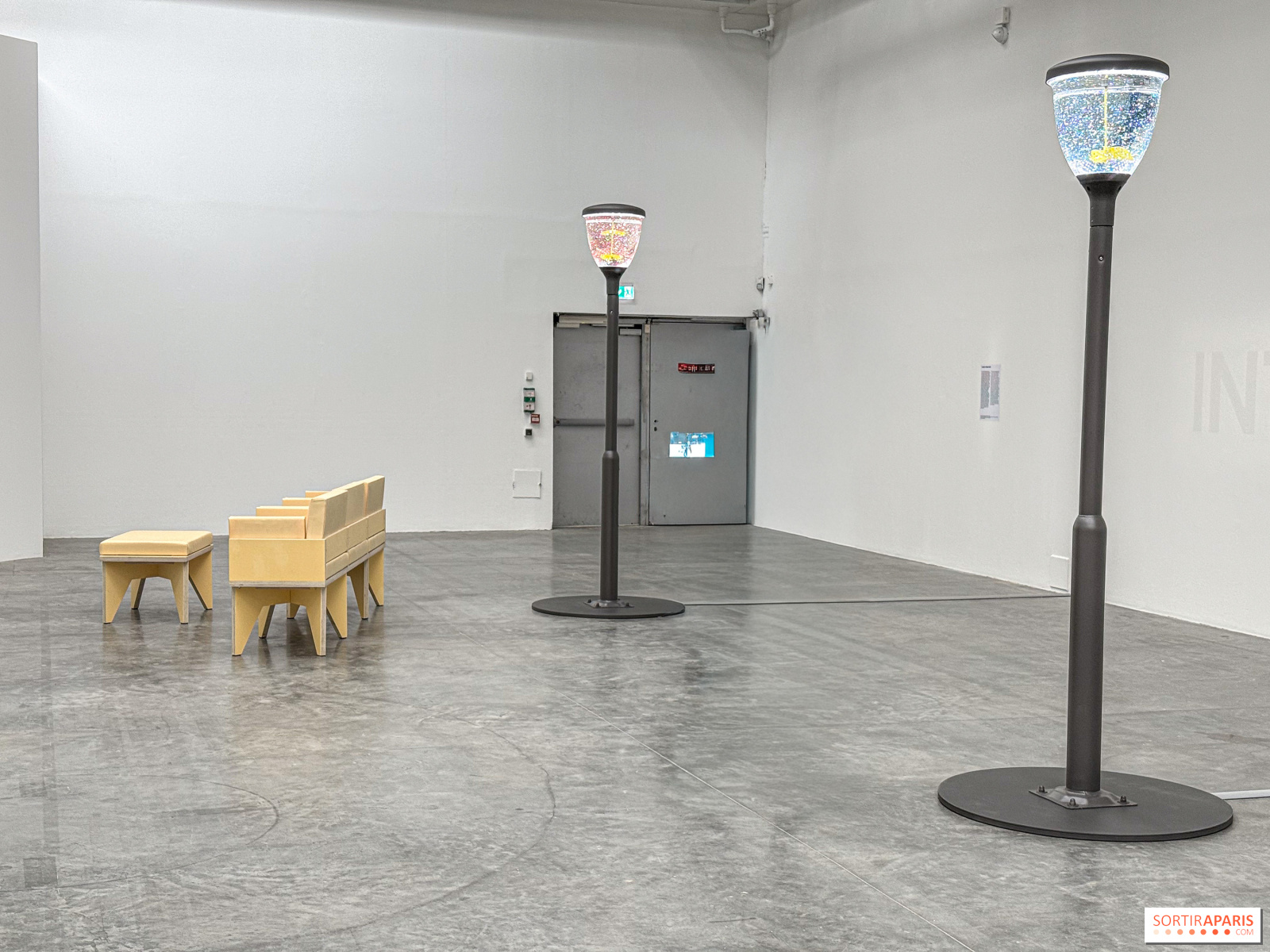
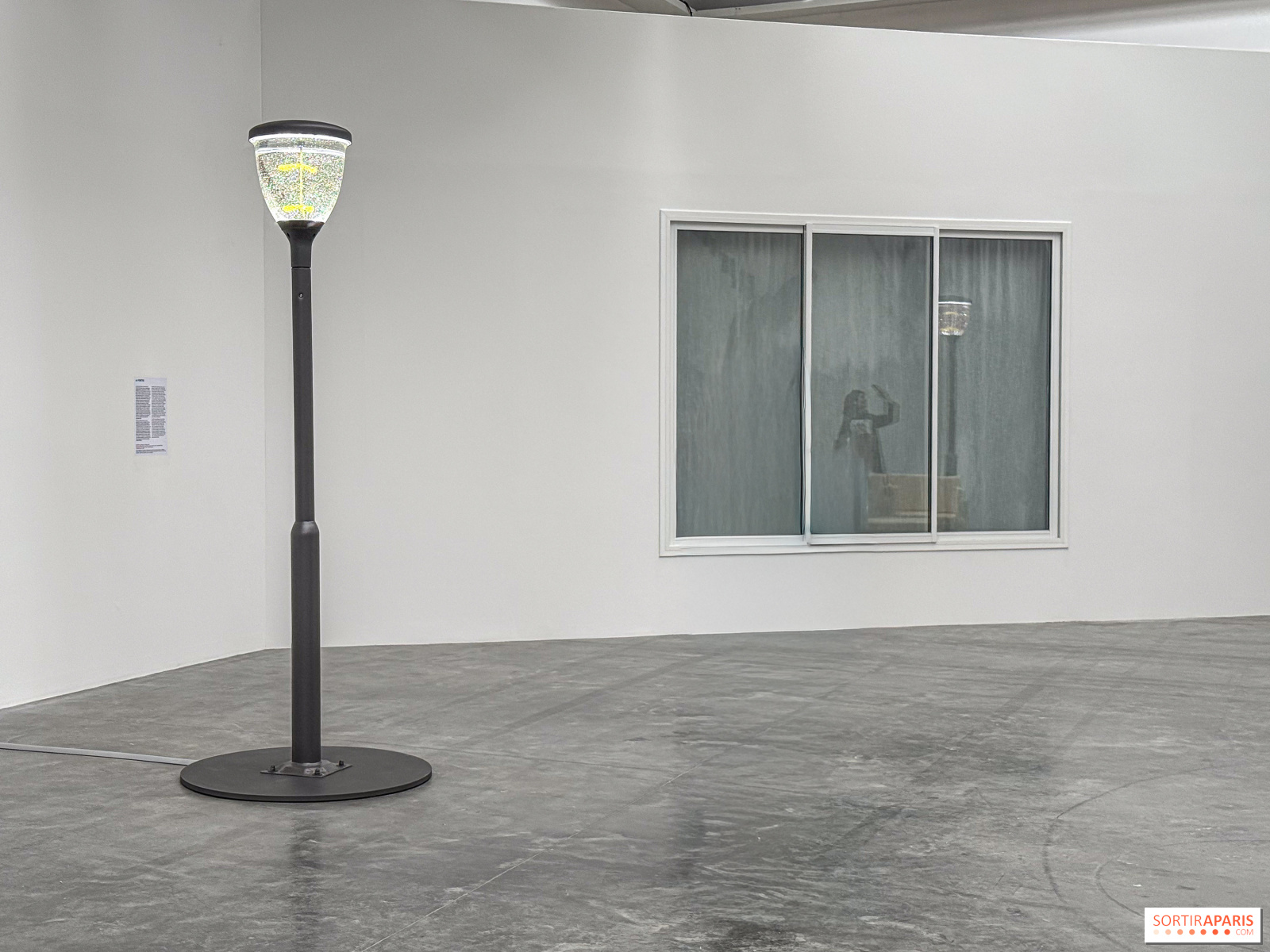
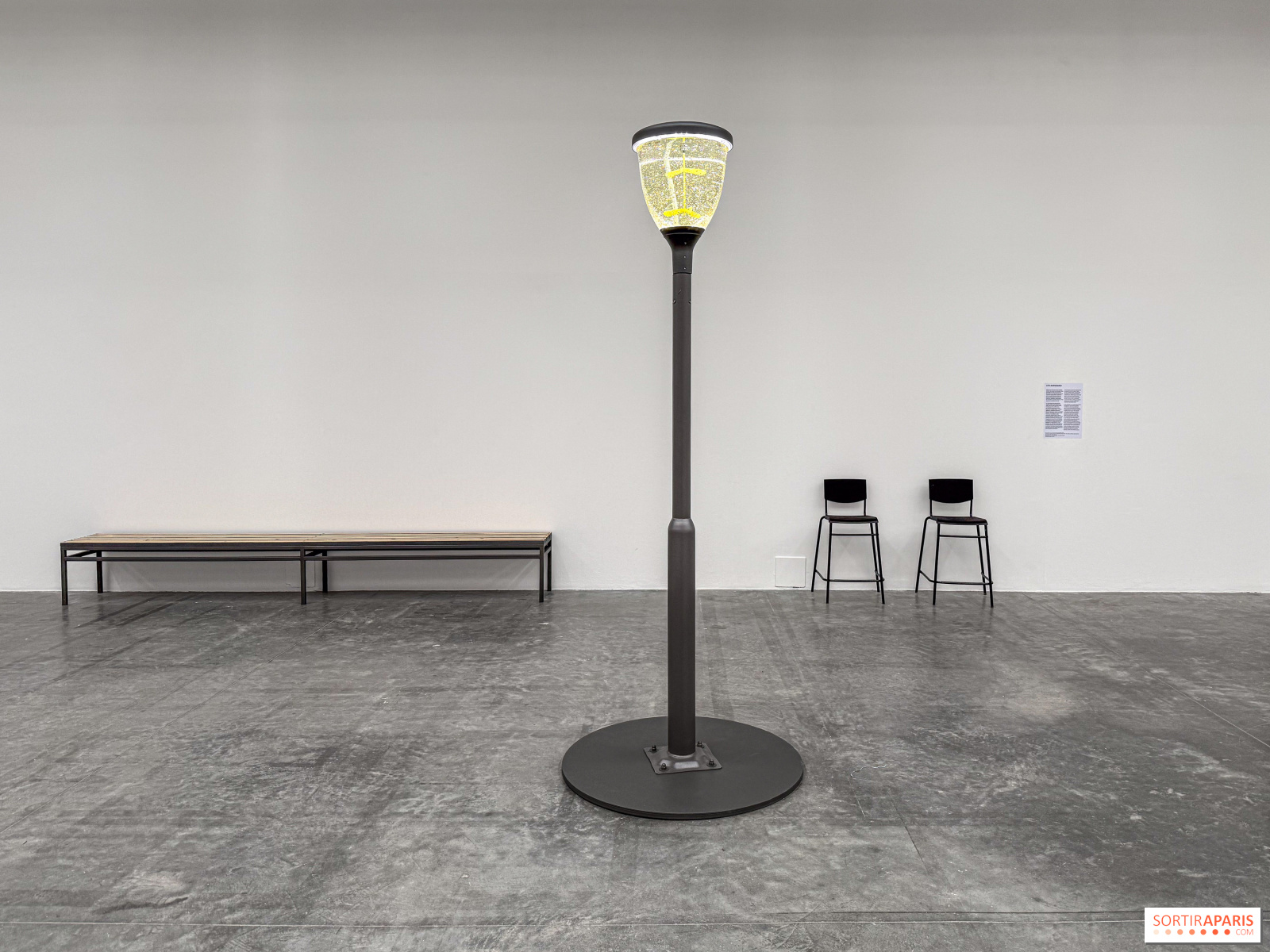
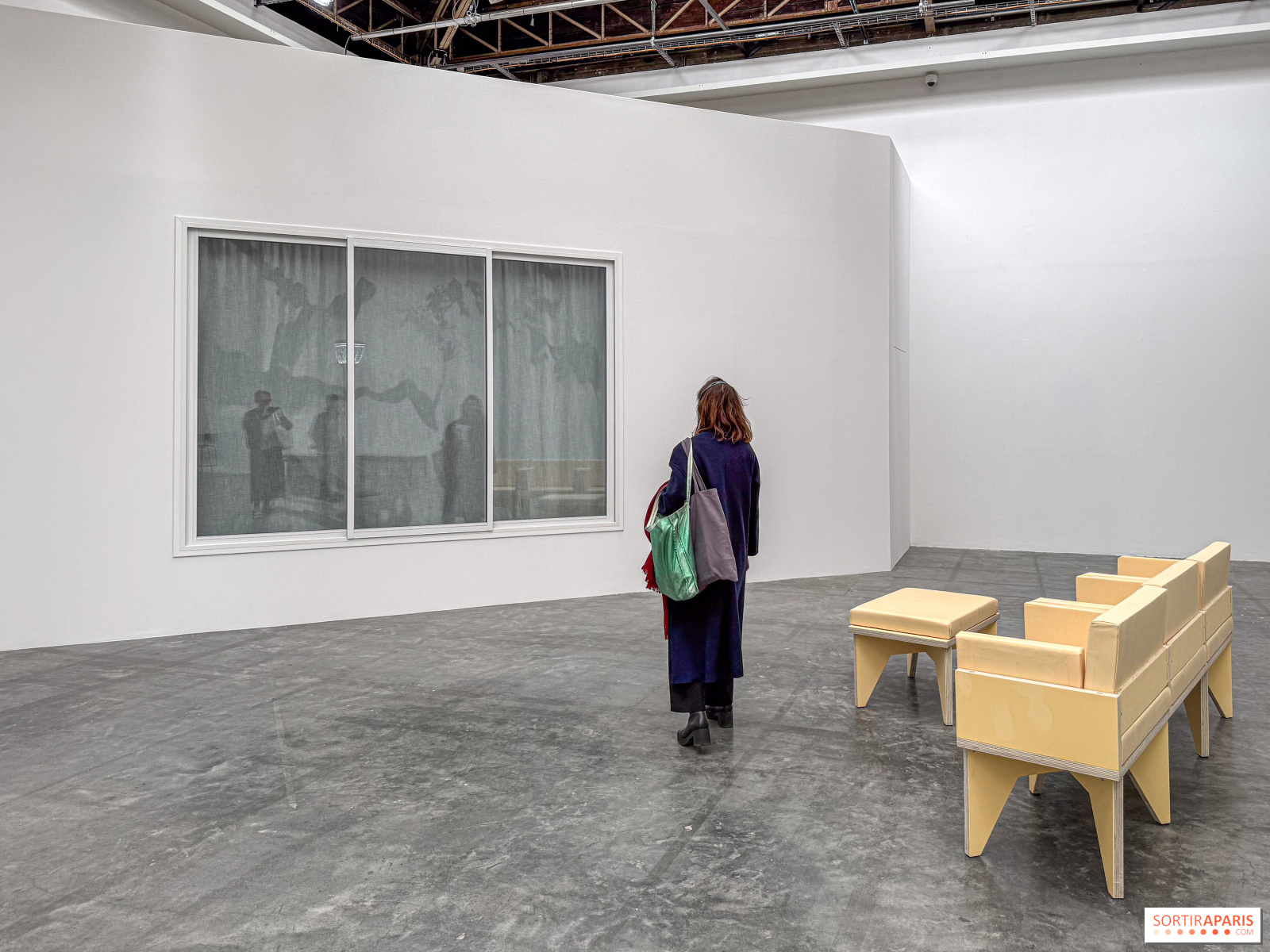
The exhibition journey juxtaposes forms and materials drawn from the hospital environment, treated with a deliberately ambivalent touch. Functional, utilitarian design converses with pastel hues, soft textiles, and rounded volumes. Emergency lights are repurposed as lamp-posts and nightlights, while an opaque waiting room becomes a theater of sexual life and sexuality. Taken together, the whole installation creates an atmosphere that oscillates between clinical neutrality and a restrained, sensory evoke.
Some installations rely on subtle mechanisms, playing with light or sound. Beams of light seeping under a door hint at an inaccessible space, accompanied by a minimalist sound composition. The bruit d’une aspirine dissolving becomes an amplified acoustic motif, evoking both a chemical phenomenon and a form of abstract sonic landscape.
The idea of vulnerability threads through the entire project, not as an exception but as a widely shared condition. The work of Benoît Piéron probes the fragility of bodies, identities and mental states, while drawing connections to broader ecological issues. The plants featured in the exhibition, both decorative and potentially toxic, embody the constant tension between care and danger, usefulness and precarity. It also raises the question of the artist's intersex identity, something he only discovered late in life, "the fact of being born with sexual and hormonal characteristics that do not correspond to the standard definitions of female and male bodies."

For this exhibition at the Palais de Tokyo, the artist presents an entirely new body of work, created in close dialogue with the architecture, volumes, and light of the space. The environment becomes an active element of the installation, emphasizing a sense of instability that runs throughout the entire piece. This sense of instability is not viewed negatively but rather as a fundamental aspect of the work, reflecting social statuses, life journeys, and physical or mental transformations.
The exhibition at the Palais de Tokyo offers a thoughtful and unconventional perspective on themes that are rarely explored in contemporary art from this angle. By blending personal experience, visual installations, and reflections on the conditions of existence, the project creates a space for imagination to take center stage—as a tool for transformation and adaptation. Visitors are invited to interpret the artwork in a way that is uniquely their own, allowing for a personal and evolving experience.
This page may contain AI-assisted elements, more information here.
Dates and Opening Time
From April 3, 2026 to September 13, 2026
Location
Palais de Tokyo
13, avenue du président Wilson
75116 Paris 16
Route planner
Access
Metro line 9 "Iéna" or "Alma-Marceau" station
Prices
Tarif réduit: €9
Plein tarif: €13
Official website
palaisdetokyo.com
More information
Open daily from 12 PM to 10 PM, except Tuesdays.





























![[IN]IMAGINABLE : nos photos de l'expo à Fluctuart - Fluctuart 19](https://cdn.sortiraparis.com/images/1021/114756/1309589-imaginable-nos-photos-de-l-expo-a-fluctuart-fluctuart-19.jpg)
![[IN]IMAGINABLE : nos photos de l'expo à Fluctuart - Fluctuart 19](https://cdn.sortiraparis.com/images/1022/114756/1309589-imaginable-nos-photos-de-l-expo-a-fluctuart-fluctuart-19.jpg)
![[IN]IMAGINABLE : nos photos de l'expo à Fluctuart - Fluctuart 19](https://cdn.sortiraparis.com/images/1023/114756/1309589-imaginable-nos-photos-de-l-expo-a-fluctuart-fluctuart-19.jpg)
![[IN]IMAGINABLE : nos photos de l'expo à Fluctuart - Fluctuart 19](https://cdn.sortiraparis.com/images/1024/114756/1309589-imaginable-nos-photos-de-l-expo-a-fluctuart-fluctuart-19.jpg)