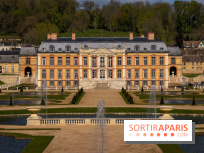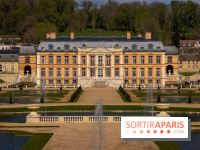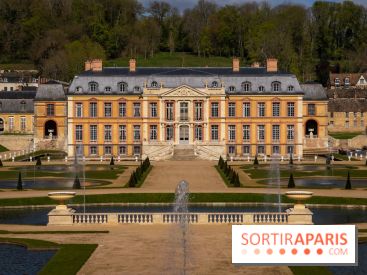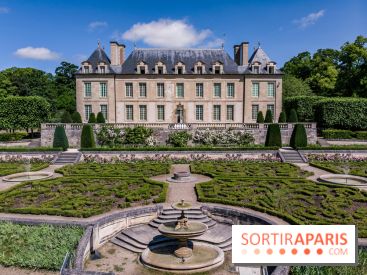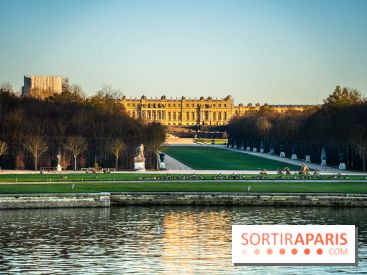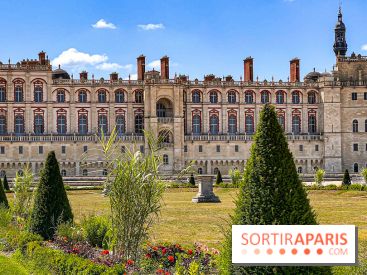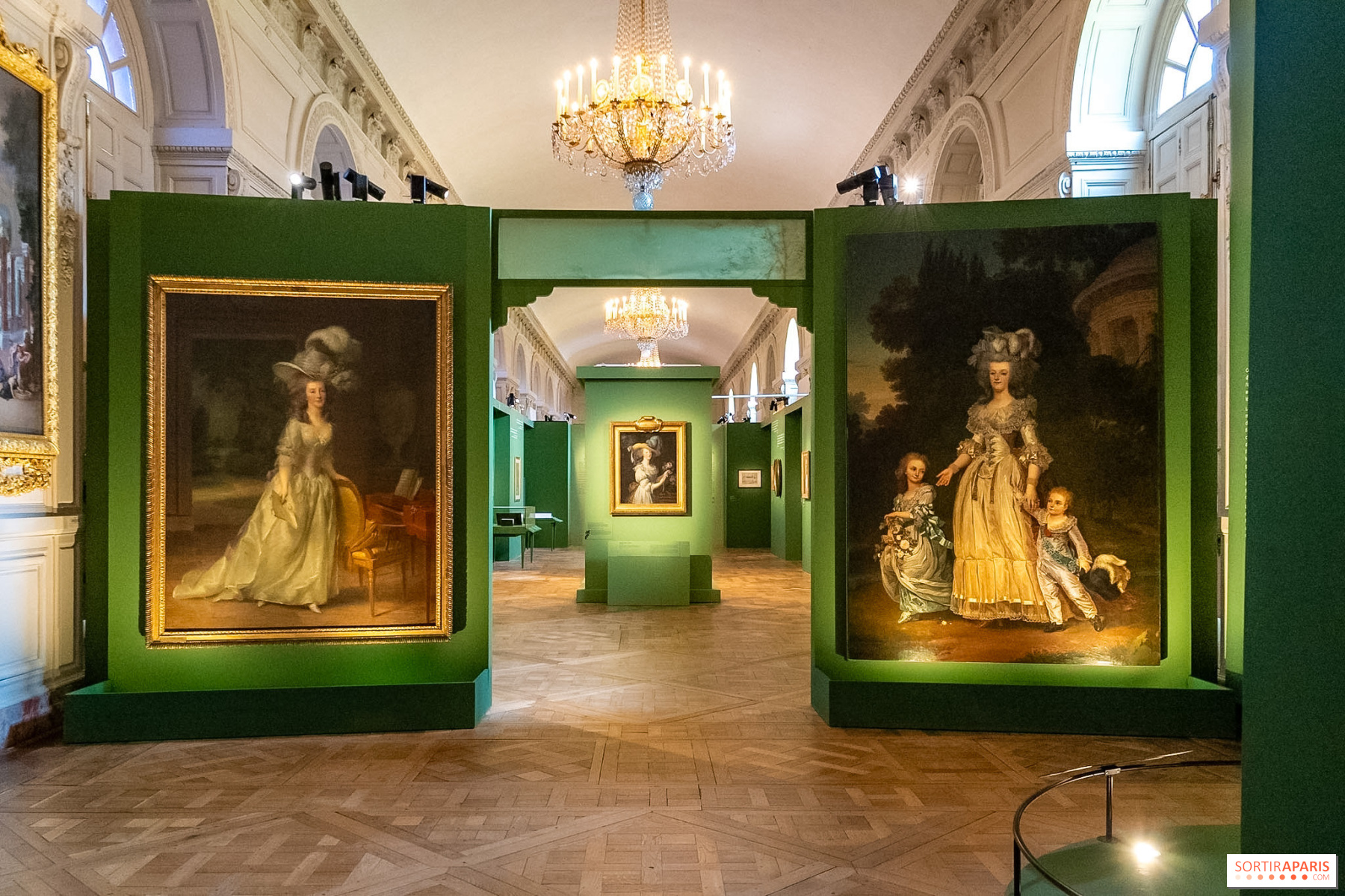
At the Grand Trianon of the Versailles Palace, in the Yvelines (78), an unprecedented summer exhibition is opening its doors for 2026. Titled Gardens of Light, 1750-1800, it runs from May 5 to September 27, 2026 and gathers around 160 works (paintings, drawings, furniture, architectural plans, and costumes) to tell the birth of a landscape art that reshaped Europe.
The idea behind this exhibition, led by curator Élisabeth Maisonnier, the chief heritage conservator at the National Museum of the Châteaux of Versailles and Trianon, is to place Marie-Antoinette’s English garden at the Petit Trianon in a much broader context. Certainly iconic, this garden was not an isolated case: at the same time, even more grandiose and inventive spaces were flourishing across Europe, from England to Russia, and through Sweden and Germany. It is this social movement, as much as this aesthetic revolution, that the exhibition aims to tell.
The exhibition is structured in two broad sections. The first, more educational, traces the origins of the landscape garden (or English garden), born in Stowe and Stourhead in England around the 1730s. The second plunges us into the aristocratic lifestyle these gardens helped shape, with its fêtes, fashion trends, furnishings and portraits. The visit naturally continues into the gardens of the Trianon estate.
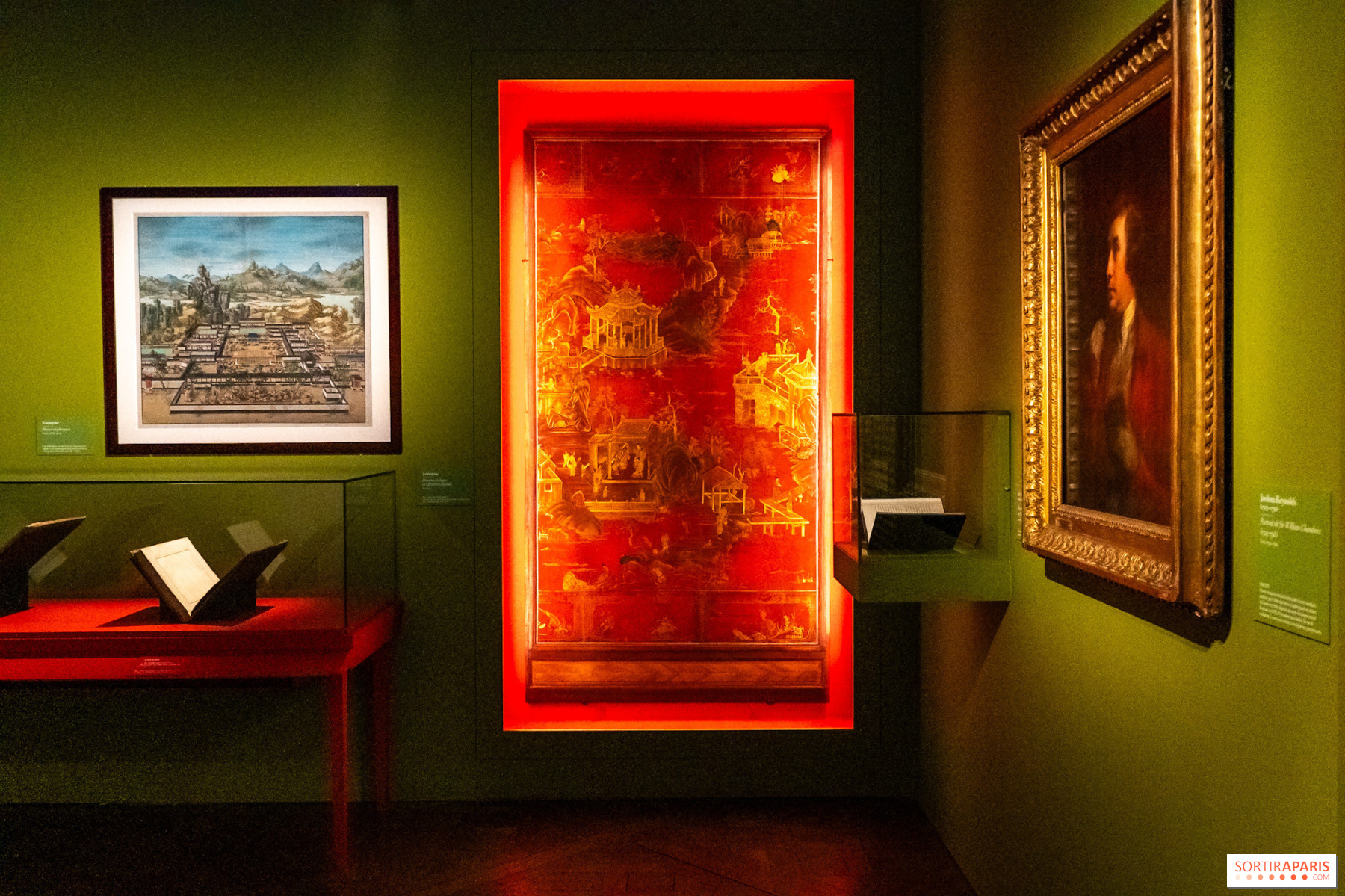
It all begins with a rejection. In early 18th‑century England, the French-style garden with its straight lines and strict symmetry is seen as the very embodiment of absolute power, the Louis XIV model. To break away from that, English aristocrats imagine a new form: winding, ostensibly freehand layouts that are actually meticulously orchestrated, where terrain, waterways, grottoes and follies (small structures in a variety of styles—temples, pagodas, rustic bridges) create a miniature world. Architect and theorist William Chambers, shaped by his travels in China, plays a pivotal role in spreading this model across Europe. His treatise Dissertation on the Gardening of the East (1772) formalizes an aesthetic grounded in variety, contrast and emotion.
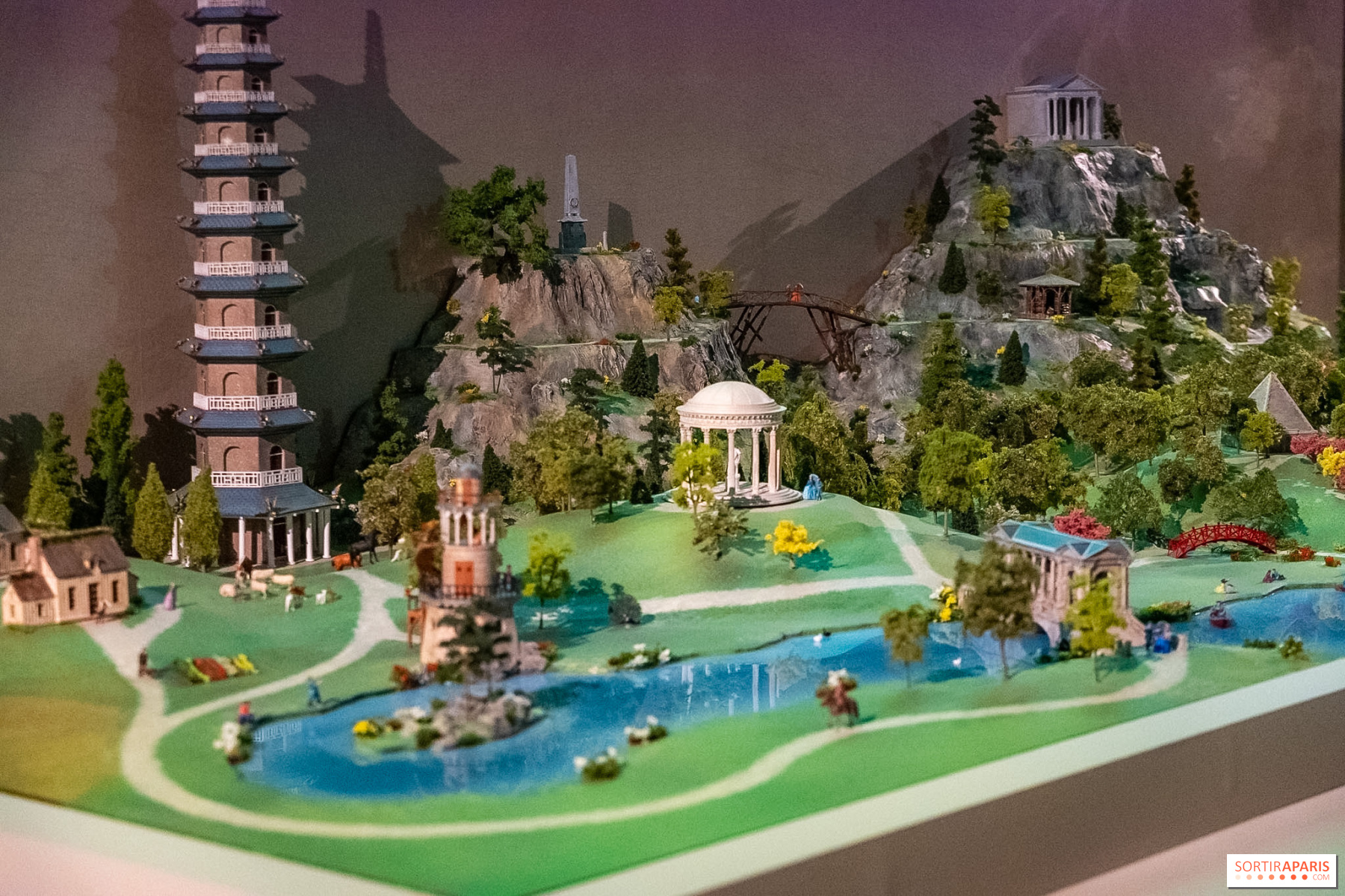
The term "Anglo-Chinese" that takes hold in France signals the double origin of this style: the picturesque irregularity of English landscapes, combined with the art of Chinese gardens Europeans discovered through collections of engravings. The adjective "Chinese" does not designate a precise geographic area but a process of imitation: to recreate an idealized nature, presumed universal and applicable anywhere. In the grounds of Kew, Chambers had a pagoda built that quickly became a European reference. Pagoda-shaped clocks, lacquered barometers, and panels of chinoiserie flood interiors. The exhibition also features a remarkable pagoda-style barometer-thermometer, lent by the Musée des Arts décoratifs in Paris, which once adorned the Marquis de Sourches’s Parisian townhouse.
From 1760 onward, this model spread across European courts at a remarkable pace. In Germany, at Wörlitz, the Prince of Anhalt-Dessau, returning from a trip to Naples, has an artificial volcano built in his park, inspired by Vesuvius. It still functions today. In Sweden, Gustav III himself collaborated on the design of his Drottningholm gardens. In Russia, the sheer scale of the parks at Tsarskoye Selo and Pavlovsk is nothing short of astonishing. In France, the Méréville estate, laid out by Hubert Robert, stands as one of the most accomplished examples of this style.
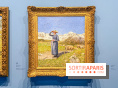
The garden of Stourhead, conceived by banker Henry Hoare II starting in 1741, is featured in the exhibition through an aquarelle by William Turner (circa 1798): it shows how the natural landscape and ancient ruins merge to erase the boundary between the garden and the surrounding countryside. The aim is to conjure an illusion of an infinite panorama, where the passerby cannot tell whether they are in a cultivated garden or in nature itself—this is the very art of this new style.
In France, the Duke of Chartres lays out as early as 1771 at Monceau (the present-day Parc Monceau, in Paris’s 8th arrondissement) a garden of “irregular taste,” conceived by Carmontelle: a cabinet of curiosities that blends a mill, fake ruins, a naumachia, and secret passages evoking Masonic rites. For these gardens are not mere aesthetic caprice. They are spaces of initiation, platforms for political debate, and settings for philosophical reflection. At Stowe, the era’s grandest English garden, liberal wigs gather to stake out their ideas. The garden becomes an outdoor manifesto.
We cannot understand these gardens without invoking Jean-Jacques Rousseau (1712-1778). His works, from Julie or the New Heloise to The Reveries of the Solitary Walk, fundamentally reshape Europeans’ relationship with nature. The promenade, the meditation, the sublime, solitary daydreaming—these are the postures the gardens stage with a certain theatricality. In 1778, the Marquis de Girardin offered Rousseau hospitality at his Ermenonville estate, about an hour northeast of Paris. The philosopher retreated there, herbariums in hand, and died there. His tomb on the Île des Peupliers became a pilgrimage site until his ashes were transferred to the Pantheon during the Revolution. The exhibition presents editions of The Confessions and The Reveries, as well as depictions of Rousseau herbariizing at Ermenonville, preserved at the Musée Carnavalet.
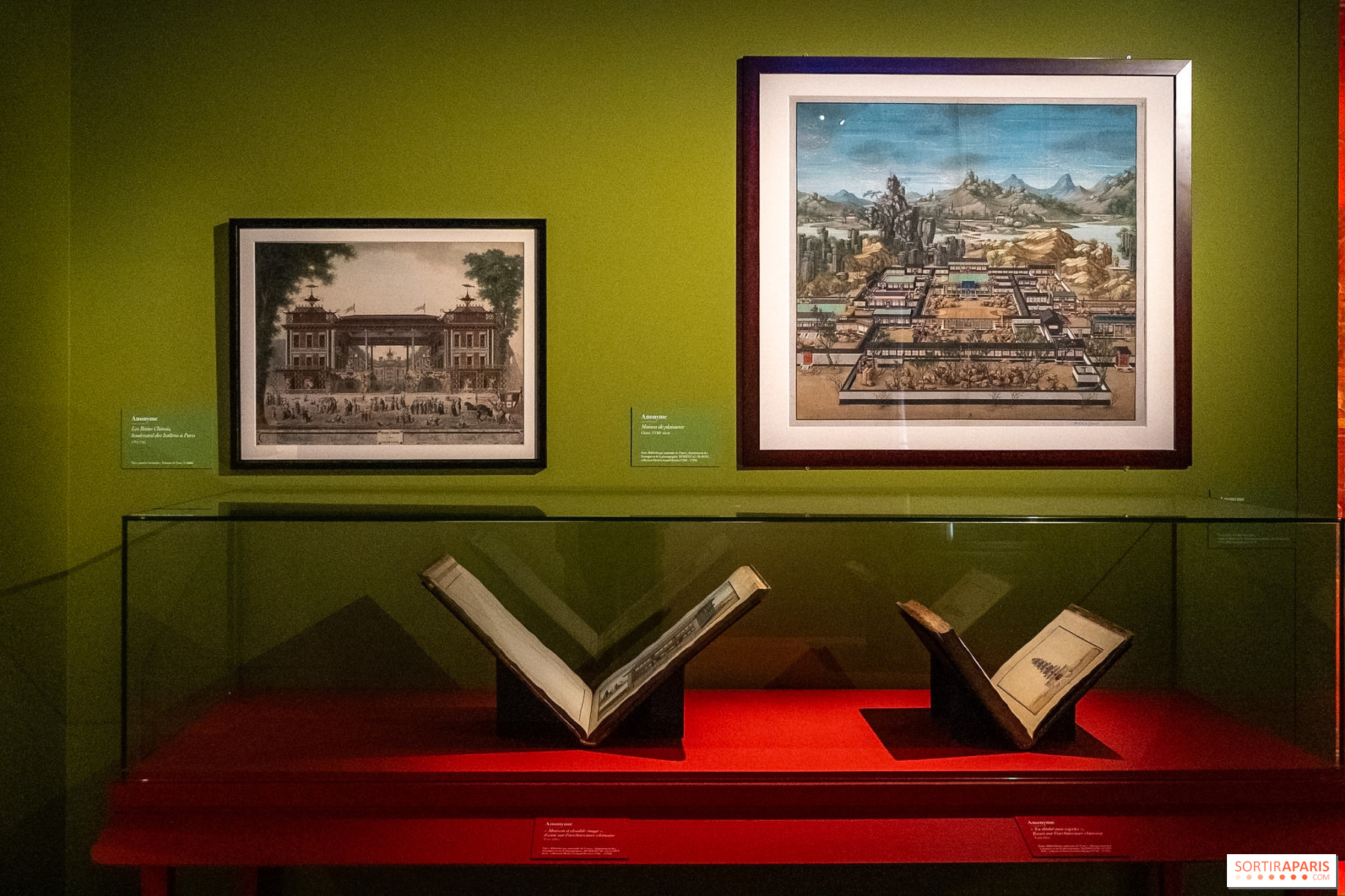
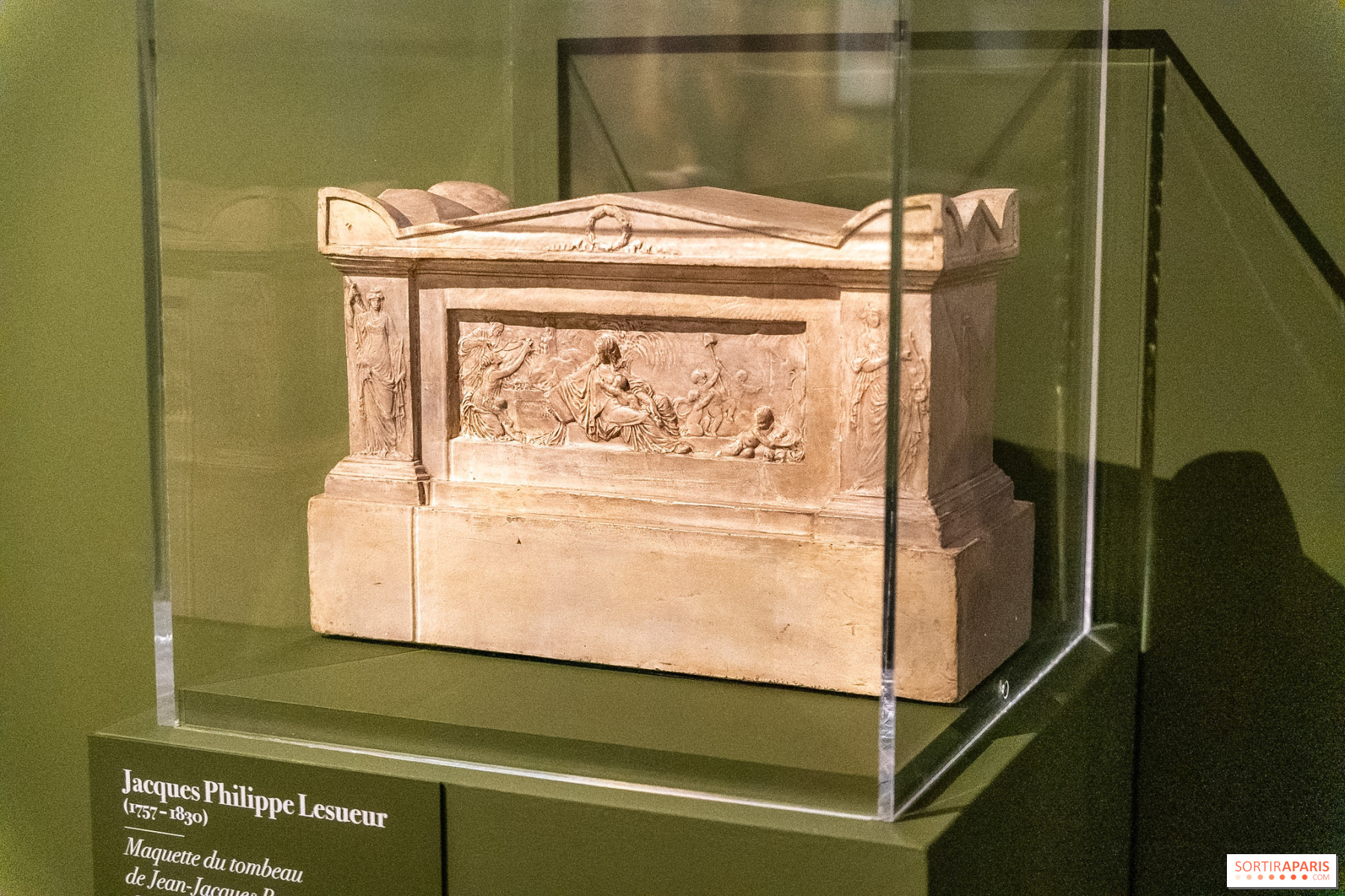
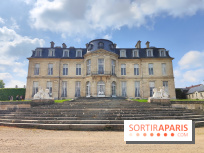
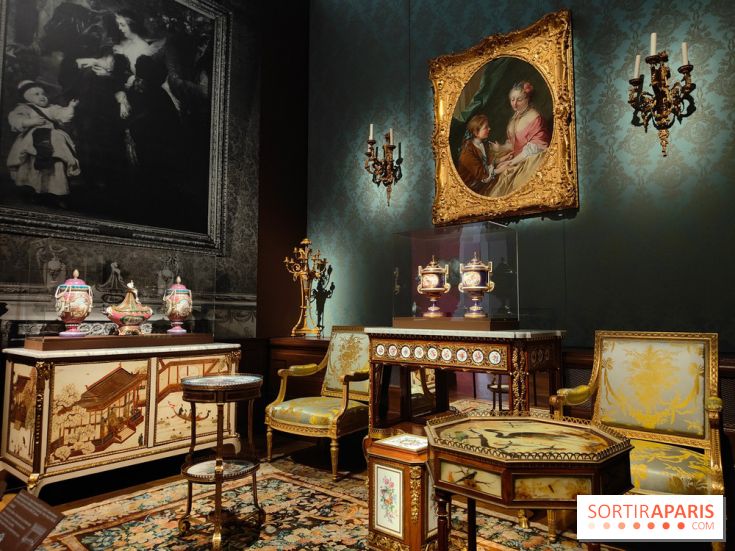
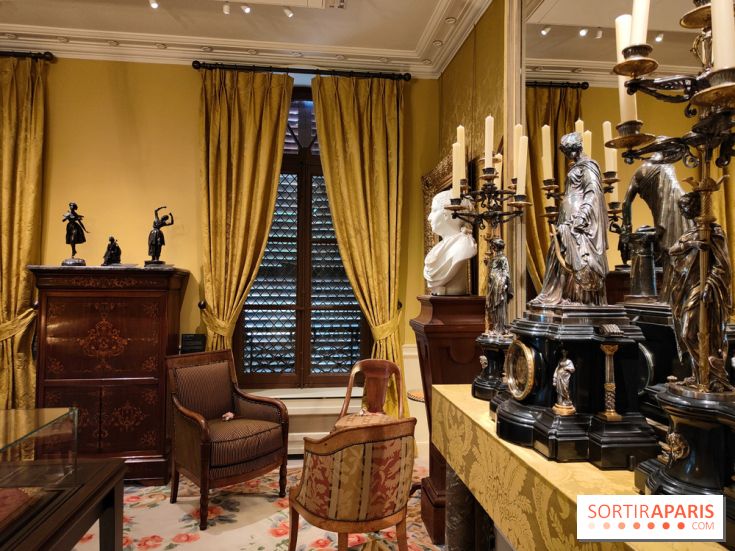
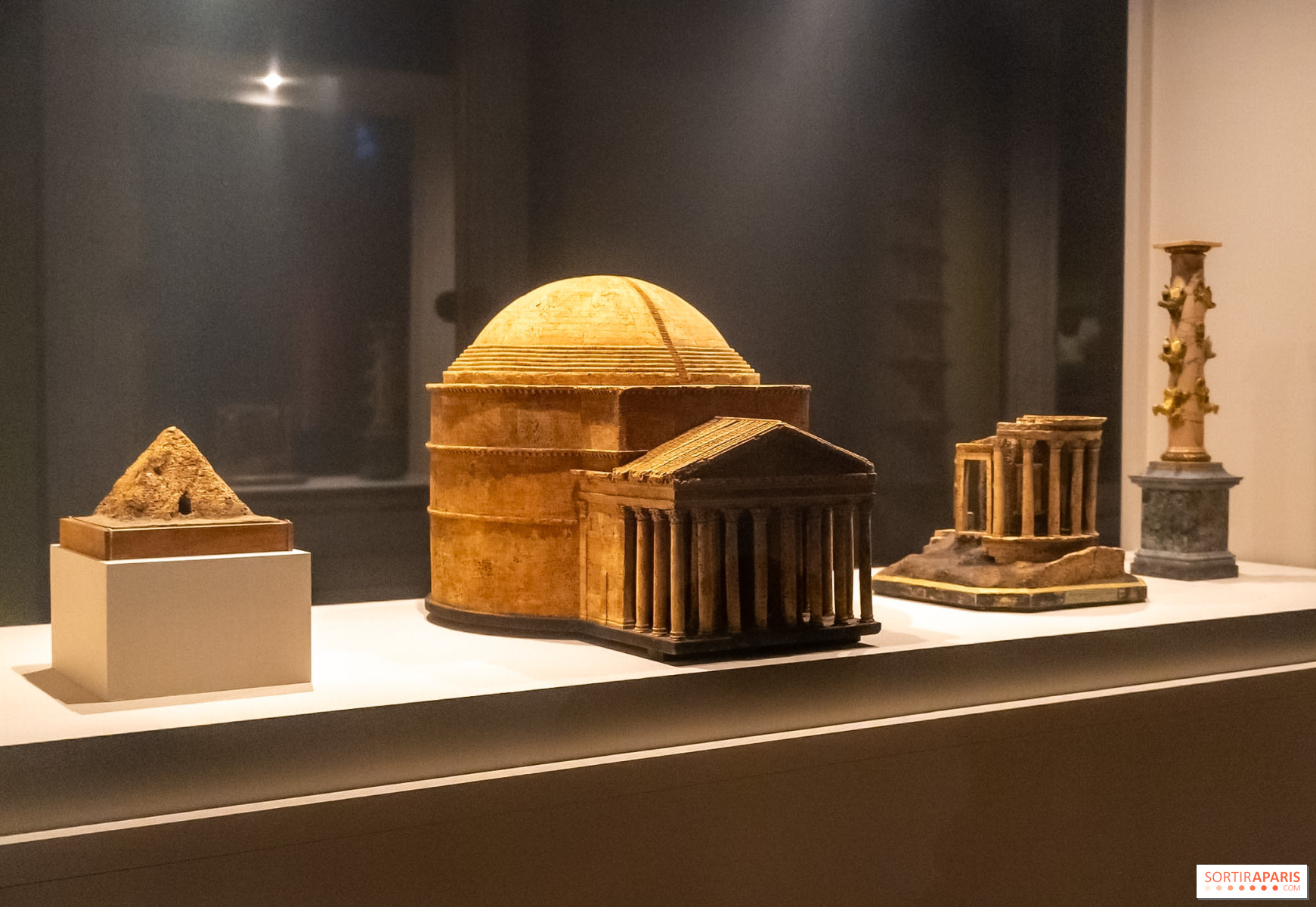
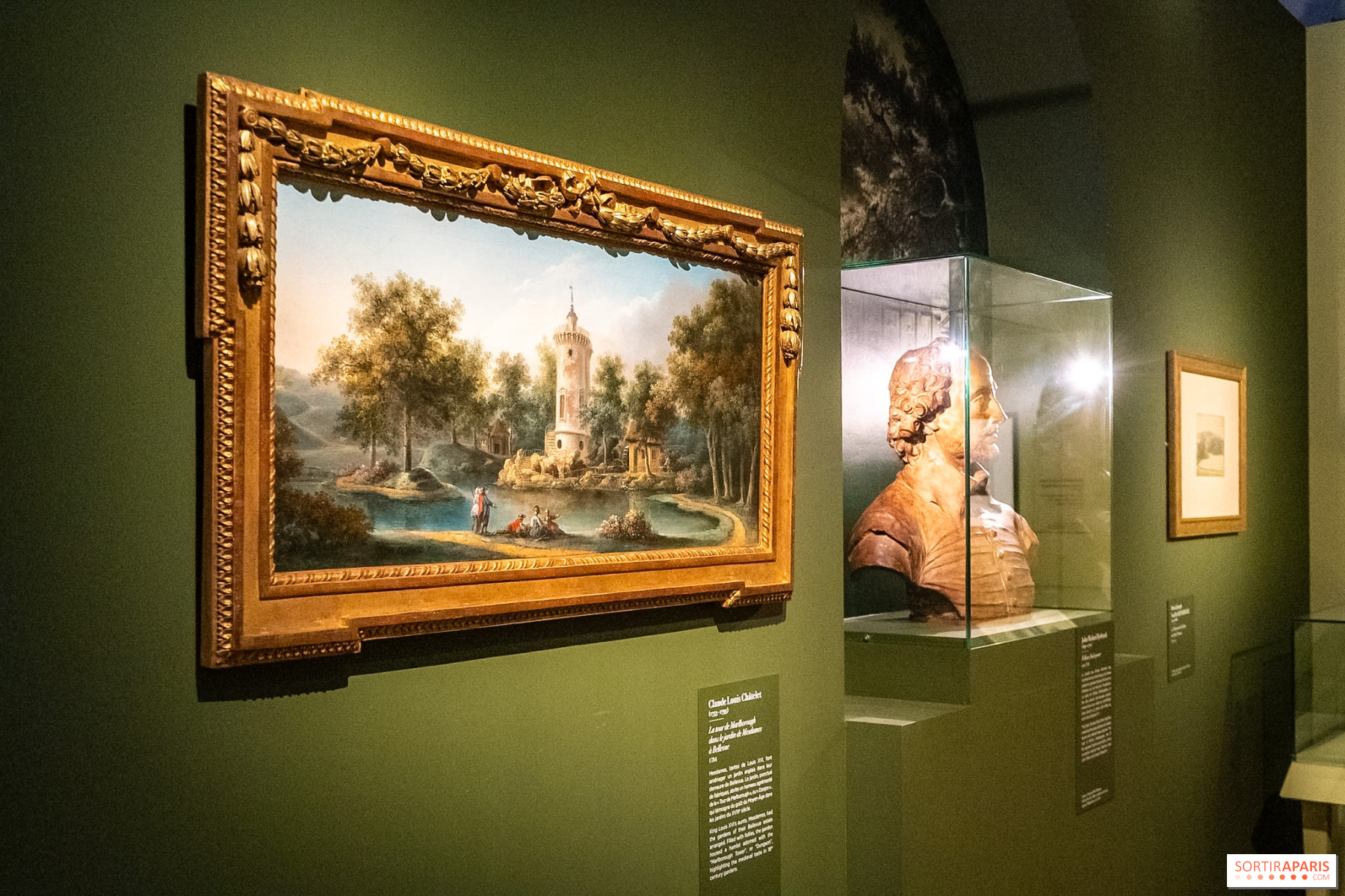
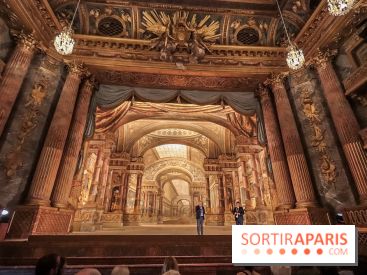
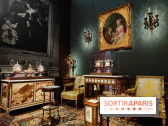
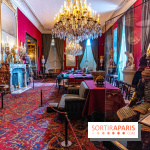
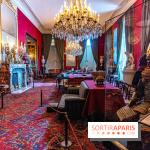
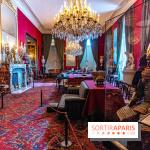
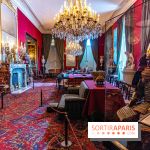
The scenography, conceived to occupy the Grand Trianon’s salons (including the renowned Malachite Room), poses a remarkable challenge: to make a dialogue between a pure Louis XIV décor and pagodas, rustic bridges, and pastoral follies. The result is convincing.
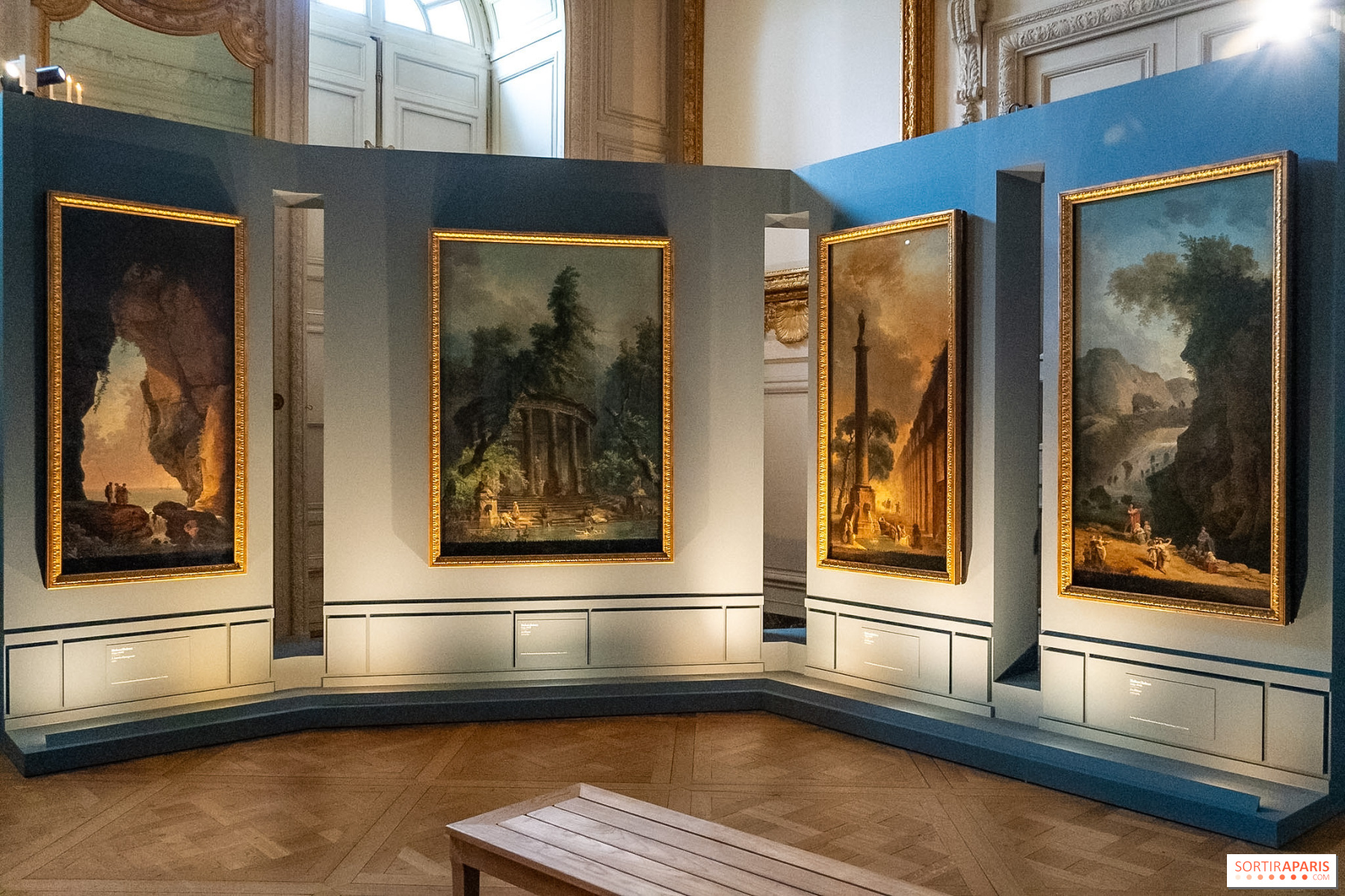
Among the highlights of the tour is the reconstruction of the decor of the bathroom of the Bagatelle château, featuring four Hubert Robert canvases loaned by the Metropolitan Museum of Art in New York. In 1777, the Comte d'Artois had this little château in the Bois de Boulogne built in 64 days following a bet with Marie-Antoinette. Robert contributed six large paintings to decorate the bathroom, pairing picturesque landscapes, antique bathers, and fantastical gardens. Seeing them gathered here offers a striking glimpse into the room's atmosphere.
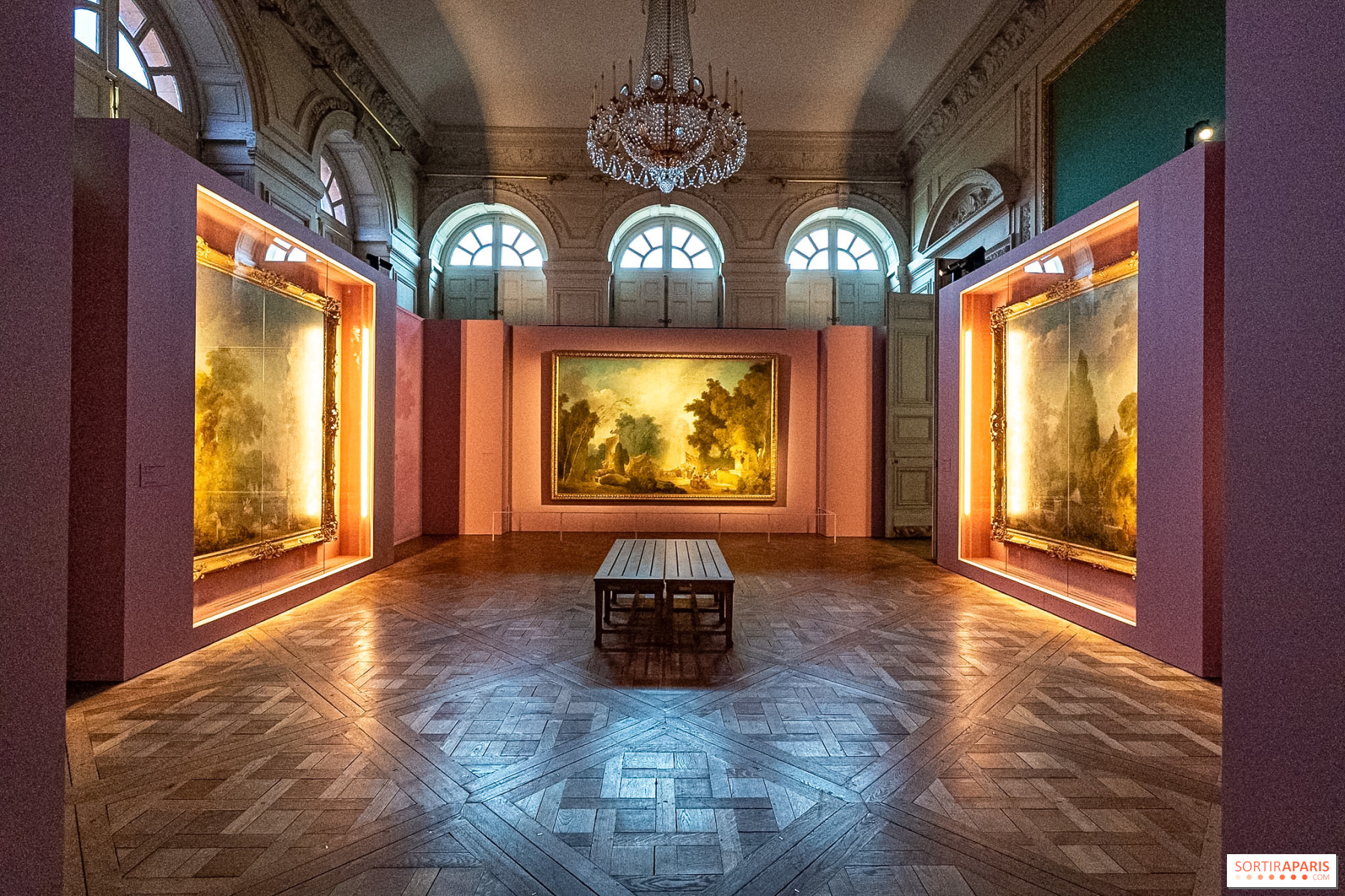
We also note the unprecedented gathering of three Jean-Honoré Fragonard paintings: La Fête à Saint-Cloud (held by the Banque de France and typically not on view), La Balançoire, and Colin-Maillard (loaned from the National Gallery of Art in Washington). These scenes of play and festivity in idealized gardens carry forward the spirit of Watteau’s “fêtes galantes,” with a light touch and an unreal atmosphere that, in themselves, capture the art of living at the close of the Ancien Régime.
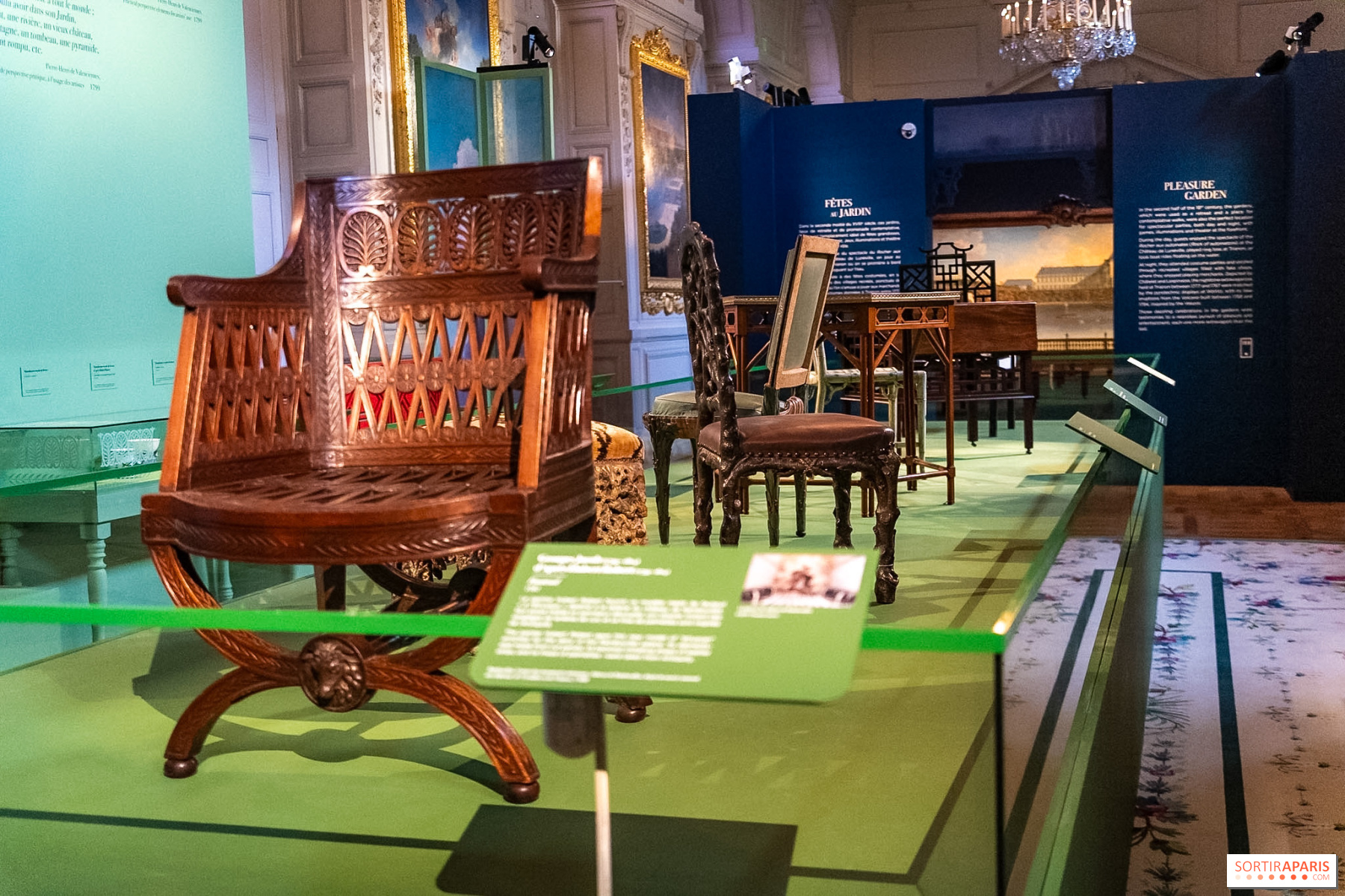
Furniture also takes a starring role in the route: chairs made to resemble faux bamboo, stools that mimic rock, reed sofas for the Rambouillet Shell Cottage, and furniture bearing ears of grain commissioned by Marie-Antoinette for Trianon. These hybrid, inventive pieces, several of which come from the Musée des Arts Décoratifs and the Petit Palais, show just how much the garden inspired a new decorative language.
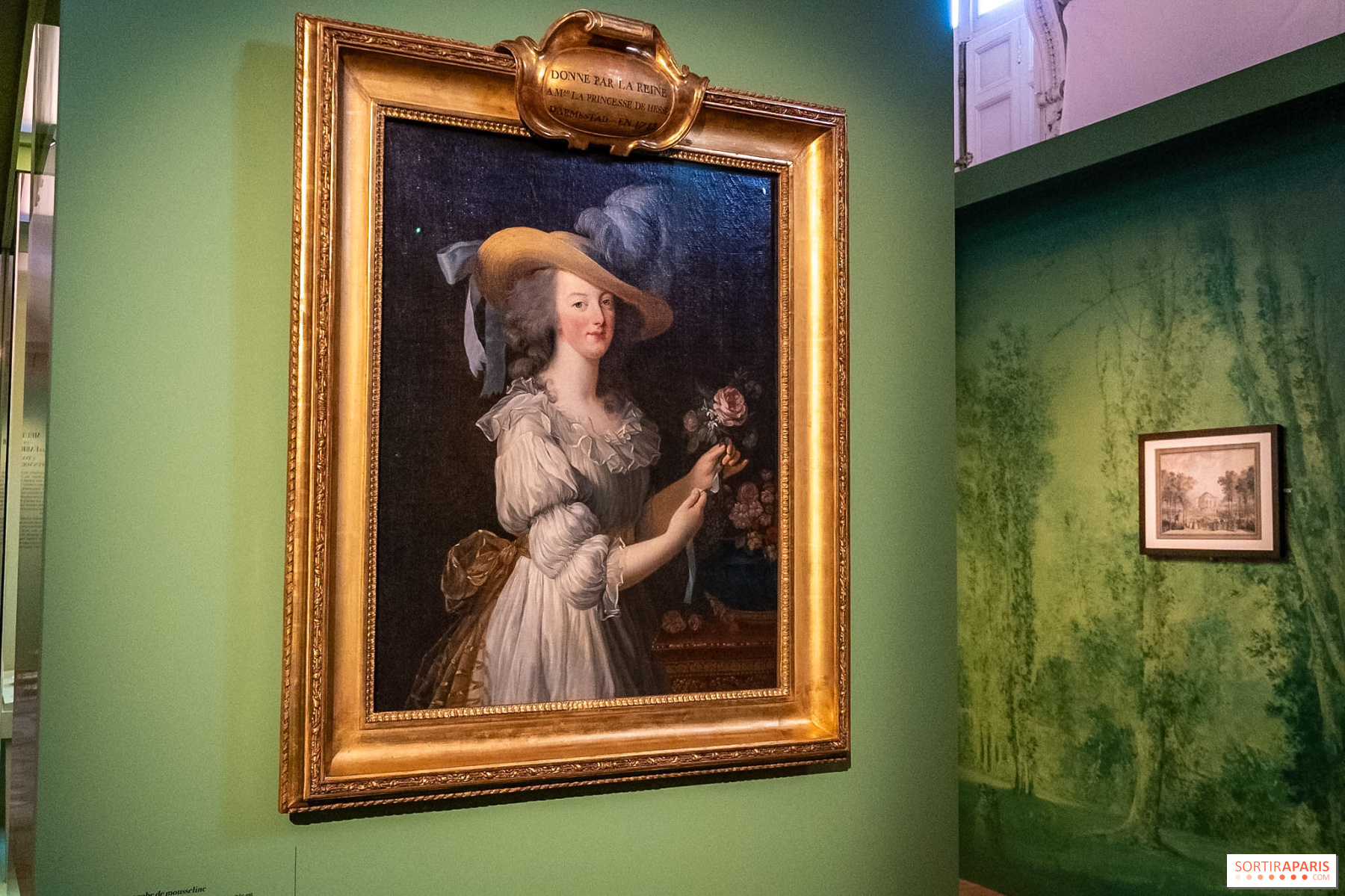
Also noteworthy: an exceptional portrait of Marie-Antoinette in a muslin gown, loaned by Wolfsgarten Castle in Germany and painted by Élisabeth Vigée Le Brun, which had caused a scandal at the 1783 Salon.
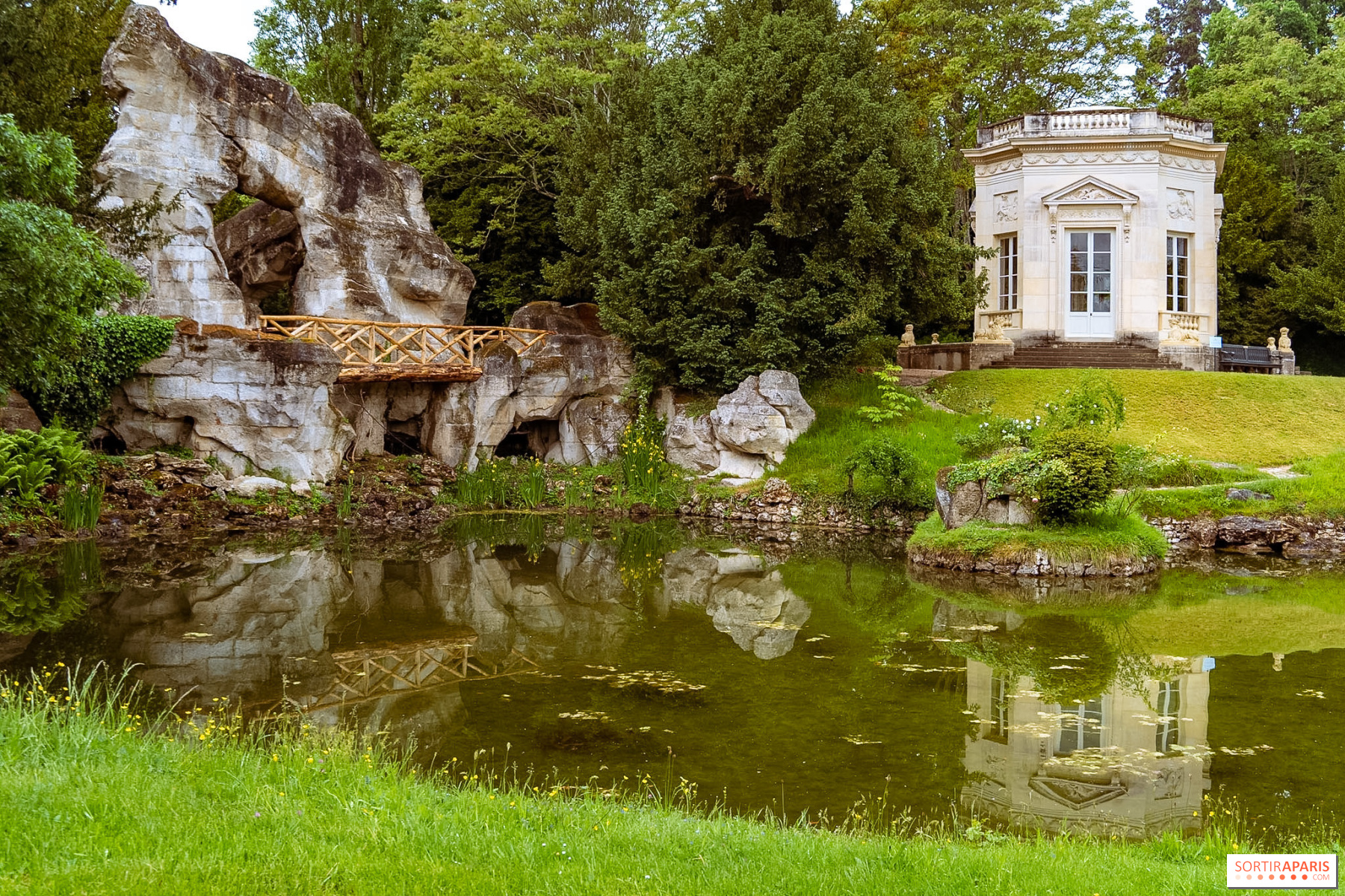
The exhibition does not stop at the Grand Trianon’s rooms. It naturally spills over into the domain of Trianon, where visitors can follow in Marie-Antoinette’s footsteps through the English garden: the Temple of Love, the Belvedere, the Grotto, and the Queen’s Hamlet. These iconic sites have, incidentally, undergone restoration work for the occasion, funded by patrons (Parfums Christian Dior, Fondation du patrimoine, Société des Amis de Versailles): the jasmine pergola has been replanted, the footbridge at the Belvedère Rock has been reinforced, and the staircase of Marlborough Tower is undergoing restoration until the end of summer.
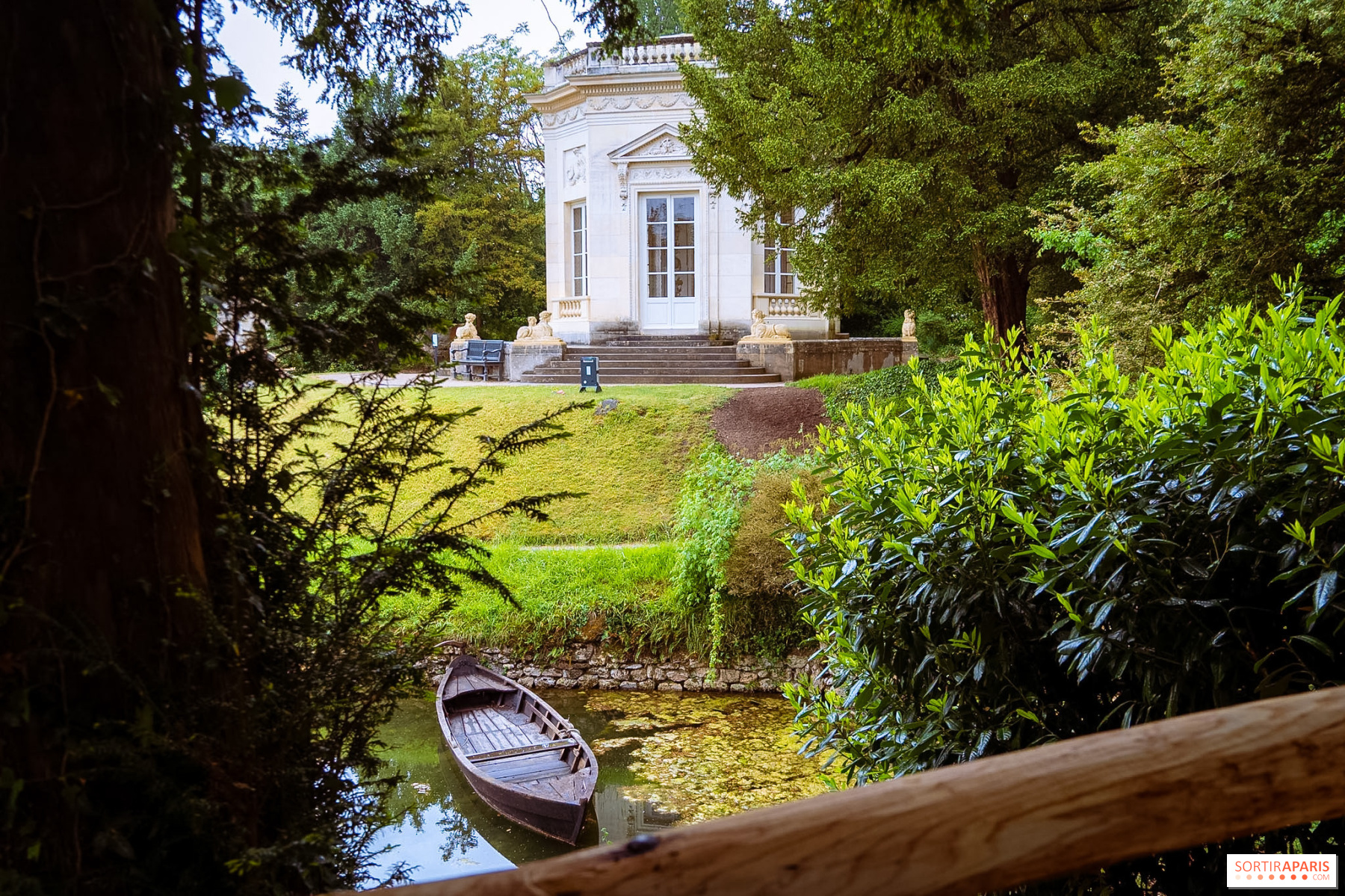
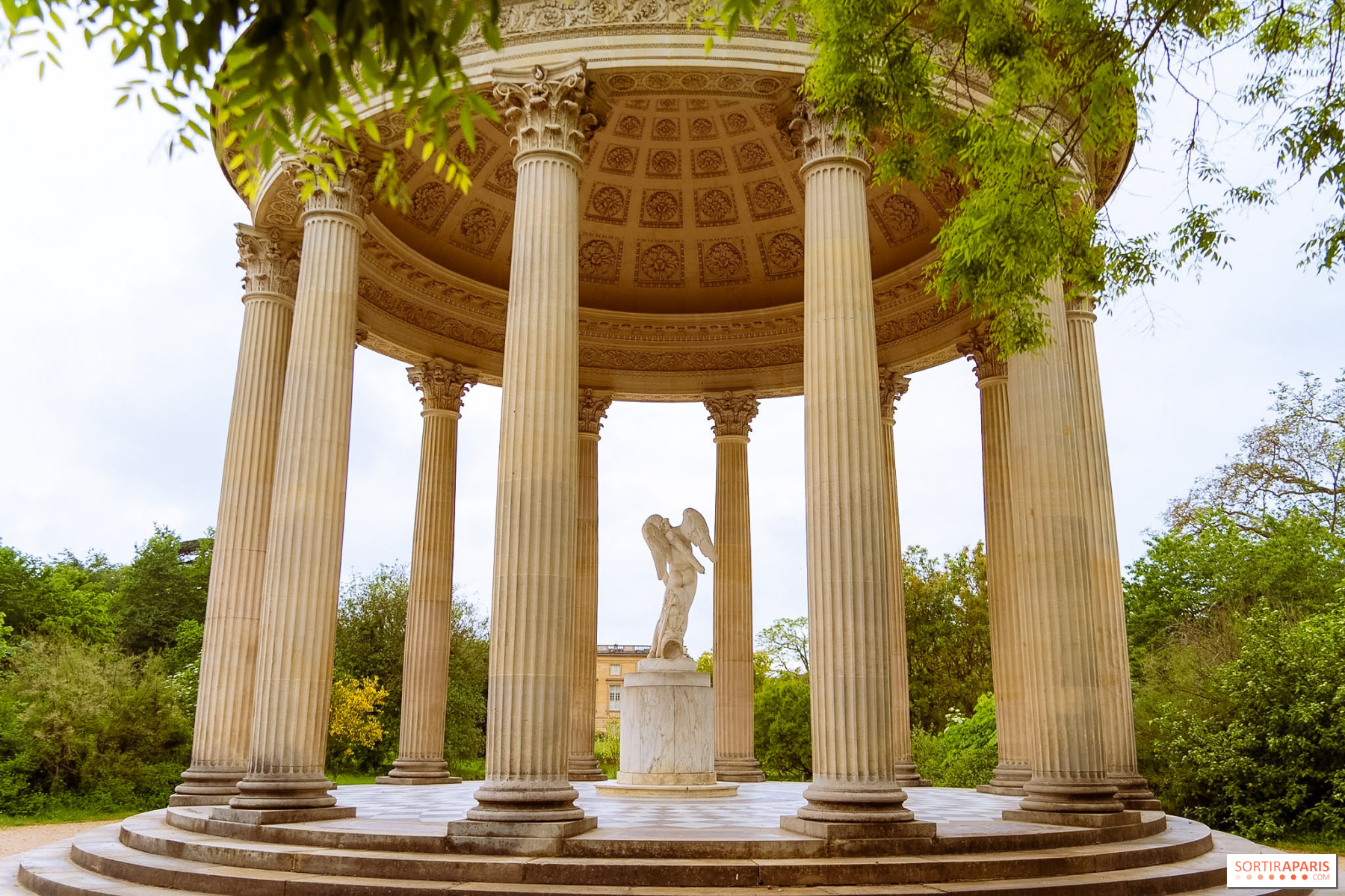
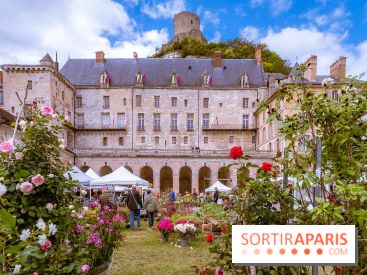
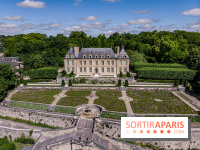
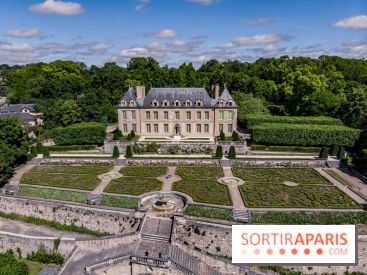
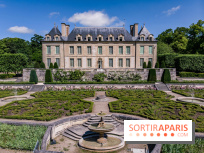
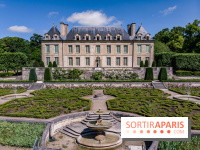
In response to the exhibition, the parterres of the Grand Trianon have been completely redesigned for the summer of 2026. The upper parterre drops its symmetrical layout in favor of dense, undulating vegetation: perennials (yarrow, echinacea), grasses and annuals (cosmos, viper’s bugloss, scabious, amaranth) create a tableau inspired by the English naturalistic gardens. This type of composition, which gives the impression of wild, spontaneous nature, is in fact carefully controlled, with each layer designed to ensure continuous bloom throughout the season. The lower parterre, meanwhile, presents as a flowering meadow with a nearly rugged, nature-like appearance.
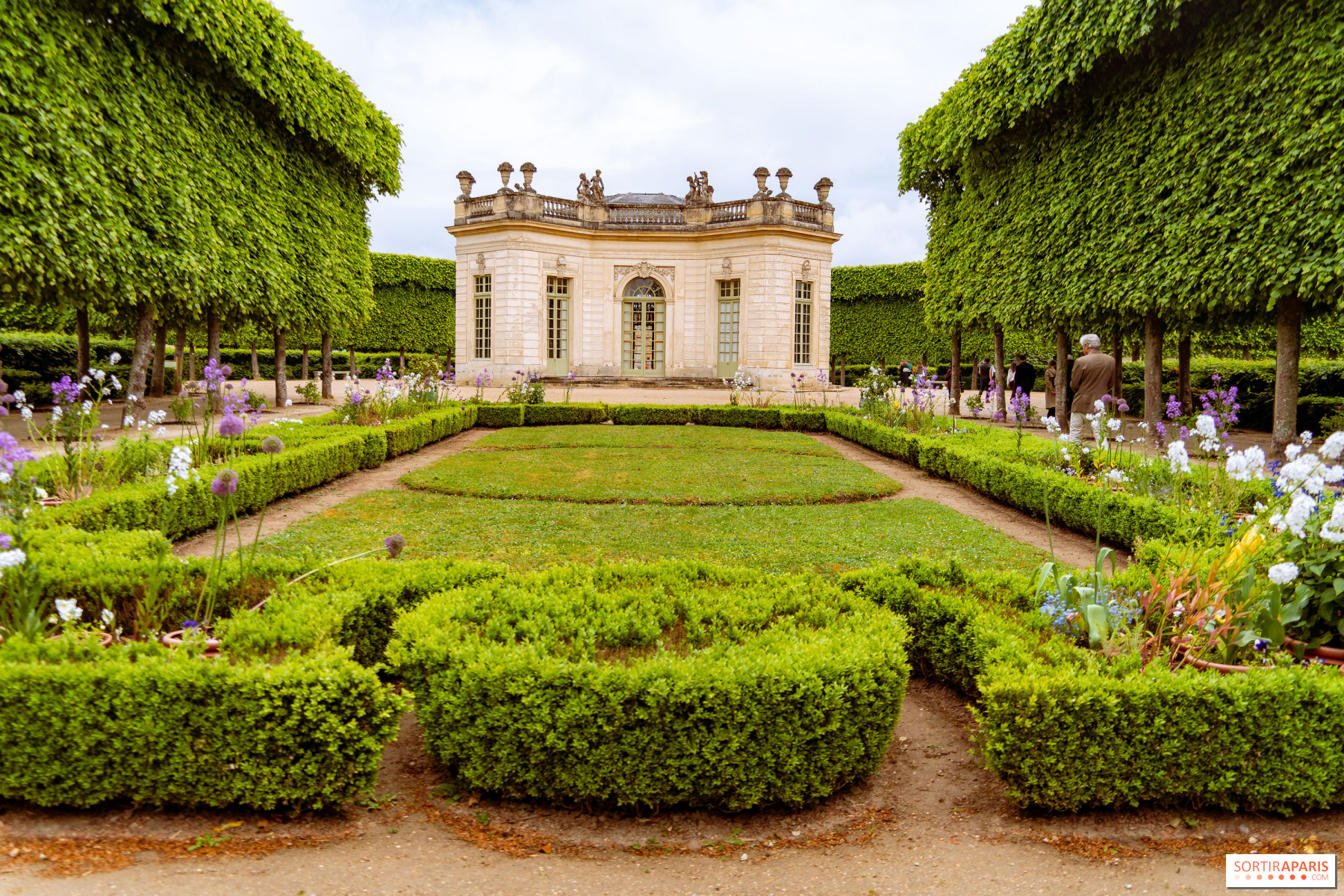
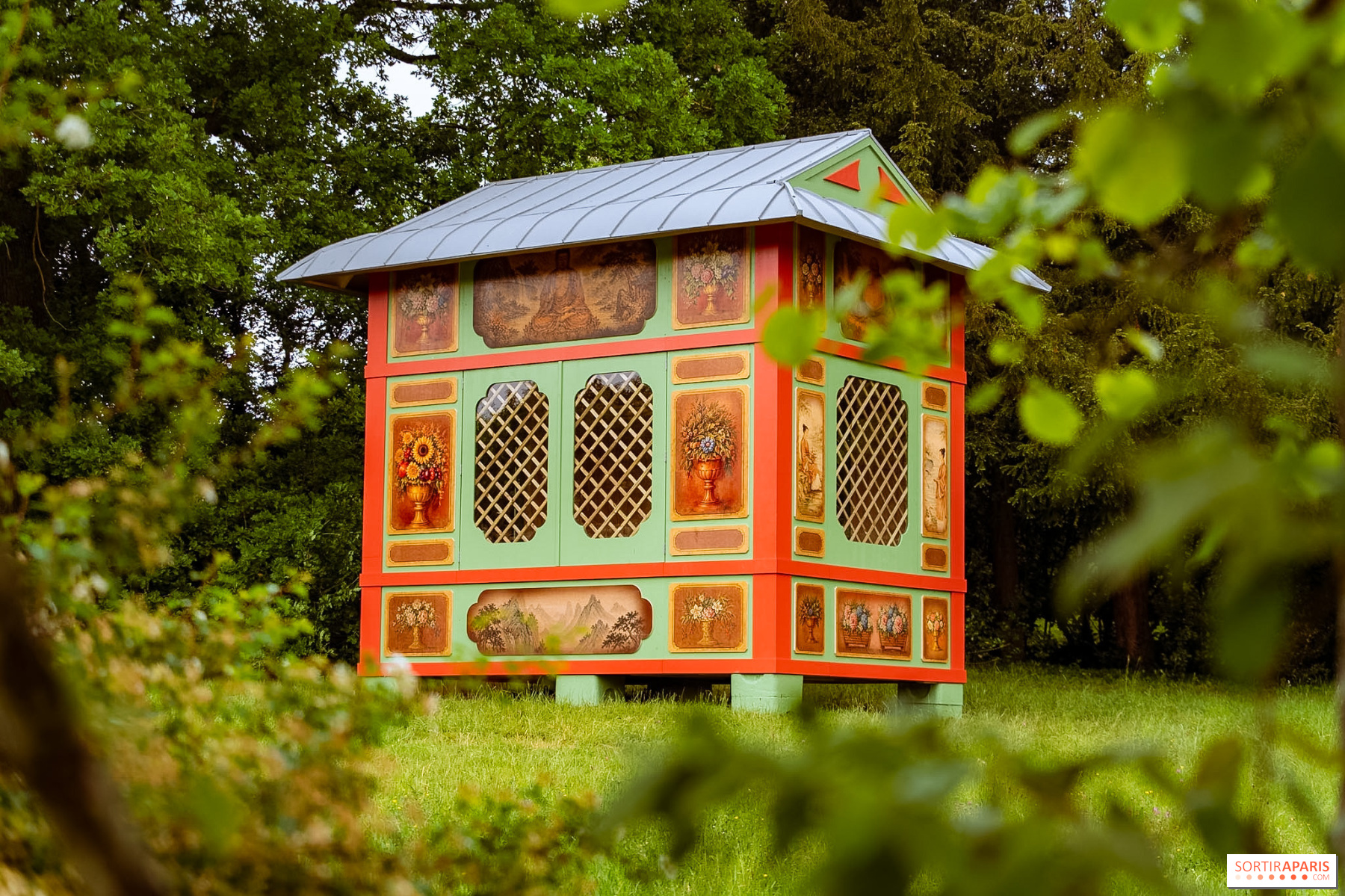
All the plants were cultivated in the greenhouses of the Trianon estate. Exotic species (pineapples, coffee plants, mimosas) recall the 18th-century fascination with plants from distant lands. Orange crates decorated in a Chinese-inspired style evoke Marie Antoinette’s taste for the exotic. Part of the plant collection comes from the Jardin des Plantes de Paris, as a tribute to the botanical exchanges that already linked the two institutions in the 18th century. This Parterre des Lumières is set to open in June 2026.
A perfect day out for art-history lovers, garden enthusiasts, and connoisseurs of the French art de vivre, this exhibition also works well for families and Sunday strollers. It pairs ideally with a stroll through the parks and gardens of the Yvelines. Versailles is easily accessible from Paris via the RER C (Versailles-Château-Rive-Gauche stop). Tickets and practical information are on the official Versailles website.
Also worth reading:
Exhibitions in the châteaux of Paris and the Île-de-France region: not-to-be-missed events
Châteaux can also offer some very fine exhibitions: that's what this guide shows, inviting you to discover the most beautiful cultural venues in the Île-de-France region at the moment. [Read more]
The Château de Fontainebleau is hosting the exhibition "Marie Antoinette and Louis XVI at Fontainebleau: Splendor and Sweetness of Life" from October 11, 2026, to January 25, 2027. This is a wonderful opportunity for history buffs to immerse themselves in the life of the royal couple. [Read more]
Dates and Opening Time
From May 5, 2026 to September 27, 2026
Location
Palace of Versailles
Château de Versailles
78000 Versailles
Official website
www.chateauversailles.fr


























 Exhibitions in the châteaux of Paris and the Île-de-France region: not-to-be-missed events


 An exhibition dedicated to Marie Antoinette and Louis XVI at the Château de Fontainebleau