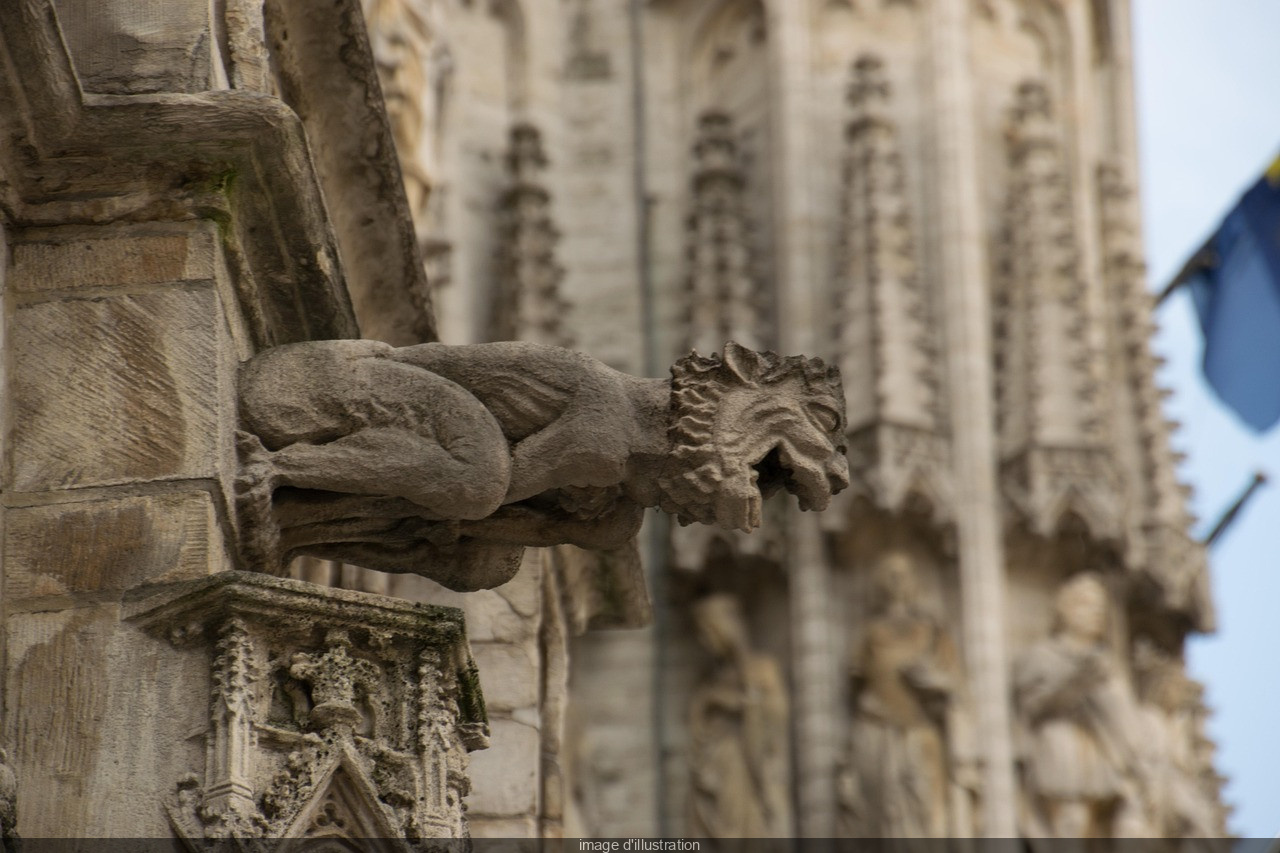
The famous gargoyles of Notre-Dame, and more generally of Gothic cathedrals, are not just mystical creatures carved in stone to spice up tourist photos. Their role is much more down-to-earth: gutters! These grotesque statues, often depicted in the form of animals or fantastical creatures, are pipes designed to evacuate rainwater.
Gargoyles reached their apogee in the 12th century, with the rise of Gothic architecture. They reflect the technical ingenuity of the time: by keeping water away from walls, they protect structures, particularly mortar joints, which are sensitive to humidity. Their function is to divert water away from the building's foundations and walls. Rainwater is directed into their mouths, then flows out of the cathedral through invisible conduits.
Gargoyle comes from the Latin gargula, meaning throat... and by extension the sound of water running down it. So it's no coincidence that the verb gargouiller, which evokes that famous gurgling of the stomach or pipes, shares the same root!
Often sculpted from limestone, a common material in the Paris region, gargoyles are easily eroded by acid rain. That's why many of them have been replaced or restored over the centuries.
Beyond their practical function, gargoyles also had a symbolic dimension. They sometimes represented evil or demonic forces, expelled from within the church, thus embodying the victory of the sacred over the profane. They were also a way for the church to "speak" to the largely illiterate populace through powerful images.
Not to be confused with the chimeras, the sculptures that adorn the roofs and cornices, but whose role is not to divert water. They're there purely for decoration, to add that mysterious, Gothic touch to the cathedral's silhouette.
Next time you come across gargoyles, remember: they're not there to frighten, but to keep Notre-Dame and other cathedrals dry!
This page may contain AI-assisted elements, more information here.