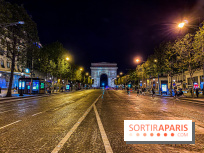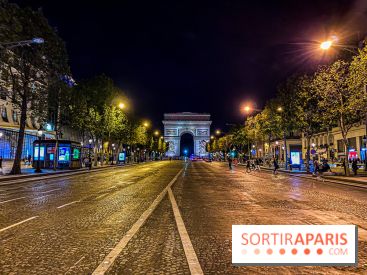
The history of the Champs-Élysées as a place of celebration goes back a long way. While this emblematic avenue, designed by André Le Nôtre in the XVIIᵉ century, was originally a royal promenade, it very quickly took on a more patriotic turn. With the French Revolution, then the July 14 military parade from 1880 onwards, the avenue became the backdrop for large gatherings. But it was above all in August 1944, during the Liberation of Paris, that the Champs-Élysées became a living symbol of popular joy.
On August 26, 1944, General de Gaulle walked down the avenue, cheered by hundreds of thousands of Parisians. The city had just been liberated from German occupation. On this day, the Champs-Élysées are covered with tricolored flags, songs and hugs. It was a turning point: from then on, the avenue was no longer just a backdrop for parades, but the theater of collective emotions.
Until the 1990s, the Champs was reserved for institutional celebrations. But in 1998, the French team's victory in the World Cup changed all that. Over a million people spontaneously gathered on the avenue. This spontaneous, massive, popular jubilation set a precedent. Since then, every victory by Les Bleus - notably in 2018 - or Paris-Saint-Germain has seen the avenue transformed into a giant open-air stadium.
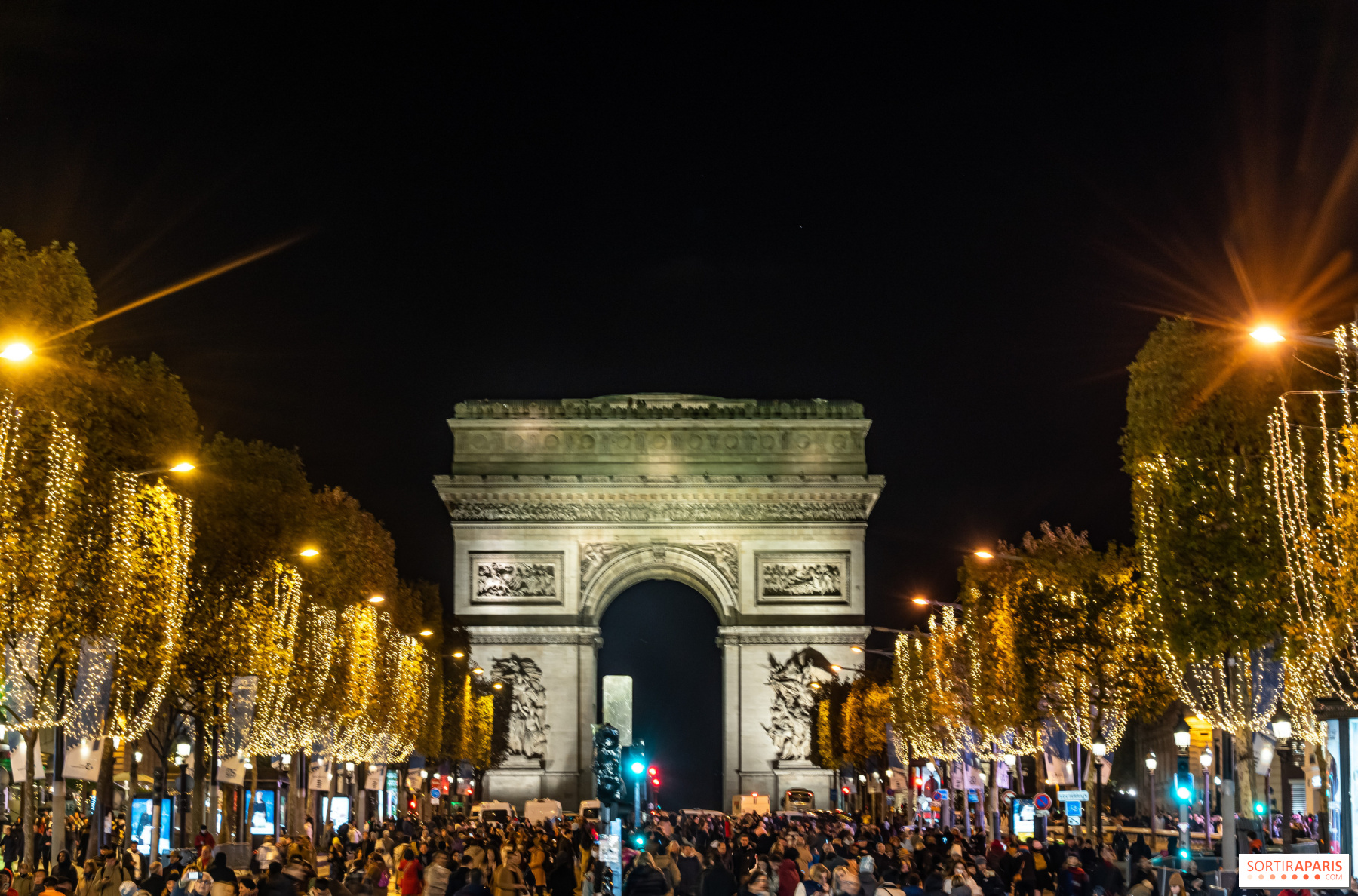
In the 2000s, the Paris city hall began to shape the New Year’s Eve festivities. Lights were projected onto the Arc de Triomphe, streets were closed to traffic, and the avenue was transformed into a pedestrian zone. The Champs‑Élysées then became the New Year’s celebration hub, much like Times Square in New York or Trafalgar Square in London. It’s now regarded as the third cornerstone of this lively tradition. Therefore, the New Year’s Eve spectacle in Paris takes place on the Champs-Elysées, not near the Eiffel Tower.
New Year's Eve in Paris: Is There a Firework Display from the Eiffel Tower on December 31st?
Every year, this common misconception persists. Many bring their hopes to the festivities of New Year’s Eve, expecting a grand fireworks show from the Eiffel Tower. Yet, on the night of December 31st, it’s not the iconic monument that takes center stage — but another emblematic Parisian site. [Read more]
This choice is no accident. The Champs-Élysées, with their width, majestic outlook, accessibility and powerful symbolism, are the very embodiment of republican grandeur. It's also an open space, easily secured and recognizable the world over. In short, the ideal backdrop for writing joy into the public space.
Even today, whether for sporting victories, New Year's Eve celebrations or spontaneous demonstrations of joy (or even protest), the avenue is the capital's emotional barometer. Its ability to unite in enthusiasm, channel crowds and crystallize the present moment makes it a unique stage in France. From royal promenade to scene of popular jubilation, the Champs-Élysées has evolved with history to become the beating heart of great collective joys. A living tradition, at the crossroads of heritage and emotion.
This page may contain AI-assisted elements, more information here.







 New Year's Eve in Paris: Is There a Firework Display from the Eiffel Tower on December 31st?