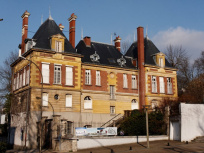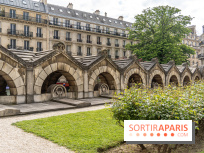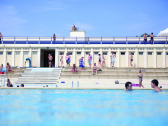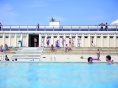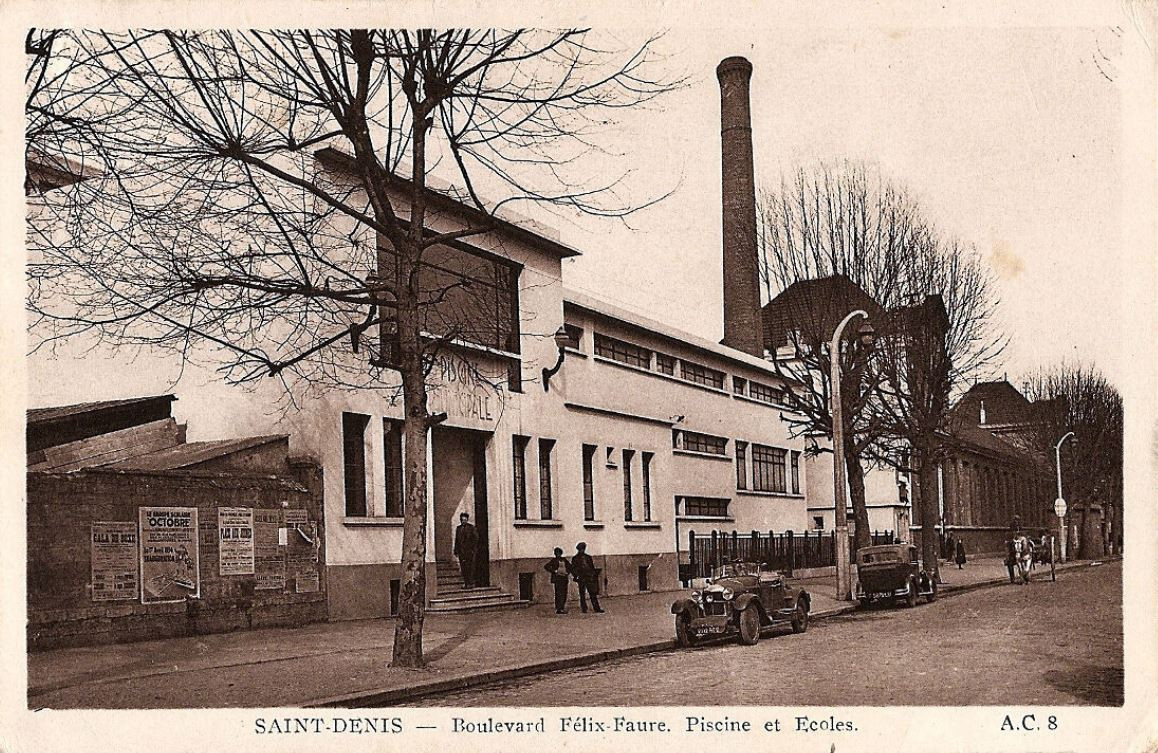
And what if one of the future cultural venues set to enliven the Paris region’s inner suburbs is hidden inside an old Art Deco swimming pool? In Saint-Denis, the former Félix-Faure Municipal Pool, located on Félix-Faure Boulevard, hasn’t hosted swimmers in years. Yet behind its lull-ed walls, the building still carries the elegance of the 1930s, the memories of generations of Dionysiens, and real potential to make waves… this time, on the cultural front.
Opened in 1933, the swimming pool was the first such facility built in the northeastern suburbs of Paris. The project drew inspiration in particular from the renowned Butte-aux-Cailles pool in Paris, with a 33-meter basin, changing rooms, showers and a layout designed to manage the flow of bathers.
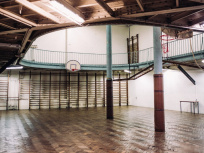
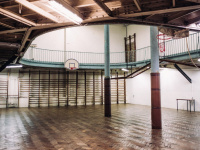
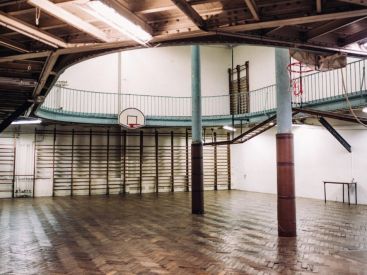
Its Art Deco style reveals itself in several details: geometric lines, the use of reinforced concrete, a preference for monumental volumes, and decorative elements that are restrained yet sharply drawn. The building is made up of two blocks: one housing the pool, imagined as a cathedral-like space with a vaulted concrete arch roof; the other devoted to showers and changing rooms. An elegant balcony, wrought-iron railings in Art Deco fashion, and old basement machinery complete the ensemble.
Since its abandonment in 1988, followed by its definitive closure in 1996, the Félix-Faure swimming pool could have remained a mere memory. But the building was retained as part of the call for projects Inventons la Métropole du Grand Paris, with the aim of turning it into a space dedicated to exchange, as well as artistic and cultural creation. The winning project, Grand Bassin, is set to preserve and rehabilitate the pool and the exterior façade, while transforming the site into a cultural venue.
The project aims to reopen to the public and envisions a hybrid space spanning nearly 3,000 square meters, simultaneously cultural, tourist and inclusive. The former swimming pool would host a variety of uses, in a spirit of encounter and communal life. Workshops, exhibitions, concerts, performances and shows should shape the rhythm of this new multidisciplinary space. A residency, part hotel, guesthouse and youth hostel, is also proposed in the plan. The site’s revival has also received support from the Mission Patrimoine, with a grant of 260,000 euros through the Heritage Lottery. All that remains is to follow the progress, closely.
This page may contain AI-assisted elements, more information here.