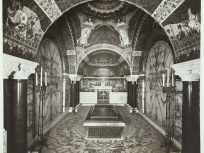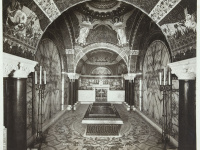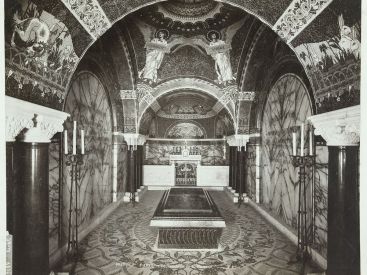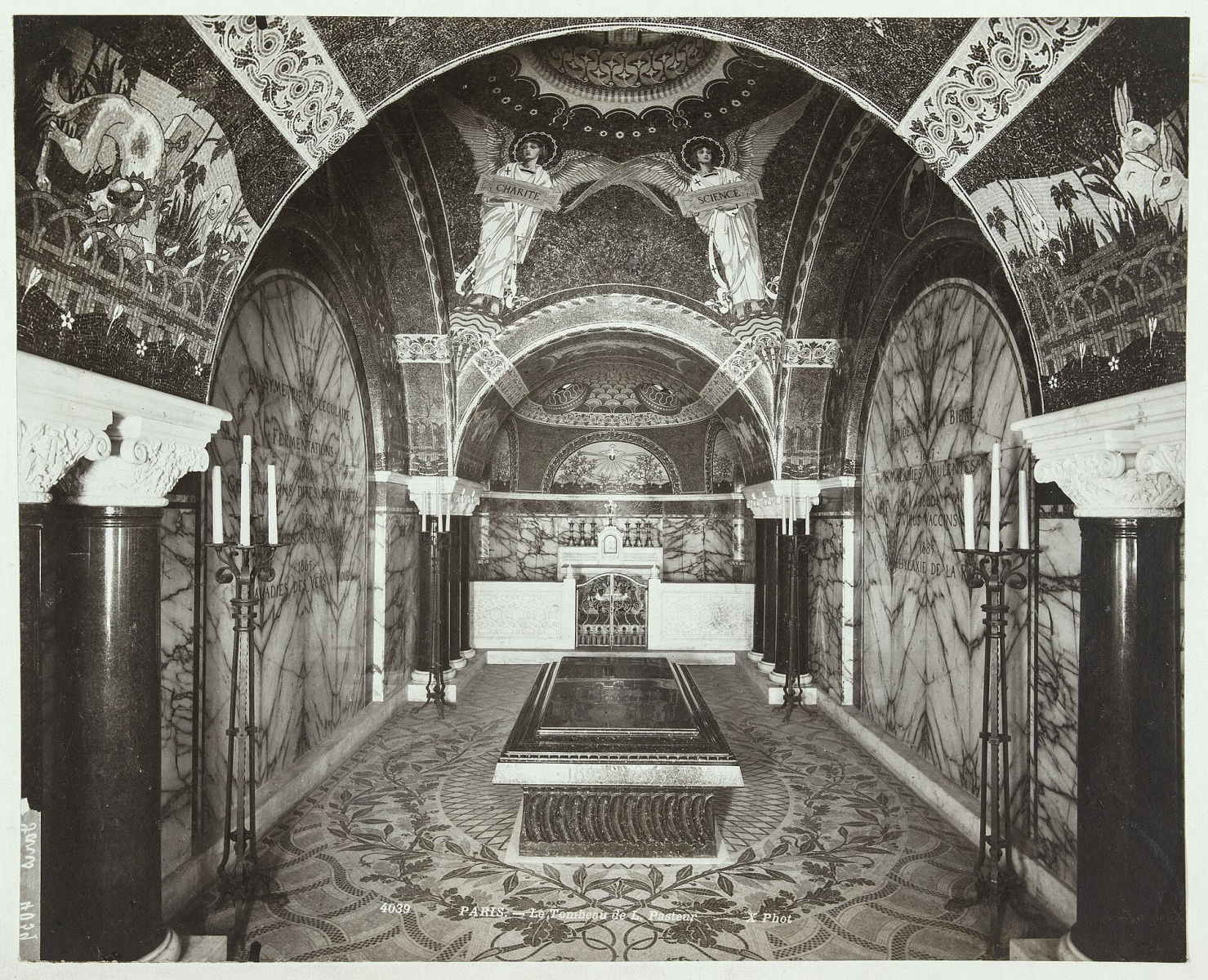
Few Parisians know it, but one of the capital's most beautiful funerary monuments lies far from the usual tourist routes. Behind the walls of the Pasteur Institute lies a monumental crypt where rests the man whom many regard as the father of modern medicine.
When Louis Pasteur died on September 28, 1895, France lost one of its greatest scientists. Thanks to his work on microbes, vaccination, and pasteurization, he profoundly transformed the understanding of disease and saved millions of lives around the world. Given the scale of his legacy, a simple tomb seemed inadequate. His family and the leaders of the Institut Pasteur decided to give him a resting place worthy of his contributions. A crypt was arranged beneath the institute he had helped to establish a few years earlier.
Even today, Louis Pasteur rests there beside his wife, Marie Pasteur, herself a scientist who stood by him in his research and in managing his scientific correspondence. Entrusted to architect Charles Girault, who would later design the Petit Palais, the crypt embraces the Neo-Byzantine style, particularly favored in the late 19th century. This architectural current is defined by grand vaults, sumptuous color-rich decorations, polychrome marbles, and mosaics inspired by the Byzantine Empire.
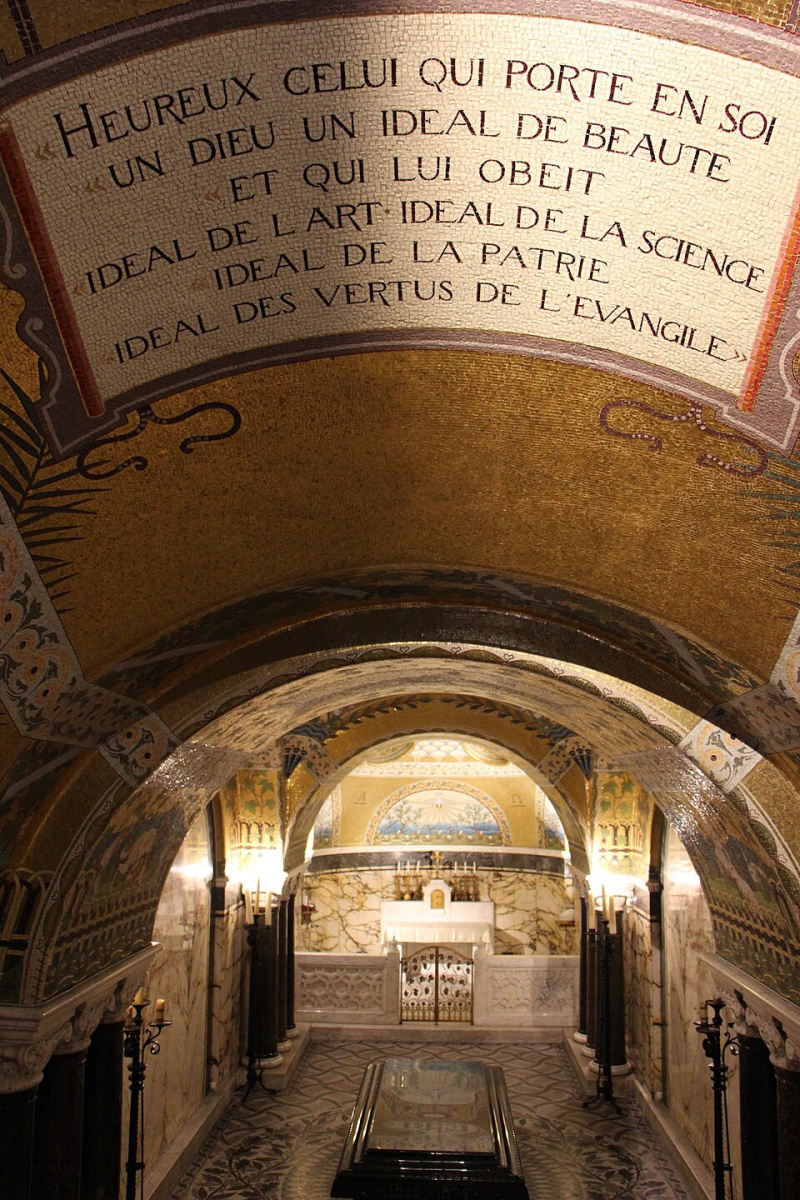
The walls and ceilings are lined with a dazzling array of gold and colored tiles that tell the story of the scientist’s greatest discoveries. Every detail has a precise meaning. The crypt’s decoration not only celebrates the man, but also his scientific work.
Across the mosaics, you can see several of the battles waged by Pasteur against the diseases that devastated populations and livestock at the time. Notably, scenes evoke his work on rabies, pebrine in silkworms, and other infectious illnesses. This staging is particularly original: rather than glorifying military campaigns or political feats—as was often the case in 19th-century monuments—the crypt marks science and medical progress.
Despite its exceptional beauty, Louis Pasteur's crypt remains largely unknown to the general public. Located inside the Institut Pasteur, it has never benefited from the fame of Paris's great monuments. Its upcoming reopening, as part of the restoration of the Pasteur Museum and the institute's historic building, could, however, give it renewed visibility. See you in late 2028!
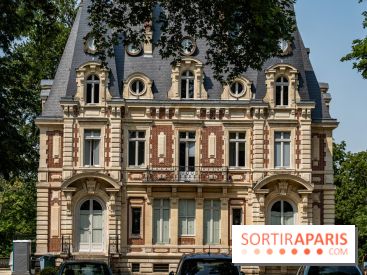
In Paris, the Marie and Louis Pasteur apartment-museum is gearing up for its public reopening.
Closed for several years for major restoration work, the Marie and Louis Pasteur apartment-museum, at the heart of the Pasteur Institute in Paris, is gearing up for its public reopening. Here, a slice of scientific heritage nestled in a 19th-century setting awaits visitors. [Read more]
This page may contain AI-assisted elements, more information here.
Location
Pasteur Institute
25, rue du Dr Roux
75015 Paris 15
Official website
www.pasteur.fr




 In Paris, the Marie and Louis Pasteur apartment-museum is gearing up for its public reopening.