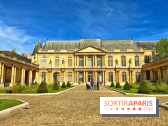
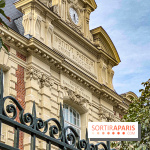
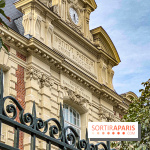
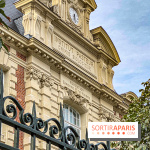
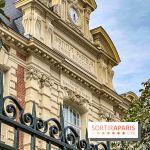
On November 14, 1888, a large crowd gathers in a Vaugirard district still edged by vacant lots and market gardens. Behind the fences adorned with tricolor flags, two substantial brick-and-stone buildings have just been erected on an 11,000-square-meter plot on Dutot Street, today known as Rue du Docteur-Roux. On the pediment, an inscription recalls the site’s very particular origin: "Public subscription 1888".
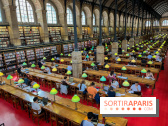
Nearly 600 guests crowd into the library transformed into a reception hall. Ministers, scientists, doctors, diplomats and collaborators of Louis Pasteur await the arrival of President Sadi Carnot. The Republican Guard plays La Marseillaise as Pasteur, a grand cordon of the Legion of Honour, comes down to greet the head of state. The emotion is such that some of his own pupils, among them Émile Roux and Alexandre Yersin, can’t even get into the room.

L’Institut which opens that day owes its existence to a medical emergency that became a global concern in just a few years: rabies. On July 6, 1885, Louis Pasteur and his team begin treating Joseph Meister, a 9-year-old Alsatian boy who had been severely bitten by a rabid dog. The experimental treatment, administered under the supervision of Dr. Jacques-Joseph Grancher, works, and Meister survives. A few months later, other patients are treated successfully and the news travels far beyond France.
People bitten by animals soon arrive from all over Europe, and sometimes from much farther afield, to receive the treatment developed by the Pasteur team. And the laboratory at the École normale supérieure where the savant works quickly becomes too small! On March 1, 1886, Louis Pasteur announced before the Académie des sciences that his method had already been applied to 350 bitten individuals and called for the creation of a facility dedicated specifically to rabies treatment. A French and international fundraising drive was opened a few days later.

Enthusiasm exceeded all expectations! Ordinary people rubbed shoulders with among the donors the widow of Bon Marché founder Marguerite Boucicaut, the Emperor of Brazil Pedro II, Tsar Alexander III, or Baron Alphonse de Rothschild. Joseph Meister himself is among the subscribers, and in January 1888, more than 2.5 million gold francs had been raised!
The Pasteur Institute was officially established by a decree of June 4, 1887, which recognizes it as a public utility establishment. Work began a few days later on the site at Vaugirard. The architect Petit drew up the plans and launched the construction; after his death, Félicien Brébant took over the project.

Louis Pasteur sought to bring together in a single institution care, research on infectious diseases, and teaching of microbiology—the discipline then in its infancy. At opening, the Institut Pasteur housed a unit dedicated to anti-rabies vaccination and five laboratories led by several leading figures of the fledgling Pasteurian school: Jacques-Joseph Grancher for rabies, Émile Duclaux, Émile Roux, Élie Metchnikoff, and Charles Chamberland, covering different branches of microbiology and vaccine development.
Louis Pasteur and his wife also had an apartment in the building. The scientist would work and live there until his death in 1895; and these rooms would later form the Pasteur Museum. At the moment he was asked to speak at the inauguration, Pasteur was too moved and physically frail to read his own speech. He entrusted the reading to his son, Jean-Baptiste. His opening words captured what the edifice stood for: "Here it is built, this great house," before stressing that its creation rested on the generosity of thousands of donors.

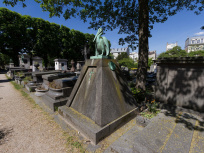
Pasteur notes that the Institute bears his name against his initial wish: the fundraising committee had decided this even before the cornerstone was laid. In front of the building, a bronze statue portrays Jean-Baptiste Jupille, another young boy treated for rabies, wrestling with the dog that had bitten him. The image lends a nearly theatrical quality to the institution's mission: a laboratory science directly aimed at protecting human lives.
As early as 1889, Émile Roux launches a program in "microbie technique", presented as the first real course in microbiology of its kind in the world. Two years later, Albert Calmette establishes in Saigon the first Pasteur Institute outside France, setting in motion an international network that would continue to expand.
To learn more:
In Paris, the Marie and Louis Pasteur apartment-museum is gearing up for its public reopening.
Closed for several years for major restoration work, the Marie and Louis Pasteur apartment-museum, at the heart of the Pasteur Institute in Paris, is gearing up for its public reopening. Here, a slice of scientific heritage nestled in a 19th-century setting awaits visitors. [Read more]
One of the world's most prestigious scientific institutes is stepping into the spotlight for Heritage Days 2026, with a special program planned for September 19 and 20. We’ve got all the details! [Read more]
L'Institut Pasteur opens its doors for a rare occasion on Saturday, October 10, 2026, to mark the new edition of the Fête de la Science. Take advantage of this free day to explore the laboratories and biomedical research in Paris's 15th arrondissement. [Read more]
This page may contain AI-assisted elements, more information here.
Dates and Opening Time
On November 14, 2026
Location
Pasteur Institute
28, rue du Dr Roux
75015 Paris 15
Route planner
Accessibility info
Official website
www.pasteur.fr

















 In Paris, the Marie and Louis Pasteur apartment-museum is gearing up for its public reopening.