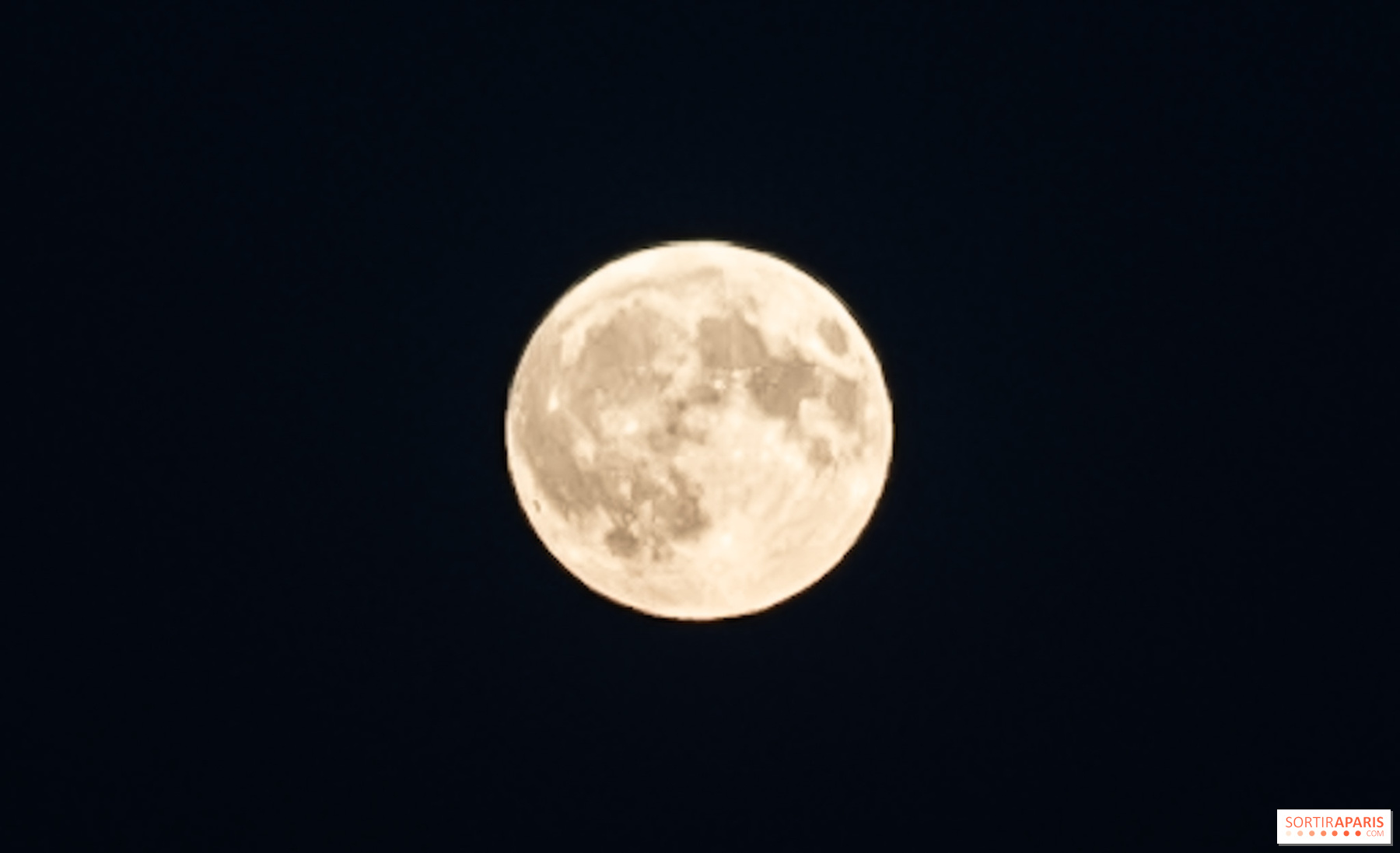
On Sunday, February 1, 2026, we’ll witness the Snow Moon, an astronomical event that signals the heart of February in the Northern Hemisphere. Following January’s Wolf Moon, this full moon carries a similarly evocative name, rooted in North American and European traditions. The spectacle is set for late at night, precisely at 11:09 p.m., when we’ll get a chance to admire our natural satellite in full glory. But what’s the story behind the poetic name Snow Moon? We reveal the secrets behind this beautiful moonwatching event you won’t want to miss, along with our top tips to make the most of it.
The name “Lune des Neiges” originates from North American and European traditions, where February has long been linked to cold temperatures, storms, and scarce resources. This February full moon earns its name from the heavy snowfall and winter conditions typical of that time of year. Some Native American tribes called it the Hunger Moon or Storm Moon, reflecting how challenging it was to hunt amid severe weather. This evocative name highlights the harshness of winter and the period of scarcity faced by indigenous peoples, as documented by the Old Farmer’s Almanac.
Indigenous peoples also linked this Moon to the animal world, referring to it as the Bear Moon—a nod to the time when bear cubs are born—or the . Other cultures called this period the Bone Moon, reflecting a keen observation of nature and seasonal cycles. Astronomically, this Moon isn't necessarily a Supermoon, but its brilliance is heightened by the clarity of winter air and the long nights, making it especially striking and breathtaking in a clear sky, as NASA explains on its Moon-focused website.
For mainland France, the peak of the Snow Moon is expected on Sunday, February 1, 2026, at 11:09 p.m. Paris time, which corresponds to 10:09 p.m. UTC. The moon will already be high in the sky early in the evening, offering ideal viewing conditions as night falls, with its fullest phase reaching its closest point around 10-11 p.m.
The prime viewing hours for observing are generally between 8 p.m. and 1 a.m., though this can vary depending on your location and local weather conditions. Early in the evening, the Moon will appear larger to the naked eye when it hovers near the horizon due to an optical illusion known as the moon illusion. This captivating phenomenon creates the impression that our natural satellite is unusually massive, even though it remains the same size throughout the night. Around 11 p.m., it will reach a high point in the sky, providing a more even illumination that's easier to photograph with a tripod.
Tonight's Snow Moon will be visible across mainland France, weather permitting. However, some regions offer darker skies, providing a superior viewing experience. Areas recognized for their clear skies, such as star reserve sites or remote natural parks away from city lights, will offer the best conditions to enjoy this celestial spectacle.
Among the most favorable regions, the Black Triangle of Quercy in Lot stands out, renowned as one of mainland France's least light-polluted areas. The International Starry Sky Reserve of Pic du Midi in the Hautes-Pyrénées also boasts exceptionally clear night skies. The Cévennes and several mid-mountain regions such as the Massif Central, the Alps, and the Pyrenees are also highly recommended as top spots for stargazing and observing lunar phenomena. This is supported by the National Association for the Protection of the Night Sky and the Nocturnal Environment.
If you're in the city, the Snow Moon will still be visible to the naked eye, but it's best to head to a park, a higher vantage point, or just outside the city limits to truly enjoy the spectacle. In Île-de-France, spots like the Montmartre hill in Paris or the heights of Meudon in the Hauts-de-Seine offer excellent viewing points, away from the most intense light pollution.
The Snow Moon can be seen with the naked eye, without any special equipment, provided you have a clear sky and unobstructed horizon in the direction of the . If you have a pair of binoculars, you'll be able to glimpse the main lunar craters and seas, making the observation even more captivating.
If you're planning to take photos, it's recommended to bring a tripod and a telephoto lens (200 mm or more) with moderate sensitivity to capture a clear, detailed Moon. The best time to photograph it is during its rise and set, when lunar illusions are at their peak, and our natural satellite appears particularly impressive on the horizon. This way, you'll be able to capture stunning images with landscape elements in the foreground. The Institute of Celestial Mechanics and Ephemerides Calculation provides precise data on the Moon's rise and set times based on your location.
The weather forecasts from Météo France for February 1st remain a key point to watch in the days leading up to the event. In short, if you're looking for a good spot to witness this celestial phenomenon, head to a clear, dark area away from the city’s light pollution. The Snow Moon promises to offer a truly magical observing experience for both astronomy enthusiasts and curious onlookers alike. For more insights into lunar cycles and astronomical phenomena, you can visit either NASA’s website or that of the French Astronomical Society, which regularly shares tips to make the most of celestial events. The Paris Observatory also provides numerous educational resources to better understand our natural satellite and its phases.