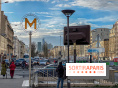
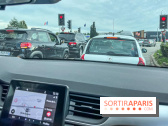
You may already know that the Porte de Montreuil is one of those entrances to Paris where you feel more stuck in a traffic jam than entering a genuine neighborhood. Located on the border between Montreuil and Bagnolet in Seine-Saint-Denis, this area of the 20th arrondissement has long been grappling with multiple challenges: degraded public spaces, pervasive road infrastructure, a fractured urban landscape between the flea market, isolated sports facilities, and the ring road that cuts through everything.
After years of discussions, counter-proposals, and delays, the transformation of the Porte de Montreuil is finally set to become a reality. Construction will begin on April 14, 2026, and by fall 2027, this aging, concrete roundabout will be replaced by a vibrant green oasis, giving the city a much-needed metropolitan green space.
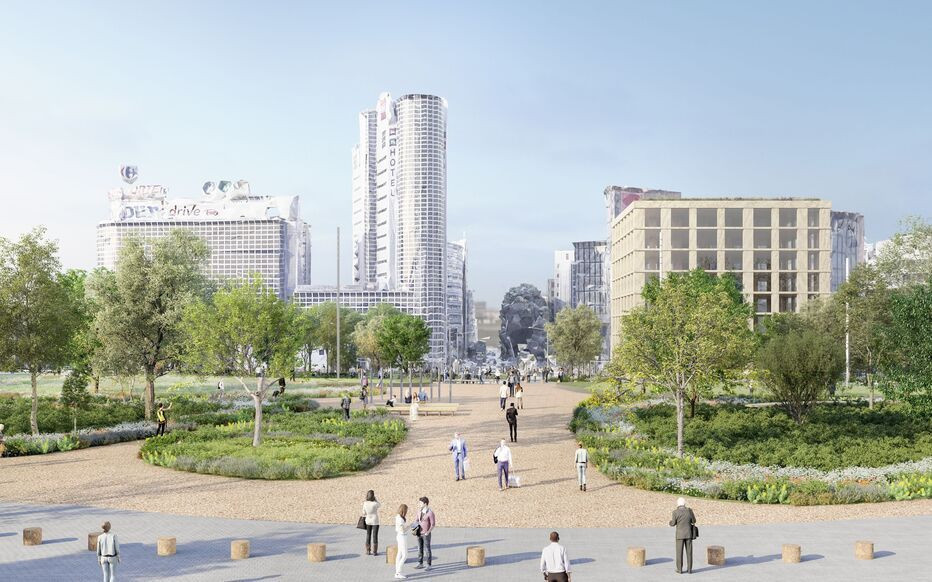
The goal is clear: to turn a major transportation gateway into a large, green metropolitan square. In practical terms, the current roundabout overlooking the périphérique will be replaced by a sprawling, 40,000 square meter rectangular plaza, with its central area dedicated to pedestrian movement. This transformation aims to establish a seamless urban connection between Paris, Montreuil, and Bagnolet, moving away from the fragmented landscape that dominates today.
The greening effort will be substantial: nearly 12,000 square meters of green spaces, including 10,000 square meters of open-ground vegetation, complemented by the planting of more than 400 trees. The revised project even allows for the preservation of additional trees and the translocation of those that might be affected. Gone are the endless stretches of asphalt—replaced by tree-lined pathways, street furniture, and open areas for respite. To improve noise levels, a soundproofing structure will stand where a pedestrian bridge once spanned the northern ring road. This is a step towards calming one of Paris's eastern districts, which has long suffered from noise and pollution issues.
The project goes far beyond simply planting trees. All around the square, along Frachon and Gaumont Avenues, an innovative array of activities will take shape: shops and services, a hotel residence, offices, restaurants, a food market, and even a health center. Part of these ventures, which will create sustainable employment, will originate from the Social and Solidarity Economy.
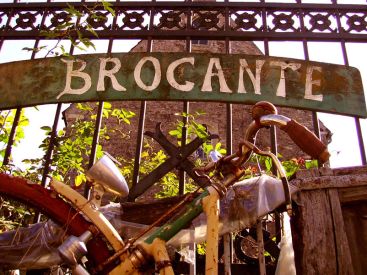
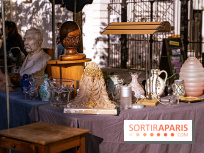
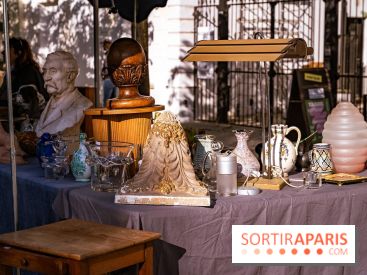
The Flea Market, a historic and iconic feature of the neighborhood, will not disappear. Instead, it will be transformed into an open-air space, renovated with greenery and modern amenities. As for the Recycling Center, operated by Emmaüs, which has been a longstanding presence on the site, it will be preserved in a new, higher-quality space. These decisions reflect a desire to maintain the neighborhood’s communal spirit while giving it a fresh, modern touch. The Port of Montreuil will evolve into a true hub of life and social interaction, a welcoming spot where families can enjoy leisurely walks or bike rides.
Pedestrian and cycling-friendly options are at the heart of the project. A two-way bike lane will encircle the square, integrated with existing pathways. Pedestrian walkways and new traffic lights have already been installed on Avenue de la Porte-de-Montreuil and Rue de Paris to ease movement while awaiting a full overhaul. Car traffic will be restructured to give more priority to active transportation. The goal is clear: to rebalance space among various modes of travel and develop a neighborhood where getting around doesn't mean relying solely on cars.
To combat climate change and minimize disturbances around the ring road, the project adopts an ambitious environmental strategy. The new buildings will set an example by using bio-based materials such as wood and natural insulation. The development plans also include flexible designs that can easily transform into housing, with green spaces integrated between the buildings and on their rooftops.
The neighborhood will be designed to be resilient against climate change: implementing cooling solutions, creating innovative public spaces, and managing urban heat. A comprehensive
This large-scale urban development project involves an investment of 220 million euros. The construction team's base camp is set to establish itself in early March 2026, with official work beginning on April 14. If everything proceeds as scheduled, the transformation should be completed by fall 2027. Surrounding the square, residential buildings operated by Paris Habitat are also undergoing renovations to enhance residents' comfort and combat energy poverty.
Led by the City of Paris in collaboration with neighboring municipalities and the Greater Paris Metropolis, this initiative is part of the Grand Urban Renewal Project (GPRU) and the New National Urban Renewal Program. To follow the progress of the work and learn more about the project details, visit the 20th arrondissement town hall website. The Porte de Montreuil is about to turn a new page in its history, aiming to provide residents with a calmer, greener living environment.