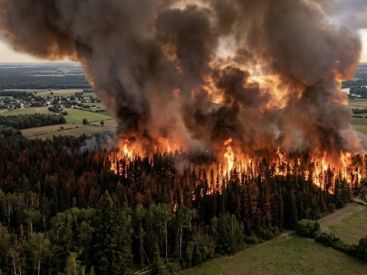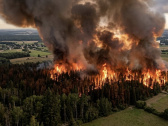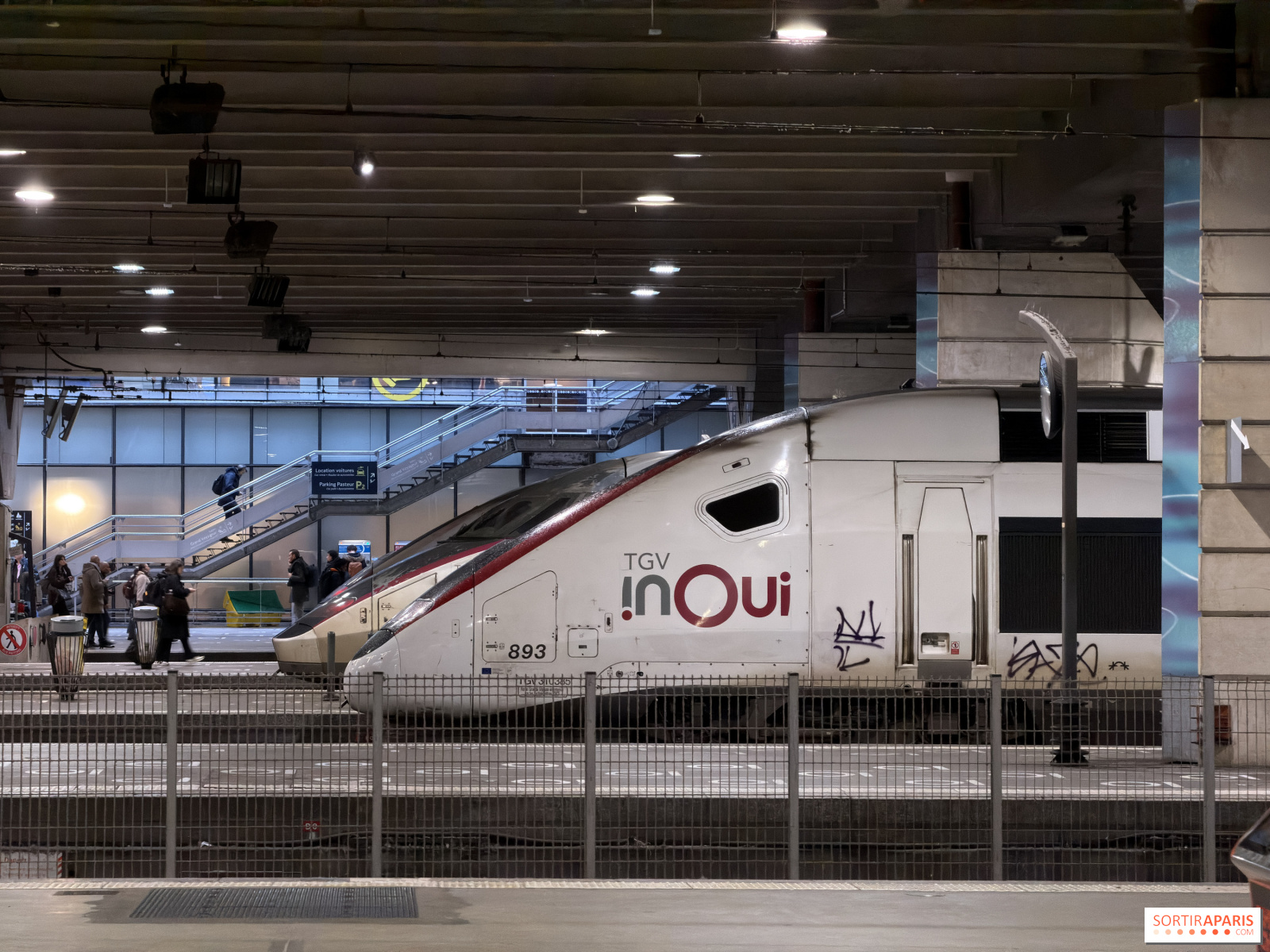
Second day of rail woes. A fire broke out near the tracks of the South-East high-speed line, near Sens in the Yonne (89), forcing the suspension of services between Paris and Tonnerre in both directions. Trains are being diverted between Paris and Vergigny, and SNCF Voyageurs warns of delays of up to 3 hours and 40 minutes. In Paris, the gare de Lyon takes another hit, with significant delays posted for both departures and arrivals.
SNCF Réseau reports a small fire in a grassy area alongside the track. It may not look dramatic on paper, but just a few meters of burning vegetation near the overhead lines can bring an entire line to a halt. Firefighters are on the scene.
On a high-speed line, a service cutover is never clean or precise. Trains must divert onto the slower, already congested conventional track. It’s this switch, more than the signal itself, that creates the cascading delays you see piling up on the screens.
Several trains departing from and arriving at Gare de Lyon are already showing significant delays. Trenitalia, which runs high-speed services between Paris, Lyon and Marseille, says some of its trains are about 45 minutes late. The company confirms it will use an alternative route via the conventional line, with longer travel times.
In practice, if you’re headed to Lyon, Marseille, Montpellier or Burgundy in the next few hours, assume the time shown on your ticket is only indicative. It’s wiser to double-check your train before you head to the station, on SNCF Connect, rather than waiting on the scorching forecourt.
This disruption comes on the heels of a nearly identical incident. On Sunday, July 12, 2026, a vegetation fire in Seine-et-Marne (77), near Les Écrennes and Châtelet-en-Brie, had already paralyzed the LGV Sud-Est for much of the afternoon and evening. High-speed trains from Lyon, Marseille, Montpellier, Milan and Switzerland arrived with delays of more than six hours for some, in the midst of the second weekend of peak vacation travel.
The Pégase plan had been activated to avert congestion at Parisian stations as late trains rolled in. By Monday morning, traffic had returned to normal—at least for a few hours.
These two episodes didn’t come out of nowhere. Île-de-France and neighboring departments are in the grip of an intense heatwave, on parched ground where even a spark can spark a fire. At the same time, the Fontainebleau forest is burning across several hundred hectares, the A6 has been shut down, and residents have been evacuated. The areas along railway lines, with their grassy shoulders and overheated ballast, are among the most vulnerable.
That said, travelers should stay vigilant in the coming days on the Paris–Southeast corridor. To track developments in real time, the best option is to check the traffic updates on SNCF Connect and the official SNCF channels, and to keep in mind that the Punctuality Guarantee compensation applies for delays longer than 30 minutes on TGV InOui.