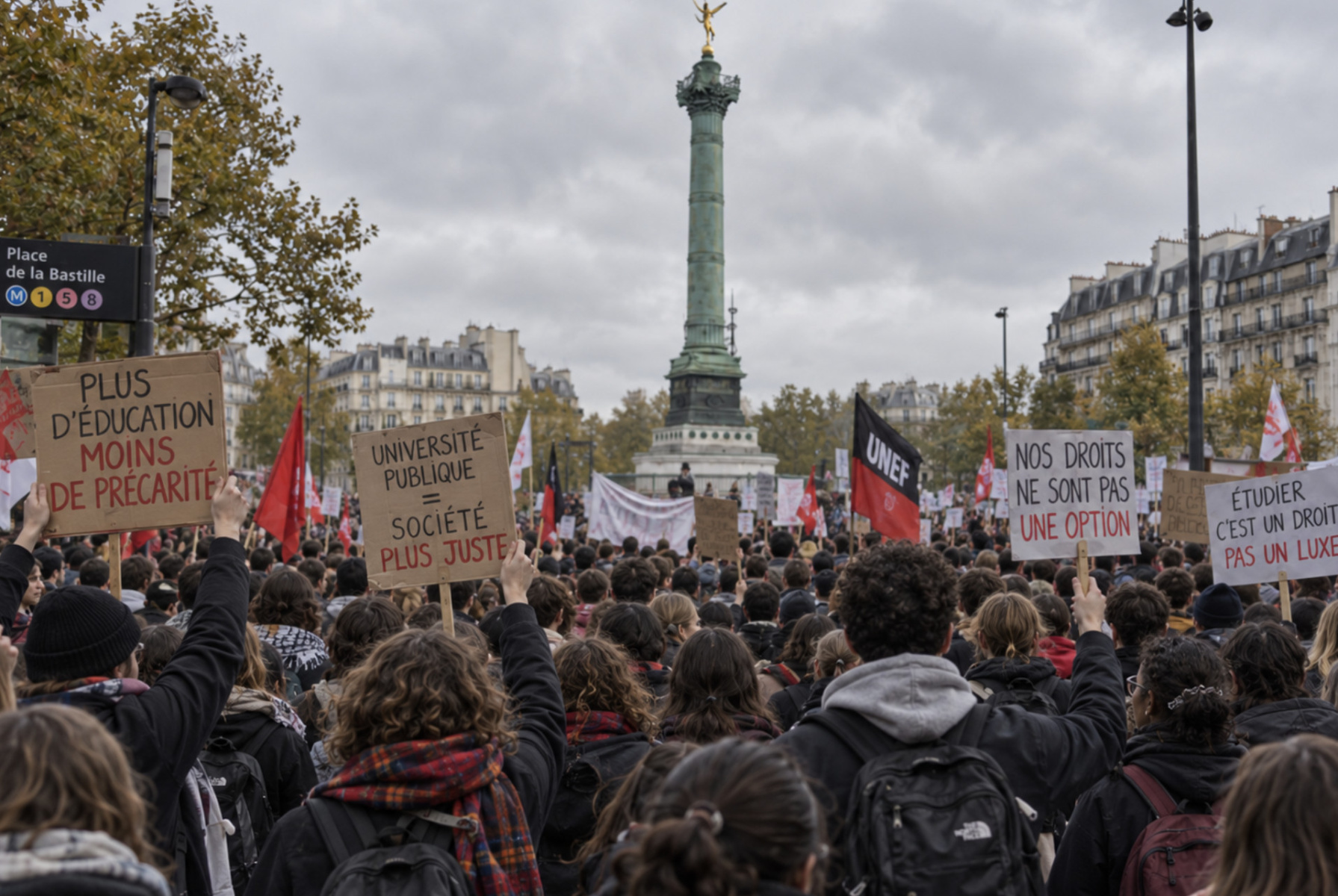
The general strike on Thursday, November 5, 2026, is tomorrow. This time, all the unions are taking part, including railway workers, and the inter-union group still hopes to link Place de la Bastille (in the 4th, 11th and 12th arrondissements) with Place de la Concorde (in the 8th). From Paris to Seine-Saint-Denis, and from Yvelines to Seine-et-Marne, the day is expected to affect transport, schools and many other sectors.
Here’s what we know on the morning of Wednesday, November 4, 2026: initial traffic trends, a legal battle over the route, and a decision expected on the flights.
The movement was launched by an inter-union coalition comprising the CFDT, the CGT, FO, the UNSA and the FSU, which signed a joint statement published on October 5. Since then, the coalition has grown: according to L'Échiquier social, all trade union organizations have announced they will take part.
On Monday, November 2, Sophie Binet set the tone on franceinfo. The CGT general secretary wants to make November 5 a major day of convergence and is calling on workers to meet in general assemblies to decide whether to strike at their workplaces.
The rallying cry boils down to two demands: pay rises across the board and a revision of the 2027 budget proposal. According to France 24, the October 21 meeting at Matignon produced no measures, although a rise in the minimum wage was discussed. For the CFTC, taking to the streets is precisely what is needed to keep up the pressure and turn that opening into concrete action.
The inter-union statement denounces the downgrading of employees: fuel, food, rents and energy are all getting more expensive, while wages and pensions remain unchanged. The 2027 budget plan, which calls for €54 billion in savings, according to Économie Matin, freezes social benefits and civil servants’ pay.
The inter-union coalition puts forward seven demands:
The inter-union group submitted a highly symbolic route through the heart of the capital, from Place de la Bastille to Place de la Concorde. But as of November 2, the Paris police prefecture had yet to approve the route or publish an order. After receiving no favorable response, the inter-union group took the matter to court, franceinfo reports. As on Saturdays, October 24 and 31, a different route could still be imposed: follow developments in our article on the November 5 protest route.
The departure time has yet to be confirmed, too: some sections say 1 p.m., others 2 p.m. A sign that the day will draw attention beyond Paris, the CFDT is chartering coaches from Yvelines, Seine-et-Marne and Val-d'Oise to join the Paris march. Rallies are also planned in the outer suburbs, in Meaux, Nemours and Évry.
The situation remains tense. Following the disturbances on October 17 (looting and nearly 200 arrests in Paris), a partial curfew and bans on unauthorized gatherings apply in particular to Place de la République, Place de la Bastille and Place d'Italie. A registered union march is subject to a separate procedure, but it would be best to avoid traveling or parking along the Bastille–Concorde route on Thursday.
November 5 protest in Paris: What is the route?
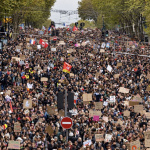
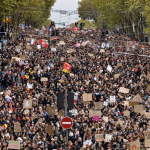
The inter-union demonstration on Thursday, November 5, 2026, is expected to bring workers, civil servants, young people and retirees together in Paris, at the call of the CGT, CFDT, FO, Unsa and FSU. The route submitted by the unions is still awaiting approval from the police prefecture. [Read more]
It’s the day’s biggest downside. The four representative unions at SNCF (CGT-Cheminots, UNSA-Ferroviaire, SUD-Rail and CFDT-Cheminots) have jointly called a strike on the eve of the TGV M’s inaugural journey. TGV, Intercités and TER services, as well as RER and Transilien services in the Île-de-France region, could be disrupted. Our article on the November 5, 2026 SNCF strike details the impact line by line.
The meeting held this Tuesday, November 3, at the headquarters in Saint-Denis (93) did not defuse the dispute, and the strike call remains in place. In its wake, SNCF announced that TGV services would be “slightly disrupted” and Intercités, TER, RER and Transilien services “disrupted.” The first indications from Transilien put the RER D at the top of the list, with service “severely disrupted.”
Details of the trains that have been cancelled will be available from 5 p.m. on Wednesday on SNCF Connect and Transilien. Until then, there’s no need to change your ticket: a strike call does not mean that all trains will remain at the station.
The SNCF strike this Thursday, November 5, 2026, looks set to cause major disruption to the RER and Transilien trains in the Île-de-France region, particularly the RER D, while the metro is expected to run almost normally. Here’s what to expect ahead of the release of detailed forecasts. [Read more]
On the RATP side, metro, bus and tram services are expected to run normally, according to franceinfo: no strike notice specifically covering November 5 has been made public for these networks. However, the indefinite strike notice filed by CGT-RATP in late September allows employees who wish to do so to stop work that day. The public transport inter-union group also considers it “essential” to take a further step, as ICI reports.
The RER A is expected to run normally, but the RER B, which it shares with SNCF, will be disrupted. Detailed forecasts are expected on the websites of RATP and Île-de-France Mobilités. One thing to watch out for: Line 7 bis will close completely from 10 p.m. Thursday for works, then all day from November 9 to 13. Our metro, RER and train service update, updated daily, lists station closures and disruptions.
The outlook is uncertain at airports too. Several DGAC and ground staff unions are calling a strike, and the DGAC is due to tell airlines on Wednesday whether they must cut flights at Roissy and Orly. Find all the details in our article on the November 5 airport strike. Metro stations will probably close around the march at the request of the police prefecture. The list will be added as soon as it is published to our update on transport disruptions for the week of November 2 to 8, 2026.
The day falls just after pupils return from the Toussaint holiday. In nursery and elementary schools, if at least a quarter of teachers say they are on strike, the local authority must provide a minimum childcare service. In Paris, families are informed by the City of Paris and by the schools. School canteens and after-school care are run by municipal staff, who have also been called to strike: it would be wise to check with the school or town hall on Wednesday evening. In middle and high schools, the Snes-FSU is calling for a major strike, and private schools are also affected.
In the public sector, the CFDT has filed a strike notice covering central government, local government and hospital staff. FSU Territoriale has, for its part, filed a notice running from November 5 to 30, according to the Bulletin des communes. The action is also spreading to banks, mutual insurers, doctors and pharmacists. If you have an administrative matter to handle or an appointment on Thursday, it’s best to call the day before.
The unions will not be alone in the streets. The Yellow Vests coordination, which initiated the October 17 action, is calling for Thursday to become a “People’s November 5,” with blockade actions it is considering repeating on Friday, November 6.
On Saturday, November 7, its Act IV is set to gather at Place de la Concorde (8th arrondissement) at 2 p.m., according to the coordination group’s website, which warns that it will call for “civil disobedience” if the gathering is banned.
High school and university students also got the ball rolling. The Interfac Île-de-France committee called for a demonstration this Tuesday, November 3, outside the Panthéon (5th arrondissement), as a dress rehearsal for Thursday. Since the Louvre blockade, the student movement in the Paris region has shown no sign of slowing down.
The high school blockade continues this Tuesday, November 3, 2026, in the Île-de-France region, with a student demonstration whose Paris route has been banned by the police prefecture. The movement’s next step: the interprofessional strike on Thursday the 5th. [Read more]
The Yellow Vests are calling for a fourth day of protests on Friday, November 6, and Saturday, November 7, 2026, with strikes, blockades and demonstrations across France, including Paris. A “popular six-seven” that extends the November 5 strike. [Read more]
The timing is anything but incidental. The 2027 draft budget is being debated in Parliament, and unions are counting on street protests to influence the discussions. After the 300,000 demonstrators on September 29 and the tense day on October 17, November 5 is seen as a test: a large-scale, orderly mobilization capable of making itself heard without getting out of hand. With the CGT calling for a strike “starting November 5,” the day could also mark the beginning of a longer movement.
Our advice if you need to travel on Thursday: check the traffic updates from 5 p.m. on Wednesday, then check the prefecture’s orders before setting off. And to keep your spirits up, our ideas for things to do this week and our top tips for the week are just a click away.
This page may contain AI-assisted elements, more information here.









































 November 5 protest in Paris: What is the route?



 SNCF strike on November 5, 2026: TGV, RER and Transilien disruptions expected, the forecast


 High school students to protest and stage blockades this Tuesday, November 3, and Thursday, November 5
 Yellow Vests, Act IV, on November 6 and 7: strike and protest—what’s planned in Paris