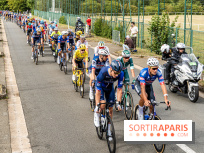
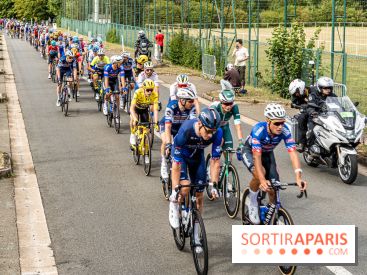
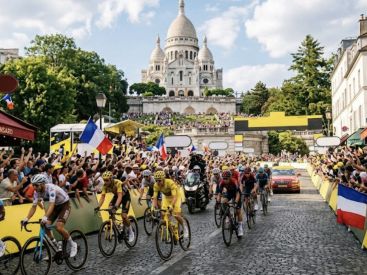
Day after day, cyclists tackle the various stages of the Tour de France, following in the footprints of the great athletes who came before them. In 2026, we are witnessing the 113th edition of the Grande Boucle! It’s time to glance in the rearview mirror and uncover some stories and anecdotes that have left their mark on the world’s most famous cycling race.
The Tour de France was born in 1903, between July 1 and 19. It was the newspaper L'Auto that gave rise to this event: the sports daily was looking for a way to attract more readers, so it decided to invent its own race. In that first Tour, 59 riders lined up at the start, but not all of them managed to finish the various stages. The race connected Paris, Lyon, Marseille, Toulouse, Bordeaux and Nantes, covering a total of 2 428 km. A truly formidable distance!
Tour de France 2026: yellow, green, polka-dots... what do the various jerseys signify?
These are the terms you’re going to hear a lot in July if you’re following the Tour de France 2026. The yellow jersey, the polka-dot jersey, the white jersey or the green jersey… To follow the competition without a hitch, here’s a quick breakdown of what these jerseys signify. [Read more]
The origin of the Tour de France was therefore a kind of promotional push for the newspaper L'Auto... But it is also deeply tied to the Histoire de France. The Norman journalist Sylvain Letouzé, author of the Histoires insolites du Tour de France, recounts in Ouest France how this race came to be.
« The Tour de France was, in fact, born out of the Dreyfus affair. At the time, Pierre Giffard defended the captain accused of providing information to the enemy in Le Vélo. But the shareholder, Jules-Albert de Dion, was an anti-Dreyfusard: he pulled his ads from Le Vélo and created a rival, Auto-Vélo, which became L’Auto in 1902. The editors of the new publication were looking for ideas to grow their readership… and a journalist proposed a “race that would circle the entire country.” The first Tour would set off in 1903. Honestly, if the shareholder had not withdrawn from Le Vélo, I’m not sure the Tour de France would have come to be.»
In 1903, the Tour de France makes its debut. This first edition is special and quite different from what we’re accustomed to today. It’s during this race that the longest stage in Tour history was staged: 467 kilometers covered in a single day. That’s nearly twice the length of the longest stage in 2021, which stretched to 249 kilometers.
Several records were set in the early years of this legendary race. In fact, Henri Cornet still holds the record for the youngest winner of the Tour. At just 19 years old, the Frenchman claimed victory in 1904.
And it's still a Frenchman who holds the record for the most podium finishes at the Tour de France. Raymond Poulidor finished runner-up three times and third five times, giving him eight podium appearances in total.
Cycling is a wonderful sport, sadly often marred by tales of cheating. Sylvain Letouzé shares his favorite cheating anecdotes in Ouest France. The first unfolds in 1935. « At the time, it wasn’t unusual for riders to stop for a drink in a café. During the sweltering stage between Pau and Bordeaux, in Le Barp, a beer-distribution stand is set up. The peloton stops... except the Frenchman Julien Moineau who seizes the moment to break away and win the stage! In reality, it was his friends who had organized the refreshment stand!»
Two years later, another cheating saga surfaces, but it’s far from wholesome. "We’re entering a period of tensions between Belgians and French, and during the warm-up the leader of the Tricolores collapses on the pavement. His handlebars had been sawn off! In another stage, at the Bordeaux finish, the Belgians will be met with pine cones and, above all, pepper in the eyes. Sometimes fans puncture the rivals’ tires…", says the journalist.
These misdeeds obviously must not be repeated. Still, we're eager to discover the next champions and the upcoming great stories of the Tour de France!




















 Tour de France 2026: yellow, green, polka-dots... what do the various jerseys signify?