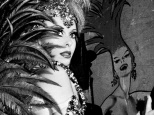
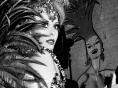
Smiles that turn into winces: Guillermo Forchino reveals the many sides of his work with "Noi, i Grotteschi", a free exhibition at the Galerie Joseph, at 116 rue de Turenne, in Paris’s 3rd arrondissement, from 6 to 29 November 2026. Across 124 sculptures, including pieces never before shown to the public, this retrospective fuses the artist’s satirical figures with darker works that address exclusion, aging, or our indifference to climate change.

The Italian title translates to "We, the Grotesques". And that “we” offers a lens for looking at the works: behind the distorted silhouettes and absurd situations, Forchino speaks to distinctly human behaviors. His characters may be drawn in caricature, but their contradictions feel familiar. We can laugh at their attitudes, before noticing what the scene reveals about our own habits.
Born in Argentina in 1952, Guillermo Forchino lives and works in Paris. After training at the National School of Fine Arts in Rosario, he pursued restoration and conservation studies at Panthéon-Sorbonne University, and helped establish the restoration workshop at the Juan B. Castagnino Fine Arts Museum in Rosario. As a sculptor, his work draws especially on the worlds of Hieronymus Bosch, Goya, Otto Dix or George Grosz, where the distortion of the body is used to lay bare social dynamics.

The exhibition stages a dialogue among five series. With Comœdia Mundi, the artist builds a human comedy populated by figures as moving as they are fragile. But the walk-through also revisits Desafinados, presented as early as 1985, which delves into the world of psychiatric institutions. Bodies and their poses are used to probe confinement, loneliness, and institutional violence.
In La mirada negada, or Le Regard dénié, Forchino deepens his meditation on those we’d rather not see: the elderly, marginalized individuals, and victims of forced disappearances under the dictatorship. The tone grows even more caustic with Me ne frego, literally "I don’t give a damn," a stinging portrait of indifference in the face of environmental upheaval. And with Ajustes, devoted to budget cuts, the chainsaw becomes the emblem of the cuts that erode social solidarity.

This retrospective grew out of the encounter between the sculptor and collector François-Henri Bennahmias. After acquiring a work by Comœdia Mundi, he discovers in a Paris workshop the other dimensions of the artist's production. From this visit arose the project to bring these bodies of work together and present them to a broader audience.
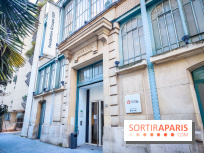
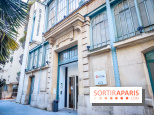
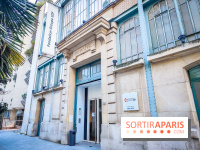
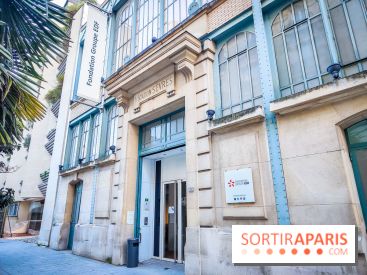
To plan your visit, the Galerie Joseph is open Tuesday to Sunday, from 12 p.m. to 8 p.m., with a Friday night late opening until 10 p.m.. The exhibition is closed on Mondays and its entrance is free. The screenings, talks and other supplementary events mentioned in the briefing are by invitation.
Which character will grab your attention remains to be seen: the one whose stance amuses you, the one who unsettles you, or the one who looks a little too much like someone you know. At Forchino, sometimes a single detail is enough to tilt the interpretation of a scene.
This page may contain AI-assisted elements, more information here.
Dates and Opening Time
From November 6, 2026 to November 29, 2026
Location
Joseph Gallery
116 Rue de Turenne
75003 Paris 3
Route planner
Access
Metro 8 Filles du Calvaire
Prices
Free
Official website
www.instagram.com
More information
Open Tuesday through Sunday, 12:00–20:00.