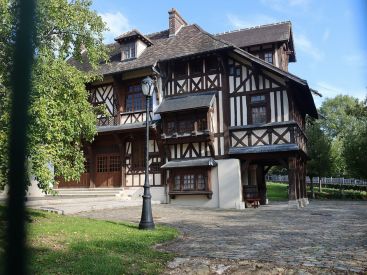
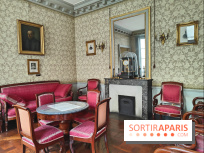
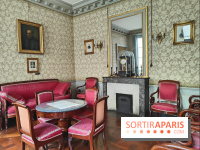
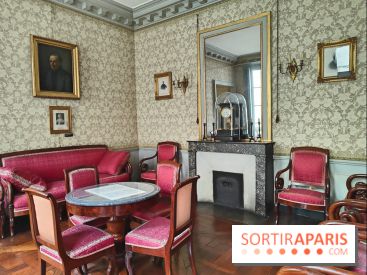
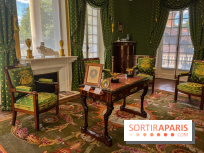
Le Bateau-Lavoir is a mythical artists' residence nestled on the Butte Montmartre, a mecca for artistic creation and encounters that, in its time, profoundly influenced theart historyof the 20ᵉ century.
From 1904, French and international painters, poets and sculptors rubbed shoulders in modest but inspiring studios, shaping movements such as Fauvism and Cubism.
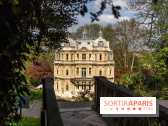
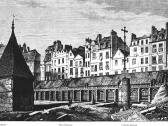
Originally, this place didn't yet bear this evocative name, until towards the end of the 19ᵉ century, when an abandoned piano factory on the slopes of Montmartre was transformed into an artists' housing estate. This wood-and-brick building, built on a steeply sloping site, has a particular configuration: the front facade, on the square, overlooks what takes the place of the first floor, while the rear of the building reveals several storeys thanks to the declivity of the ground.
Originally christened Maison du Trappeur, it earned the nickname'Bateau-Lavoir', probably from the poet Max Jacob. The term "bateau" evokes the narrow passageways and long floor plan similar to the washerwomen on the Seine, while "lavoir" refers to the Spartan life lived there and the fact that there was then only one water point for the 25 occupants.
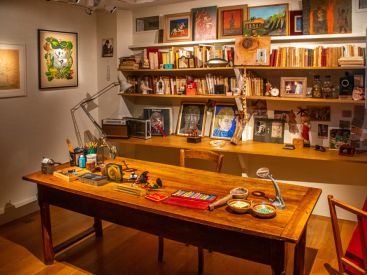
The studios here are rudimentary: cold in winter, stifling in summer, often without gas or electricity, wooden partitions leaking sound, humidity fomenting mildew. The artists live on very little, but help each other out, sharing space, equipment and sometimes the few comforts available.
In the years following the transition to the 20th century, the Bateau-Lavoir welcomed artists from France, Italy and Spain, attracted by theeffervescence of Montmartre. Painter Maxime Maufra was one of the first to settle there in 1892. Soon after, painters such as Ardengo Soffici, Paco Durrio, Modigliani, Kees van Dongen and Juan Gris followed. In 1904, Pablo Picasso moved in and stayed until 1909 - although he kept a studio until 1912. It was here that he developed his pink period and his experiments, and above all that some of the founding works of Cubism, such as Les Demoiselles d'Avignon, were born.
Guillaume Apollinaire, Max Jacob and Georges Braque also regularly passed through these workshops, where discussions, readings and impromptu dinners fueled a unique atmosphere. A famous anecdote: in 1908, a banquet in honor of Douanier Rousseau was held here. The walls were draped, the mood was upbeat, the artists decorated the studio, Picasso presented him with a portrait, and the party lasted until the early hours of the morning.
With the outbreak of the First World War, Montmartre lost its artistic influence to other districts such as Montparnasse. The Bateau-Lavoir, despite its renown, saw many of its residents leave, its studios sometimes remaining abandoned or under-occupied.
In 1969, the building was listed as a historic monument, shortly before a fire in May 1970 destroyed the original wooden structure, leaving only the façade intact. In 1978,architect Claude Charpentier rebuilt the building almost identically, this time in concrete, while retaining the original layout of the 25 glazed workshops overlooking the Burq garden to the rear.
Today, these studios are occupied by contemporary artists, painters and photographers. Indeed, the Bateau-Lavoir has retained its reputation, not as a permanent home for artists as it was then, but as a strong symbol of the artistic Paris that continues to this day. And even if you can't freely enter the studios, the place remains a major landmark on any stroll around Montmartre, and a visible testimony tomodern art.
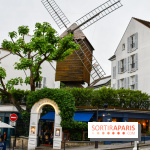
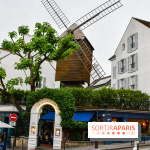
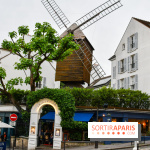
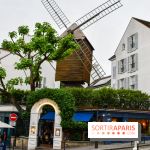
The legendary addresses and historic sites of artistic and bohemian Montmartre
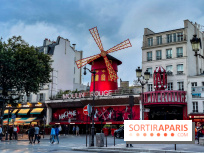
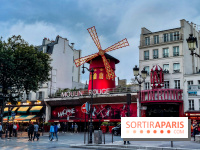
Perched high above Paris, Montmartre was the beating heart of artistic bohemia in the 19ᵉ and 20ᵉ centuries. Painters, poets and songwriters lived there freely between cabarets, studios and steep alleyways, leaving an eternal imprint on the soul of the capital. [Read more]
This page may contain AI-assisted elements, more information here.
Location
Le Bateau Lavoir
8, Rue Garreau
75018 Paris 18
Route planner
Accessibility info














 The legendary addresses and historic sites of artistic and bohemian Montmartre