Alfred de Musset was a child of Paris, consumed by love, poetry and suffering. He never left the capital for long, and it is among its streets, cafés, salons and memorials that his literary destiny is inscribed.
Follow in his footsteps around Paris, in search of the addresses where he was born, loved, wrote and died, and rediscover the work of this major author of Romanticism.
The embodiment of French Romanticism, Alfred de Musset expresses the torments of the soul and the whims of the heart in a body of work that is both poetic and theatrical. Born in Paris, he frequented literary salons from an early age, making a name for himself with his plays and poems. His passionate relationship with George Sand fueled his inspiration as much as his wounds. He died at the age of 46, leaving behind a body of poetry imbued with elegance, spleen and disillusionment with love.
33 rue des Noyers (5th arrondissement, now boulevard Saint-Germain). Alfred de Musset was born here on December 11, 1810. His parents moved shortly afterwards to 27 rue Cassette (6ᵉ arr.), where young Musset grew up in the heart of literary and religious Paris. At the age of nine, he entered the Collège Henri-IV at 23 rue Clovis (5ᵉ arr.) for his classical studies, reinforcing his taste for letters.
59 rue de Grenelle (7ᵉ arr.). Around 1824, his family moved into a modest dwelling at the back of a courtyard, where the young man's intimate surroundings took shape. His Parisian childhood was bathed in walks through parks, narrow streets and nearby churches, settings that would later influence his melancholy lyricism. It was in this childhood Paris that he forged his first aspirations, shared his family's reading and immersed himself in the cultural revolutions of the time.
Restaurant Lointier (2ᵉ arr.). As an adult, Musset frequented the most active literary salons in Paris. In June 1833, at a dinner organized by François Buloz, the director of the Revue des deux Mondes, he met George Sand for the first time. The dinner took place at Restaurant Lointier, 104 rue de Richelieu (or, according to other versions, at Restaurant Les Trois Frères Provençaux, 1ᵉ arr.).
The Latin Quarter (5th arrondissement) and rue Richelieu (2ᵉ arrondissement). Alfred de Musset frequents bookshops, poetic circles and literary cafés where verse and theater are discussed. The publishing studios, magazine offices and salons of the Rue Richelieu and the surrounding covered passages were the backdrop for his literary ambitions, where he navigated between worldliness and modesty. His affair with George Sand led him to share addresses with her, their passionate exchanges taking place in cafés, apartments on the Quai Malaquais (6ᵉ arr.) and Parisian salons.

6 rue du Mont-Thabor (Iᵉʳ arr.). Alfred de Musset died in this apartment on May 2, 1857, as indicated by a commemorative plaque affixed to the façade.
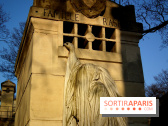
Père-Lachaise cemetery (20ᵉ arr.). He is buried in the Père-Lachaise cemetery, in the 4ᵉ division. His tomb is adorned with a monument engraved with lines from his poem Rappelle-toi.
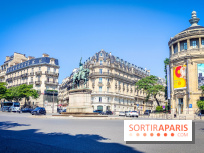
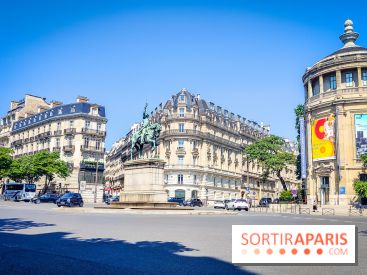
Parc Monceau (8ᵉ arr.). One of the most visible monuments dedicated to Musset can be found in the Parc Monceau, where the full-length statue of the poet, surrounded by his muse, erected in 1906, is enthroned. Initially placed near the Comédie-Française, the statue was moved, placed in storage and reinstalled in the Parc Monceau in 1981. The poet appears seated, while the muse leans her body over her right shoulder, in a posture reminiscent of La Nuit de mai.
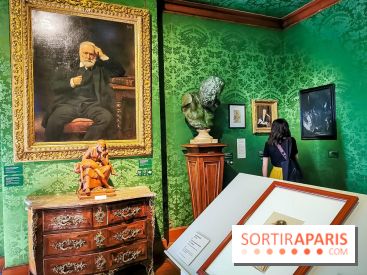
Musée de la Vie romantique (9ᵉ arr.). The museum holds portraits of Musset (including a lithographed print from 1854) and period memorabilia. For its part, the Musée Carnavalet (3ᵉ arr.) exhibits a sculpted medallion with his bust in an allegorical composition around literature.
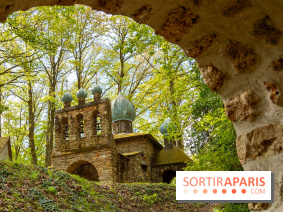
Parc Monceau, the romantic park in Paris
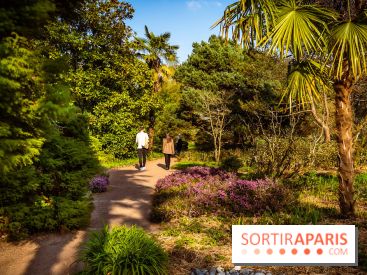
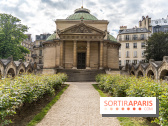
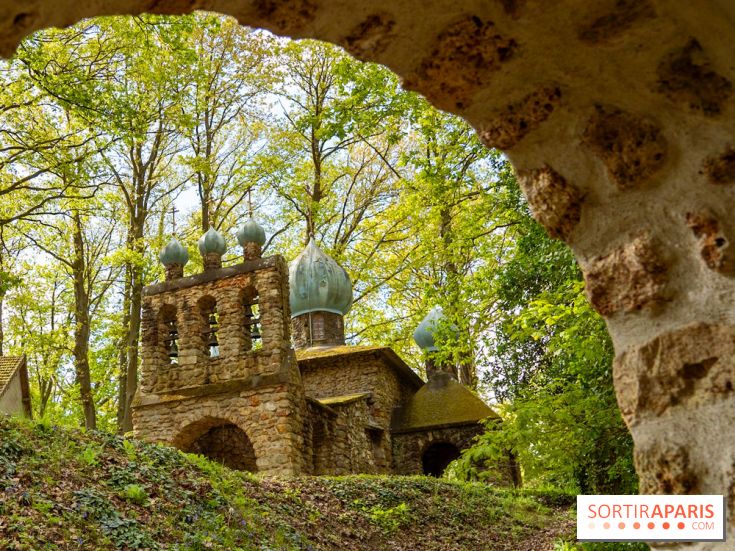
Parc Monceau, undoubtedly one of the most beautiful flower gardens in Paris, nestling between the 8th and 17th arrondissements, is a romantic haven of peace where ruins, artists' sculptures and lush vegetation stand side by side. We take you on a tour to discover its history and special features. [Read more]
The Père Lachaise cemetery is not only the largest cemetery in Paris, but also one of the most visited in the world. Whether for its history, its illustrious figures or even its legends, this place is a must-see in the capital. [Read more]
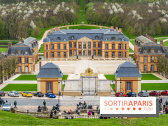
In Paris, the Musée de la vie romantique is a hidden gem, a favorite among locals and visitors alike. Don’t miss the chance to explore this charming museum and its enchanting garden, tucked away in the 9th arrondissement. [Read more]




 Parc Monceau, the romantic park in Paris
 Père Lachaise, Paris's most mythical cemetery and the graves of famous personalities
 The Musée de la Vie Romantique in Paris: a lush, artistic haven brimming with charm