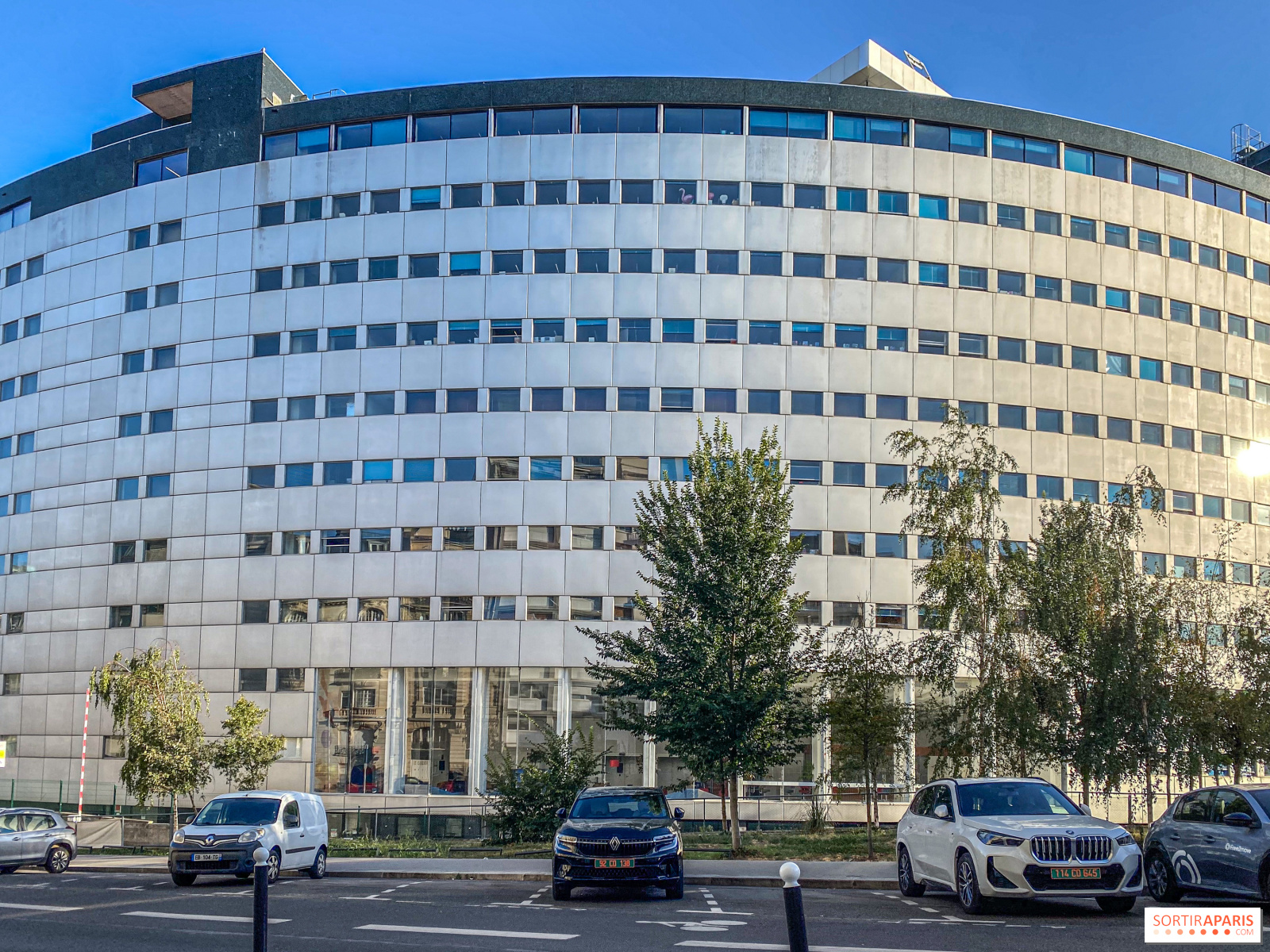
Along the banks of the Seine, in the 16th arrondissement of Paris, the Maison de la Radio catches the eye with its striking cylindrical design. Built starting in 1952 to house France’s broadcasting services, today it’s more than just a media hub—it's also a vibrant center for music and culture. Yet, beneath its modern façade lies a lesser-known relic: an atomic bunker, a remnant from a turbulent era shadowed by nuclear fears.
The House of Radio was built between 1950 and 1963, commissioned by the state to consolidate the broadcasting stations and technical services of the public radio in one location. Its architect, Henry Bernard, designed a modern, functional building that reflected the needs of centralizing media operations during the era of the Glorious Thirty.
But this era was also marked by the Cold War, a time when the threat of nuclear conflict was a real concern for governments worldwide. In France, as in other countries, so-called "sensitive" buildings were sometimes equipped with bunkers designed to protect personnel in the event of an attack.
At Maison de la Radio, several nuclear shelters were built in the underground levels during that period. These reinforced concrete structures were designed to withstand an indirect nuclear blast and the fallout from radioactive debris. They weren’t intended to house large crowds of civilians, but rather to ensure the continuity of a critical function—namely, national broadcasting.
This type of equipment was common in public buildings built during the 1950s and 1960s. It reflected a civil defense policy focused on keeping vital infrastructure operational, even during times of conflict.
The nuclear shelters beneath the Maison de la Radio are not open for public tours. They are not included in the guided visits offered to visitors, which typically focus on the studios, technical spaces, and the building’s visible architecture. However, their existence is confirmed by various sources referencing the protective measures in place at the time the building was constructed.
The bunker integrated into this building highlights the national security concerns shaped by the geopolitical tensions of the time. It places the Maison de la Radio within a broader historical narrative—one of French infrastructure designed to withstand a nuclear threat, even though such a crisis never actually materialized.
This page may contain AI-assisted elements, more information here.
Location
Maison de la Radio et de la Musique - Radio France
116 avenue du Président Kennedy
75116 Paris 16
Route planner
Accessibility info
Official website
www.maisondelaradioetdelamusique.fr