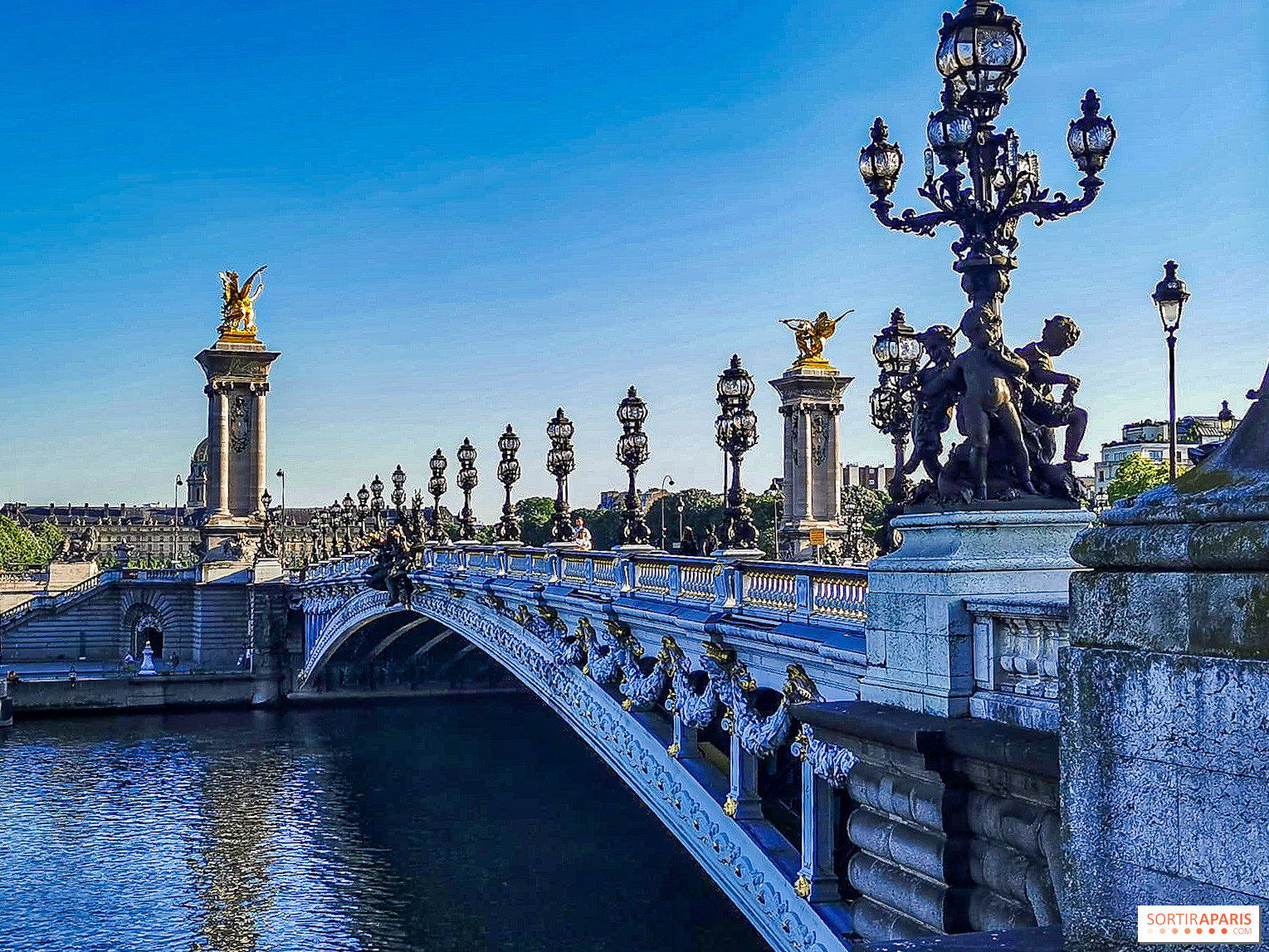
Discovering the Alexandre III Bridge in Paris is already an experience that leaves you breathless with its beauty. But did you know that the massive statues adorning each of its four corners tell a deep symbolic story? Spanning art, science, commerce, industry, and historical figures, these allegorical sculptures embody the spirit of an era dreaming of a bright future — and they certainly deserve a closer look.
Walking across the Alexandre III Bridge is like flipping through a sky-high novel carved into the Parisian skyline. Opened for the 1900 Exposition Universelle, this iconic bridge is much more than just a link between Les Invalides and the Grand Palais. It embodies a national and artistic aspiration, with every detail carefully crafted to dazzle.
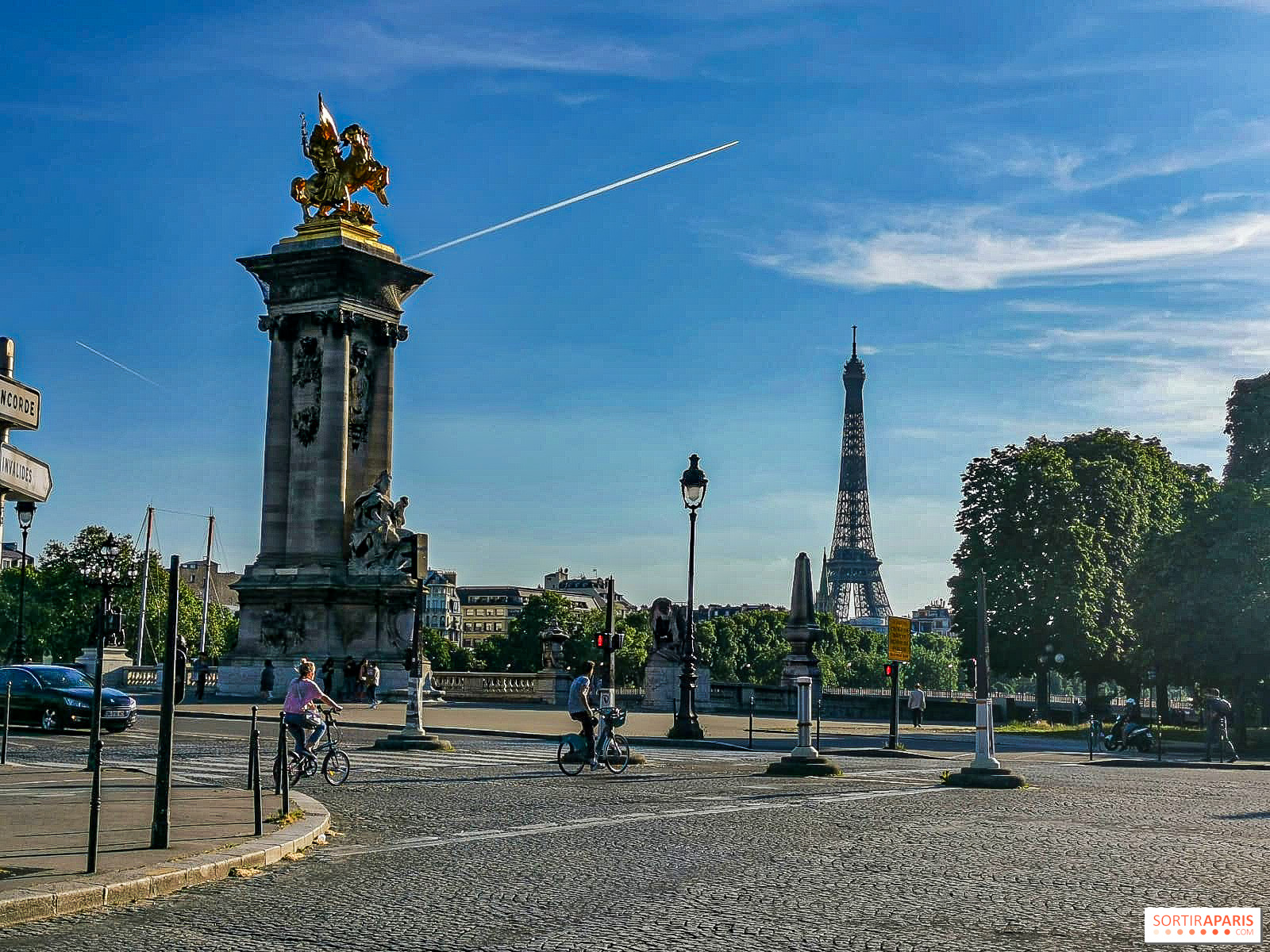
The four monumental pylons of the bridge are each crowned with a gilded statue of a winged female figure, known as Renown, guiding a Pegasus. These allegories embody the overarching driving forces of modern society according to the ideals of the late 19th century. Each column features one of these figures:
Carved by Pierre Granet, it celebrates economic vitality and international exchanges—cornerstones of French prosperity.
Created by Clément Steiner, it celebrates the Industrial Revolution, highlighting the machines, engineers, and the hardworking labor force driving progress.
Designed by Emmanuel Frémiet, it represents knowledge, discovery, and faith in scientific advancements.
This piece, also crafted by Emmanuel Frémiet, celebrates the power of artistic creation, imagination, and France’s rich cultural legacy.
Each of the four pylons features an allegorical sculpture representing a different period of French history. These stone groups add a layer of symbolic meaning to the bridge, blending a proud past with the promise of a brighter future.
By Gustave Michel. It embodies the Republic, social progress, contemporary values, and the technological advancements of the 19th century.
By Alfred-Charles Lenoir. This figure evokes the Crusades, chivalry, cathedrals, and the prevailing spiritual authority of that era.
By Jules Coutan. It highlights humanism, major discoveries, global exploration, and artistic refinement.
By Laurent Marqueste. This sculpture celebrates the reign of the Sun King, emphasizing the centralization of power, the grandeur of Versailles, and the dominance of monarchy.
The Alexandre III Bridge stands as a flagship example of Beaux-Arts style, rich in symbolism, mythological references, and a striking aesthetic. It’s more than mere decoration; it conveys a visual and political message, expertly carved in stone and bronze. The Fame statues atop the bridge embody France’s aspirational future, while the allegories at the base recount its storied past.
This page may contain AI-assisted elements, more information here.
Location
Alexandre III Bridge
quai d'Orsay
75008 Paris 8
Route planner