Tackle 42.195 km, not a single meter short: that’s the challenge facing runners at the Paris Marathon 2027. A distance that has become a staple in the world of running, but which hasn’t always been so precisely defined.
To grasp its origin, you have to go back to the early days of the modern Olympics. In the Athens edition of 1896, the marathon measured about 40 kilometers, harking back to the legend of the Greek courier Phidippides and the path from Marathon to Athens. The following Olympic editions didn't settle on a single distance: 40.260 km in Paris in 1900, 40 km in St. Louis in 1904, or 40.2 km in Stockholm in 1912.
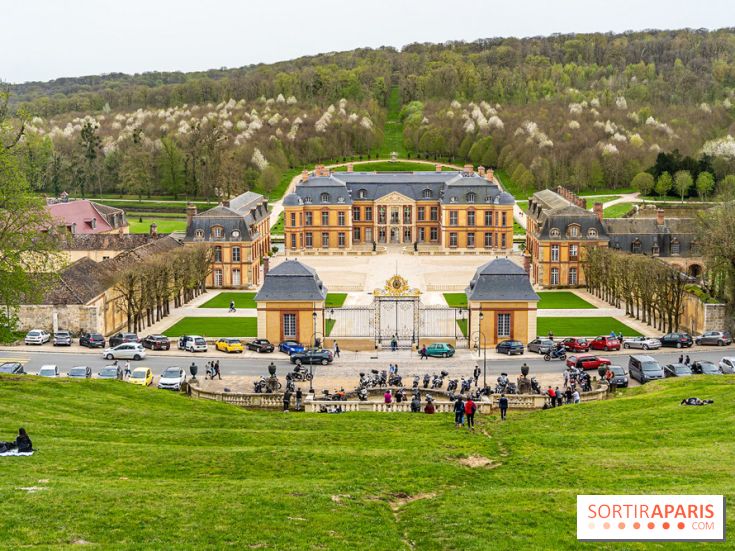
The turning point comes at the London 1908 Olympic Games. That year, the course runs from Windsor Castle to White City Stadium, with a start laid out inside the castle grounds and a finish in front of the royal box. Result: runners cover 26 miles and 385 yards, or exactly 42.195 kilometers.
Contrary to a widespread belief, this distance did not immediately become the norm. Olympic marathons continue to vary: Stockholm's 1912 race measured 40.2 km, while Antwerp's 1920 edition reached 42.75 km. The distance of 42,195km was finally standardized in the early 1920s and then became the international reference.
That’s why, more than a century after London 1908, participants in the Paris Marathon 2027 will still have to contend with the infamous 195-meter stretch beyond the 42nd kilometer!
Paris Marathon 2027: When the capital's biggest race takes place and how to register
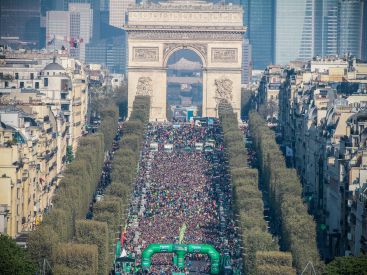
The 50th Paris Marathon will take place on Sunday, April 4, 2027. Once again, runners will thread through the capital, passing by some of Paris’s most beautiful sights. Who will cross the line first? [Read more]
This page may contain AI-assisted elements, more information here.
















 Paris Marathon 2027: When the capital's biggest race takes place and how to register