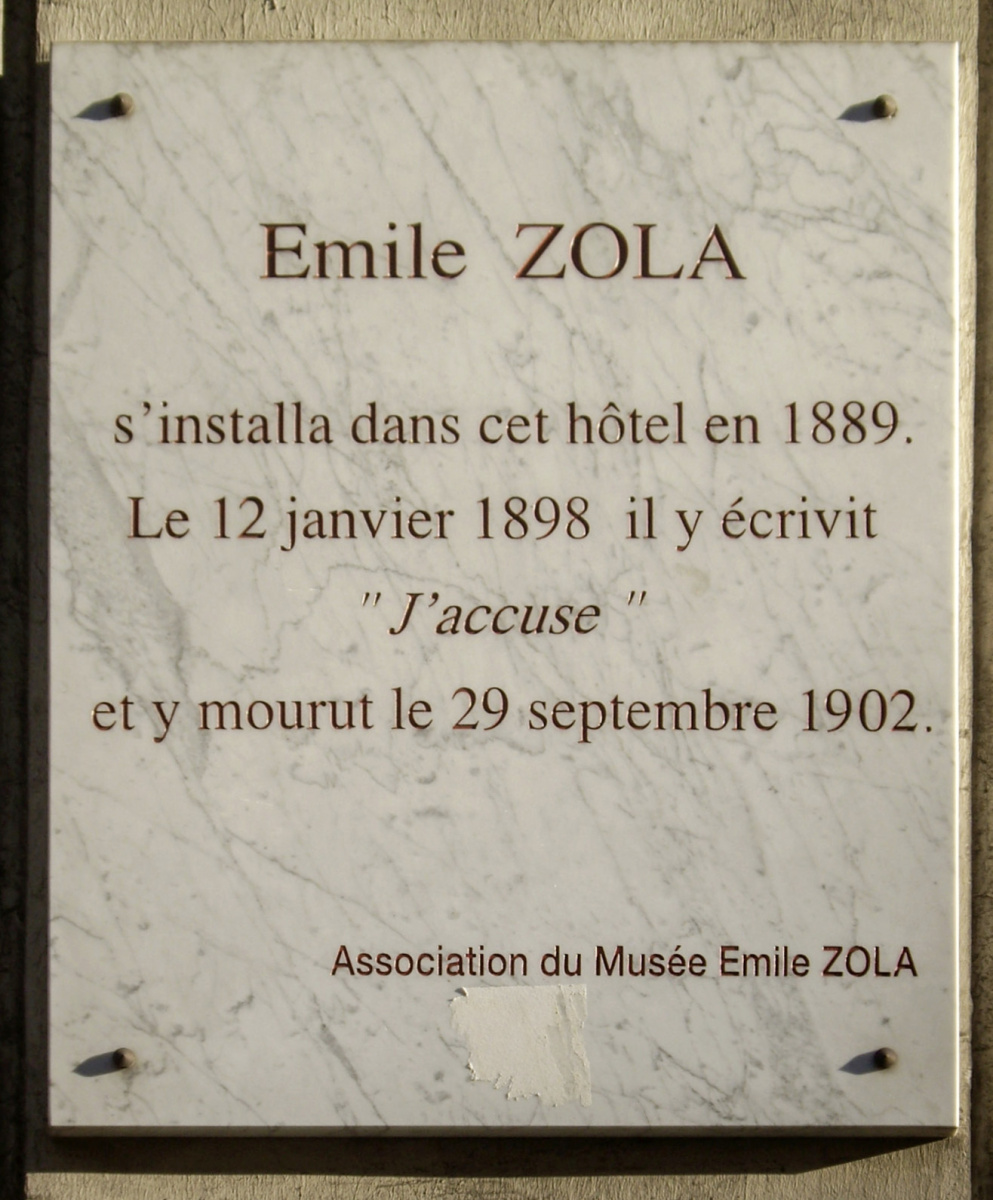
Paris, on 29 September 1902. At 21 bis rue de Bruxelles, in the 9th arrondissement, Émile Zola’s household staff fear their master will not emerge from his room. When they reach the couple, the novelist lies unconscious at the foot of his bed while his wife Alexandrine struggles to breathe. Doctors are summoned, oxygen is administered, resuscitation attempts are made. For Zola, it is too late.
At 62, one of the écrivains most famous in France has just died in his Parisian apartment. Very soon, the autopsy confirms the cause of death: carbon monoxide poisoning, caused by the fumes from a fire that had burned in the bedroom fireplace. But another question, far more difficult, will cross the century: why did that fireplace work so poorly?
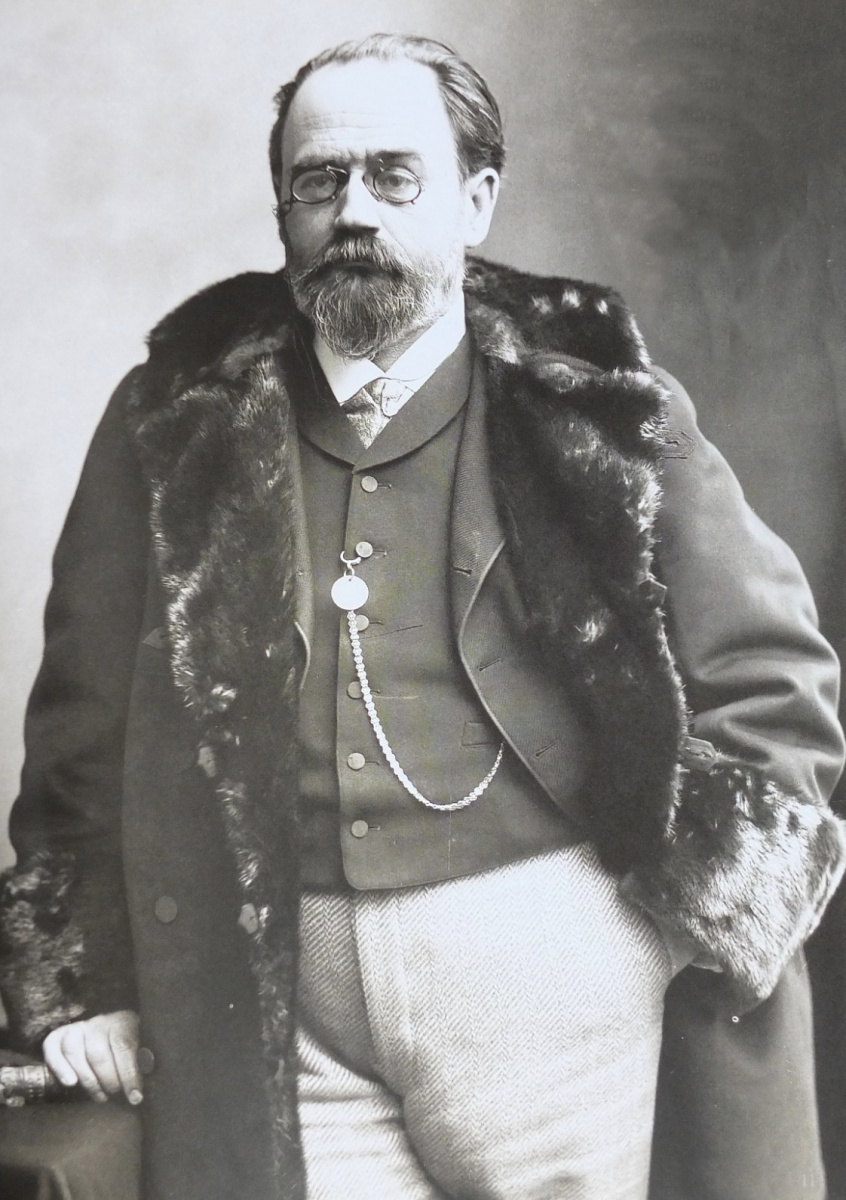
Zola and Alexandrine have just returned from Médan, their estate in the Yvelines where they spent the summer. The day of September 28 is cool and damp; a servant lights a coal-fired fire in their room before the couple goes to bed. During the night, both begin to feel unwell. Alexandrine would later recall headaches and nausea and says she had suggested calling the servants. Zola would have preferred not to wake them. Around 3 a.m., already heavily intoxicated, the writer rises, apparently to get some air or to try opening a window. He collapses. Alexandrine loses consciousness as well, but remains on the bed and survives the night. Transferred to a clinic after she is found, she eventually recovers.
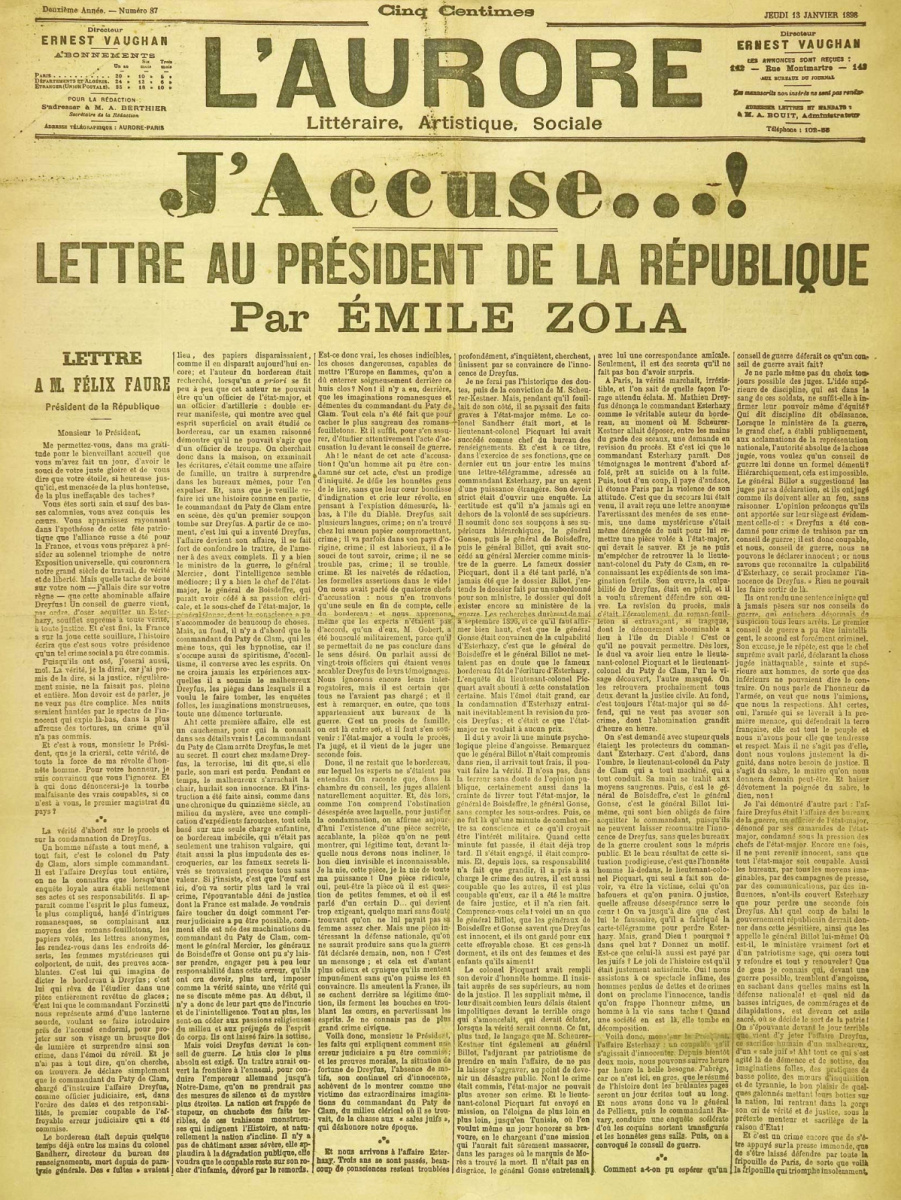
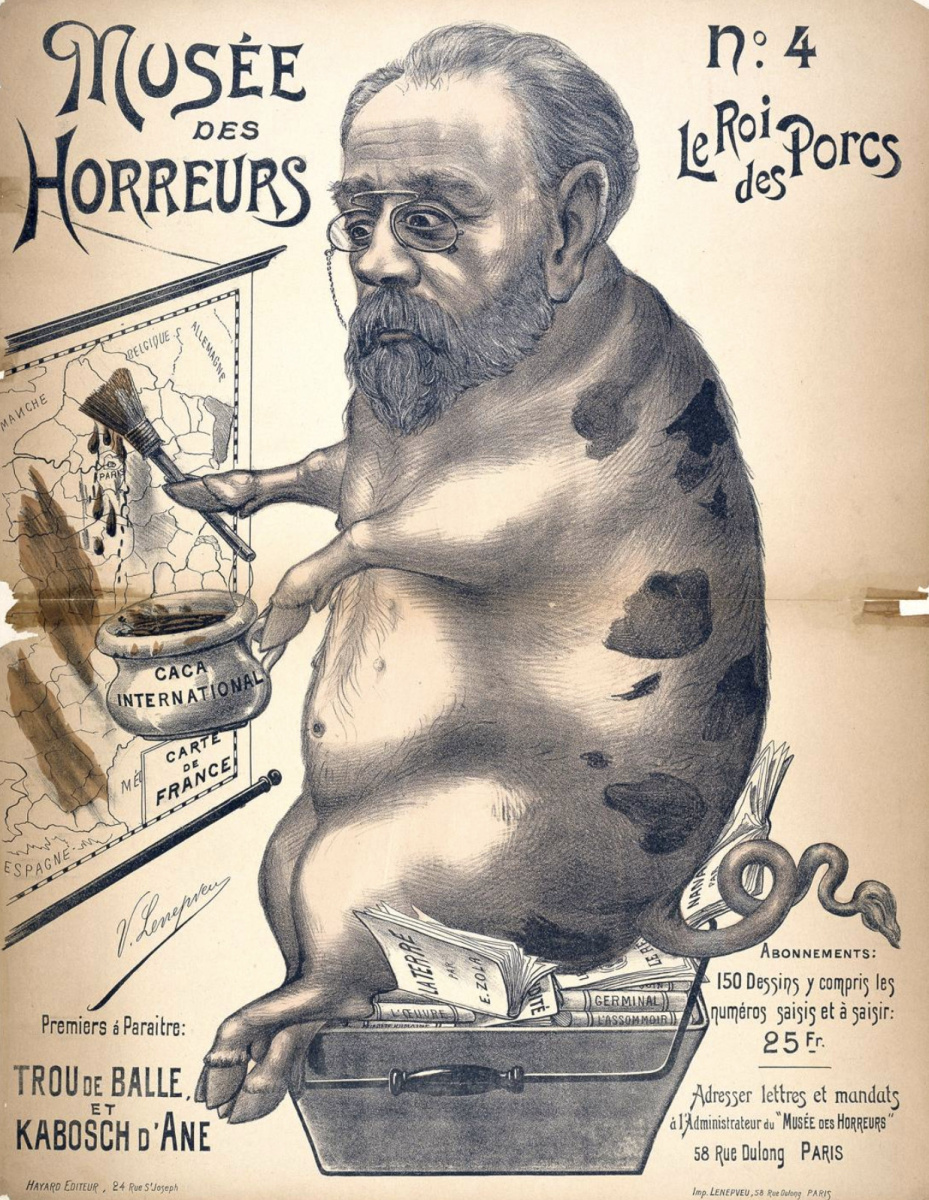
Death is immediately a national event, because Émile Zola is no longer just a novelist. Since January 13, 1898 and the publication of “J’Accuse…!” on the front page of L’Aurore, his name has become inseparable from the Dreyfus affair. By publicly accusing the military and judicial authorities of having condemned an innocent man and hidden the truth, Zola placed himself at the center of a political battle of exceptional violence. Convicted of defamation, forced into nearly a year of exile in England, he became a prime target for the nationalist and anti-Dreyfus press. Four years later, passions had not fully cooled. His sudden death in a gas-filled room could not be treated as the fate of any writer. In the hours that followed, rumors of poisoning, suicide, and even assassination circulated.
The physical findings soon steer the investigation toward the chimney. Its flue is partially blocked, and the fumes from the fire could have backfired into the sealed room. The investigating judge, Joseph Bourrouillou, calls in doctors, toxicologists and architects. Experiments are arranged in the chamber with a fire similar to that of the night of the tragedy in an effort to reproduce the poisoning. The results are imperfect: the experts do not truly manage to reconstruct the conditions that killed Zola. A chimney sweep also reveals an abnormally large amount of soot. Despite these uncertainties, no evidence of foul play is found, and the official inquiry ultimately endorses the theory of an accident, tied to a malfunction and obstruction of the flue.
The affair could have ended there, but in 1953, more than half a century after the events, journalist Jean Bedel published in Libération an investigation that would upend how that night is read. He relays the testimony of a man named Pierre Hacquin, who says he knew in Sarcelles in the 1920s a chimney contractor who allegedly told him something striking: in September 1902, while work was being carried out on a roof near Zola’s building, he and several men took advantage of the writer’s absence to obstruct the chimney flue. They supposedly returned the next day after his death to remove what had blocked it, thereby erasing any trace of a possible deliberate intervention. Hacquin, however, refuses to publicly reveal the name of his interlocutor.
We had to wait until 1978 for Jean Bedel to reveal it: the man would have been named Henri Buronfosse. The information remained largely unknown until the Zola specialist historian Alain Pagès picked up the file again at the end of the 20th century. His research at the Archives of Paris and at the Archives of Sarcelles establishes that Buronfosse really existed, that he worked in the fumisterie and, most importantly, that he belonged to the Ligue des patriotes, the nationalist movement founded by Paul Déroulède and violently aligned with the camp antidreyfusard. The profile thus matches in a troubling way the one described by Hacquin several decades earlier.
Another detail piques researchers. Chimney sweeps were spotted on the roofs adjacent to Zola's apartment at the time of the tragedy, though their presence was not thoroughly explored by the 1902 inquiry. Technically, a professional could have temporarily blocked the chimney and then removed the obstacle after the asphyxiation. This hypothesis would also explain why later expert experiments have never managed to reproduce exactly the lethal conditions of the night of September 28–29. Yet it remains a reconstruction: no known archival document proves that Buronfosse actually went up onto the roof that night, and his alleged confession is known only through Hacquin's indirect testimony.
So resist the temptation to turn doubt into certainty! The assassination of Émile Zola is not historically proven; the judicial investigation of the time concluded it was an accident, and no documents uncovered since have formally overturned that conclusion. By contrast, the research conducted on Buronfosse lends greater weight to the hypothesis of a malicious act, possibly intended to trigger poisoning, though its authors may not have anticipated the writer’s death. Alain Pagès and the Zola expert Henri Mitterand thus argued that the hypothesis deserved to be taken seriously, while underscoring the impossibility of proving it definitively.
The context understandably explains why this possibility continues to fascinate. Zola received threats and insults during the Dreyfus affair and crystallized a political and antisemitic hatred whose violence is well documented. But making that hatred the proof of a murder would go too far. The historical interest of the case lies precisely in this gray area: a perfectly plausible accidental death, an investigation whose experiments fail to replicate the drama and, 50 years later, an indirect testimony pointing to a man whose profession and political commitments remarkably match the tale.
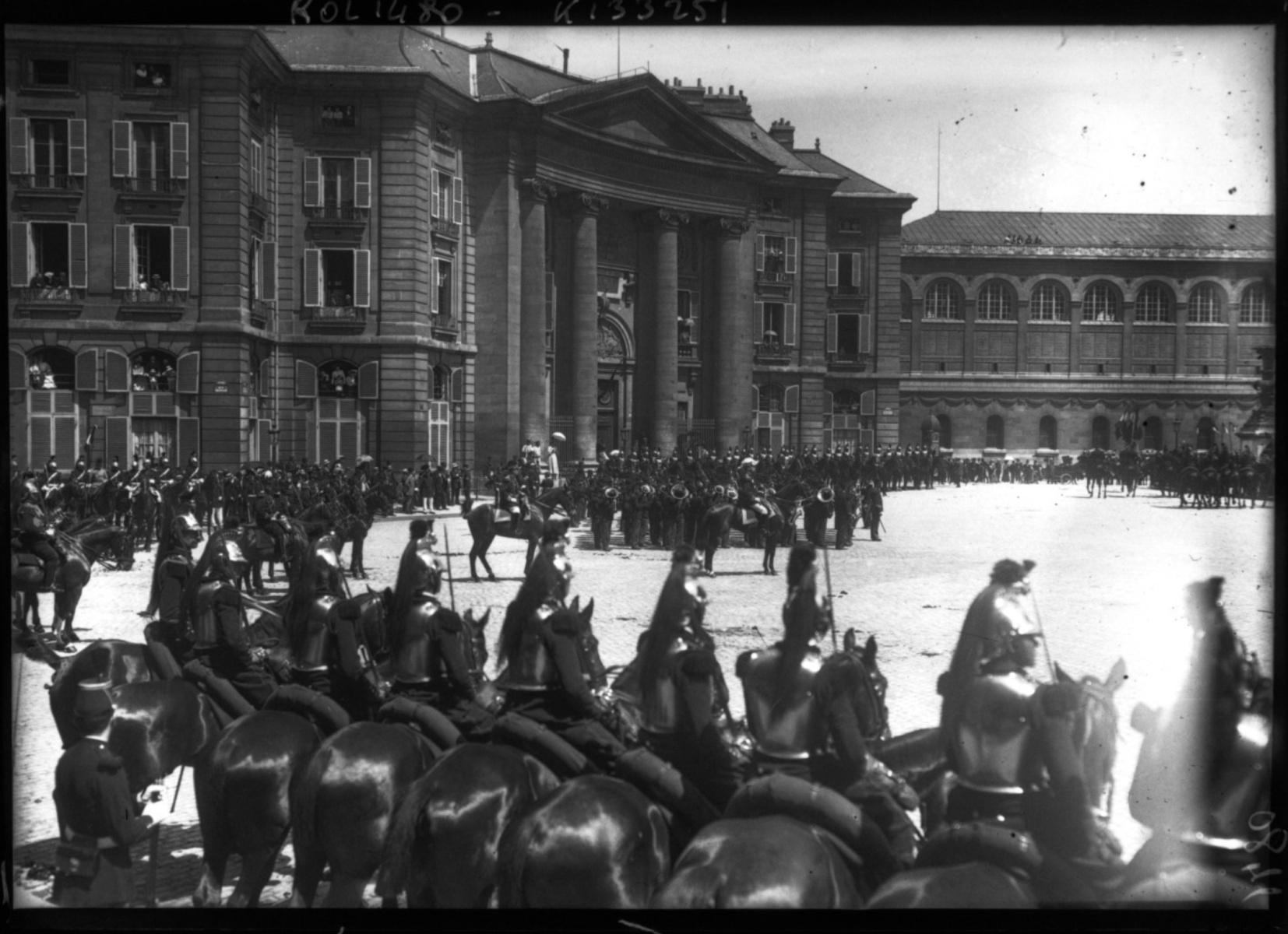
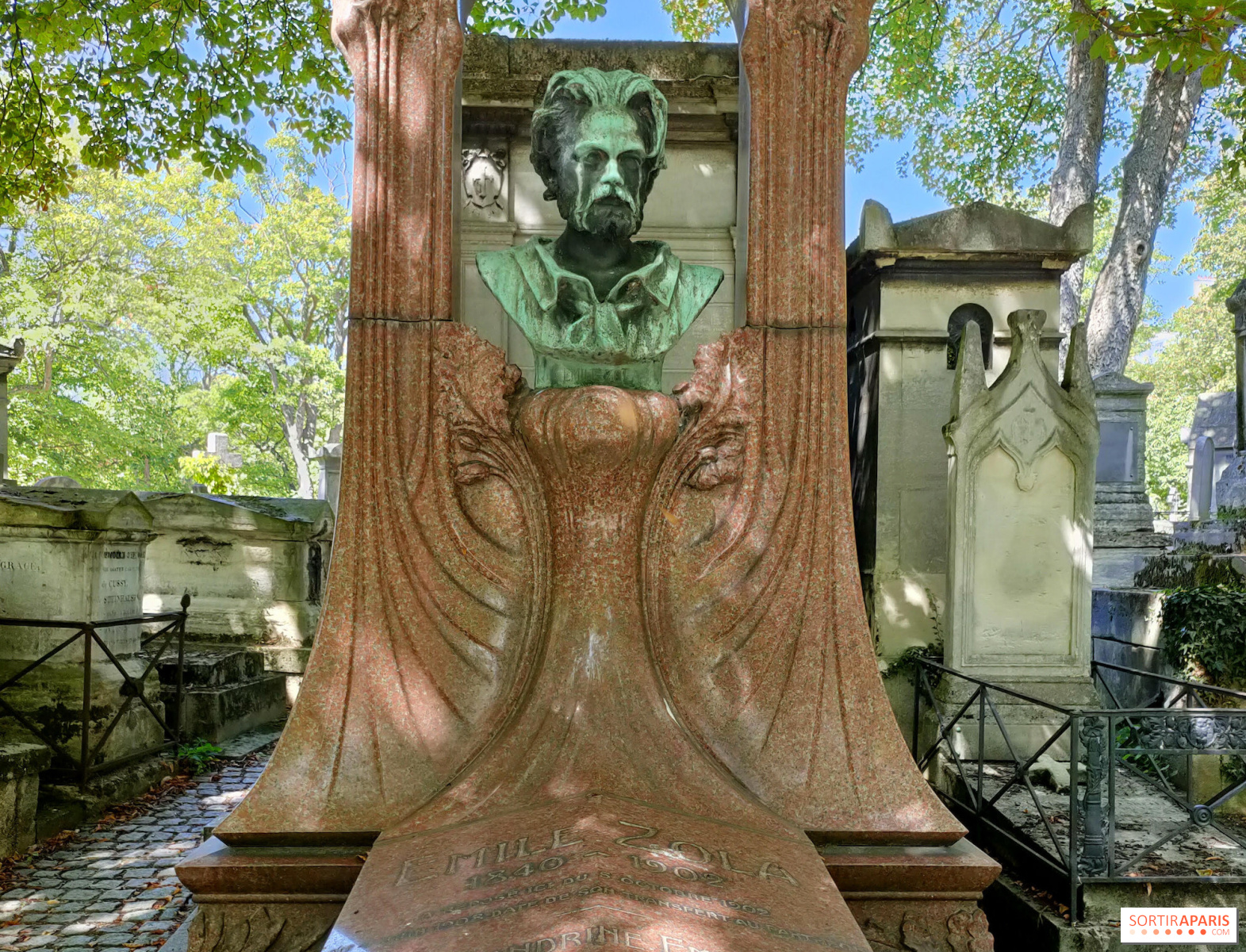
The death of Zola certainly provokes a considerable emotion. His funeral is held on October 5, 1902 and a crowd accompanies the procession to the Montmartre cemetery, where the writer is initially buried. Anatole France delivers his funeral oration and notably hails in him "a moment of human conscience", a phrase that will remain attached to his memory.
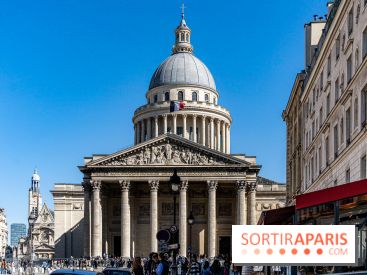
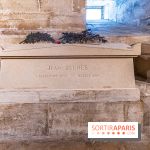
Six years later, on June 4, 1908, his ashes were laid to rest in the Panthéon, where they were laid alongside those of Victor Hugo. The ceremony rekindled the passions surrounding the Dreyfus Affair: during the transfer, nationalist journalist Louis Grégori fired at Alfred Dreyfus, wounding him slightly.
To go further:
Walking in Emile Zola's footsteps in Paris, from the Latin Quarter to the shadow of the Pantheon
Émile Zola, a major figure of naturalism and social commitment, set his novels in a changing Paris. From his Parisian homes to his public battles, from commemorative plaques to the avenues that bear his name, here's an itinerary to discover how the capital still bears the novelist's imprint. [Read more]
Victor Hugo, Marie Curie, Voltaire, Alexandre Dumas, Simone Veil... Inside Paris's Panthéon, the crypt holds the tombs of some of France’s most esteemed historical figures. But not every figure honored in the monument is actually buried there. Here are the best-known names laid to rest in the Panthéon and where to find their graves. [Read more]
This page may contain AI-assisted elements, more information here.
Dates and Opening Time
On September 29, 2026
Location
Emile Zola's House
21 Rue de Bruxelles
75009 Paris 9
Route planner

























 Walking in Emile Zola's footsteps in Paris, from the Latin Quarter to the shadow of the Pantheon
 Who is interred in the Panthéon in Paris? The notable figures who have their tomb or cenotaph there