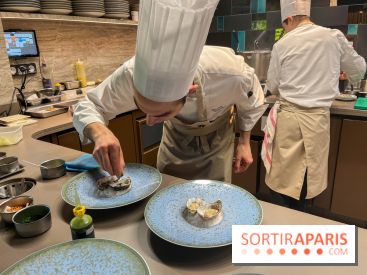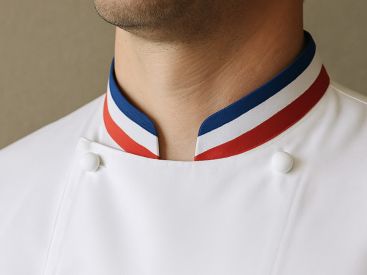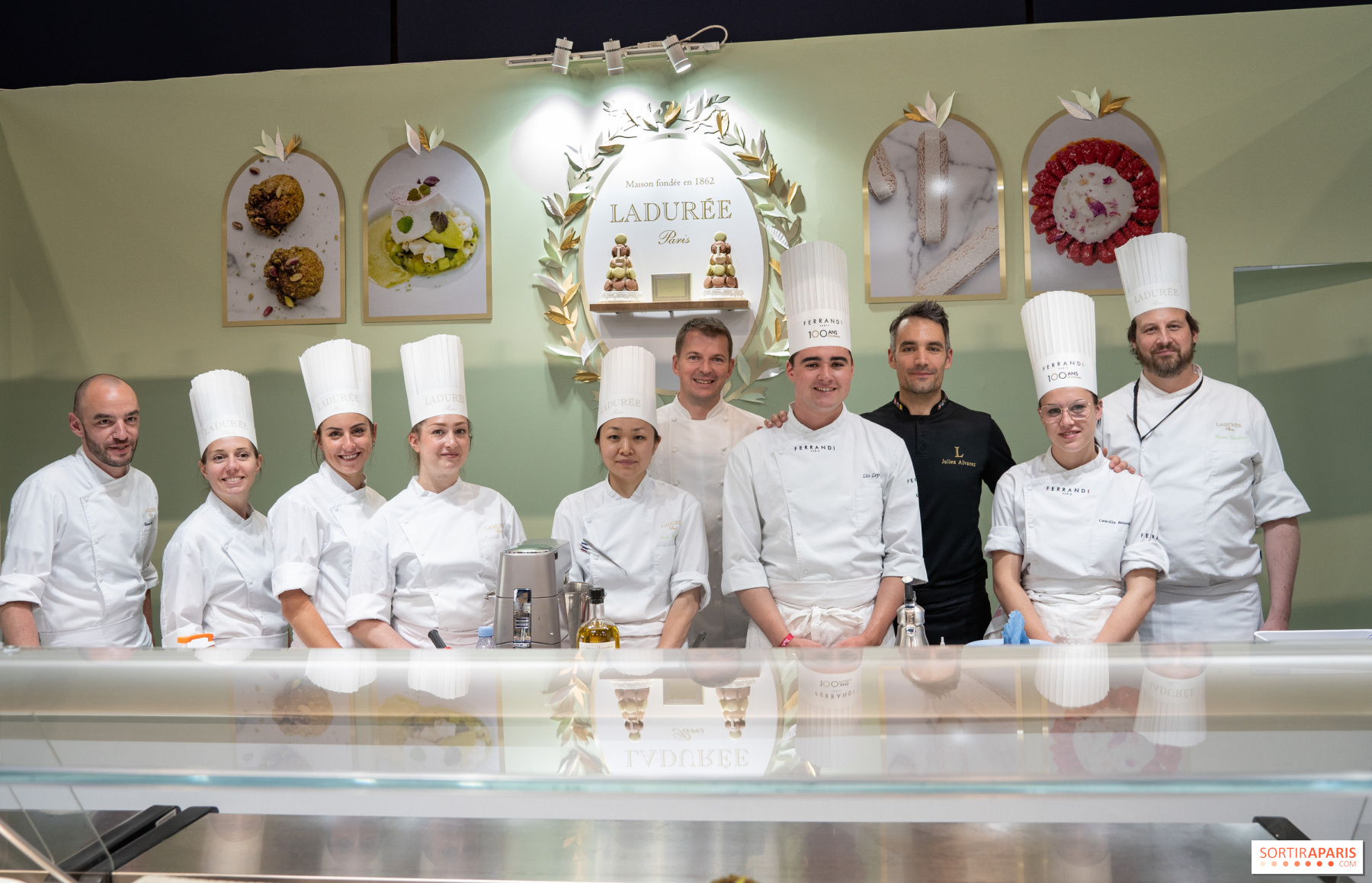
Tall, white and pleated, the chef's hat is now one of the most recognizable symbols of French cuisine. But where does it come from? Between Byzantine traditions, hygiene standards and hierarchical ranks, the history of the chef's hat is as rich as it is flavorful.
The origins of the chef's hat can be traced back to Antiquity or the Middle Ages, according to various hypotheses. One of the oldest versions takes us back to the 6th century, inthe Byzantine Empire. Court chefs already wore headgear resembling a toque to protect themselves and signal their rank. At that time, Orthodox monks, who wore a headdress called a "kalimavkion," are said to have influenced this clothing practice among court artisans, including chefs.
Another theory links the toque to the royal chefs of the Middle Ages, who adopted a specific uniform to show their affiliation with the royal household and avoid being confused with servants or domestics.
The modern form of the white chef's hat has its roots in the 19th century. The famous chef Antonin Carême, a pioneer of French gastronomy, is said to have codified the wearing of white in the kitchen, considering this color a symbol of cleanliness. He wore a tall, rigid hat, inspired by doctors' caps, to give prestige to the profession.
But it was Auguste Escoffier, another major figure in French cuisine, who generalized the hierarchy based on the height of the toque. The higher it is, the higher the chef's rank. It is sometimes said that the folds of a toque (often 100) represent the 100 ways to cook an egg, although this anecdote is more of a culinary legend.
Today, the toque remains a powerful symbol of the profession, although its everyday use is becoming less common in favor of more practical headwear (caps, nets, bandanas). However, it is still worn during competitions, demonstrations, and in certain fine dining establishments, as a sign of respect for tradition.
Although it has evolved, the chef's hat continues to symbolize rigor, technique, and respect for the cooking profession. It tells a story in which cooking is not just a matter of taste, but also of transmission and posture.
This page may contain AI-assisted elements, more information here.