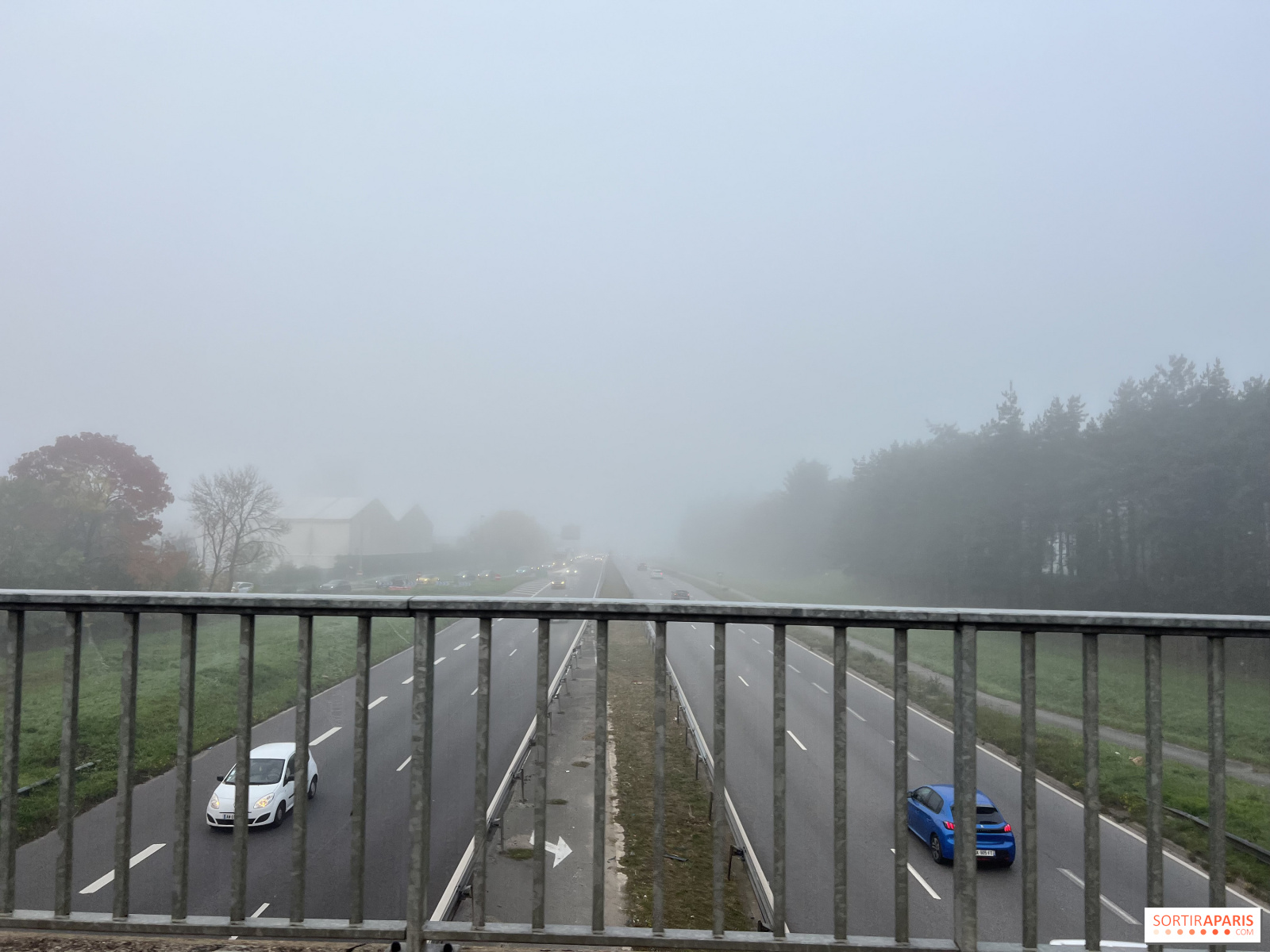
Work to bury the N10 motorway in Trappes will enter a decisive phase in October 2025. This major project, led by the Direction des Routes d'Île-de-France (DiRIF), aims to radically transform the town of Saint-Quentin-en-Yvelines. The current N10, which carries almost 80,000 vehicles a day, literally splits Trappes in two, creating a major nuisance for local residents. By 2028, it will be buried beneath three urban slabs that will create new living spaces.
The project was officially launched on October 3, 2025 in the presence of several elected officials and representatives, including Valérie Pécresse, President of the Île-de-France Region, Pierre Bédier, President of the Yvelines Department, and Ali Rabeh, Mayor of Trappes. This milestone marks the culmination of more than 20 years of reflection on this urban redevelopment project.
The undergrounding of the N10 meets several key objectives: to restore urban continuity between the north and south of Trappes, to improve the quality of life of local residents by reducing noise pollution, and to improve traffic flow and safety at junctions. At present, this "urban highway" separates neighborhoods and creates difficult traffic conditions during rush hours. The landscape is of poor quality and the junctions are dangerous. The project also aims to promote public transport and soft modes of travel.
By creating three urban platforms, the town of Trappes will literally be sewn back together. These spaces will enable pedestrians and cyclists to cross easily from one neighborhood to another, without having to bypass or use underpasses or bridges. It's a real urban transformation in the making.
The new phase begins in October 2025 with the construction of a roundabout at the intersection of Rue Jean Jaurès and RD36. The project involves levelling the RN10 to a depth of 6.5 meters above its current level and building three cover slabs.
The undergrounding will take place in two stages. First, the Province to Paris direction will be treated for 15 months. In concrete terms, the entire length of the line will be excavated at once, creating three urban half-slabs. The other direction, Paris-Province, will then be completed in 12 months, from the fourth quarter of 2026 to the end of 2027.
The three urban platforms are :
Full operation is scheduled for 2028. After that, the urban slabs will have to be developed, a project to be steered by the Saint-Quentin-en-Yvelines urban community in consultation with the town and its residents.
Good news for motorists: most of the undergrounding work will take place within the already-cleared rights-of-way, so traffic disruption will be kept to a minimum. In fact, since 2024, preparatory work has been freeing up the spaces needed for the worksite. Four lanes of traffic will be maintained at all times, using the side-alleys.
However, occasional traffic restrictions will be necessary. Night-time closures have already been organized, notably from Monday March 24 to Thursday March 27, 2025, from 9pm to 5:30am in the Paris-province direction. In these cases, the DIRIF is proposing a detour route via the RD912 and RD58.
A local agent has been on site since summer 2024 to keep local residents and shopkeepers informed of the progress of the work. Information is regularly circulated via newsflashes available on the DiRIF website.
Once the work is completed, Trappes will have a completely new face. The three roof slabs will be redeveloped in consultation with the town of Trappes and its residents. A major urban study is underway to improve the living environment, enhance the attractiveness of the town center and design an environmentally exemplary project.
The large urban plateau in front of the town hall, covering over 3,000 m², will be transformed into a central square. Inhabitants will be able to enjoy new, high-quality public spaces that encourage people to meet and stroll around. Soft mobility and conviviality are the watchwords of this urban restructuring project. The aim is to give more space to pedestrians and cyclists, while preserving parking facilities for those who need them.
Pedestrian crossings will be level on the urban platforms, making it much easier to move between neighborhoods. Gone will be the Marcel Cachin bridge and its cumbersome crossings! The temporary footbridge installed in 2023 will be dismantled once the slabs are in place.
The project represents a total cost of 149 million euros, financed by the French government, the Île-de-France region, the Yvelines département, the Saint-Quentin-en-Yvelines urban community and the town of Trappes. In addition to its technical aspects, this project also has a significant social dimension: 21 years of work experience are planned between now and the end of the project, contributing tolocal employment. An artistic street-art fresco, created by young residents, will also decorate the cladding along the temporary roadway.
To follow the progress of this major project, visit the official DiRIF website or the Saint-Quentin-en-Yvelines website. The transformation of Trappes is underway, and promises to change the face of this Yvelines town for good.