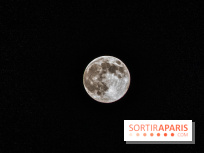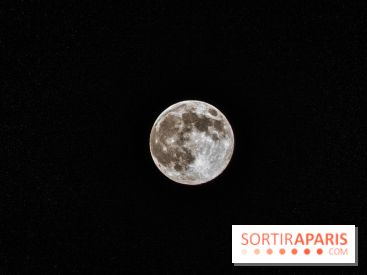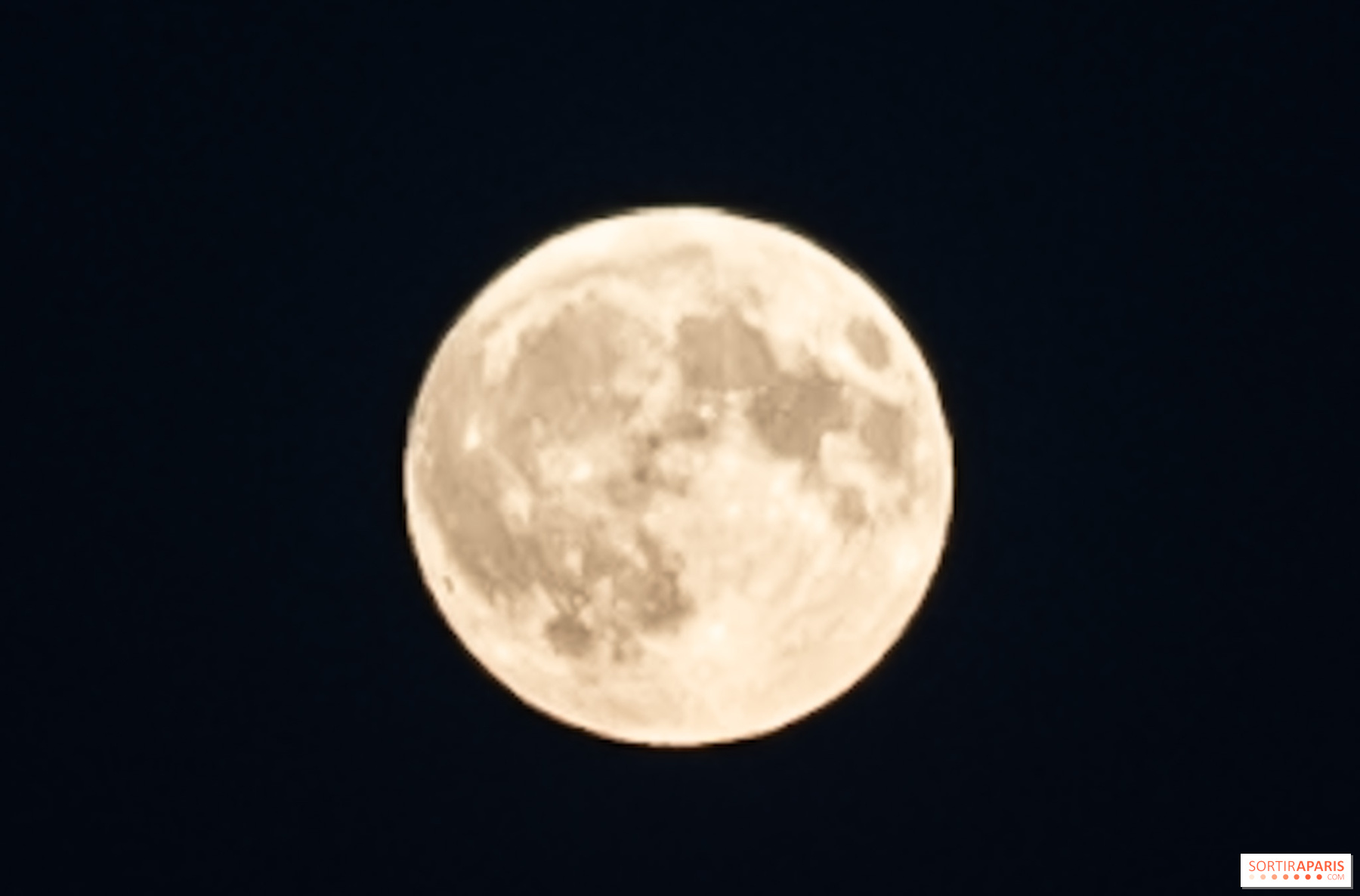
As we've already mentioned, a cold supermoon awaits us this Thursday, December 5. The supermoon on December 4, 2025, promises to be a rare astronomical event not to be missed in Paris and throughout the Île-de-France region. This last full moon of the year will be the most impressive since December 2006, 19 years ago. Earth's natural satellite will appear 8% larger and 15% brighter than usual, offering residents of the Paris region a remarkable celestial spectacle.
This exceptional phenomenon is the result of a combination of several astronomical factors. The Moon will reach its perigee, i.e., its closest point to Earth, at a distance of approximately 357,175 kilometers from us, compared to an average of 384,000 kilometers. But that's not all: this supermoon coincides with the end of a lunar cycle that lasts about 18 years. It is this rare convergence that makes the event so spectacular and explains why we will have to wait until 2042 to experience a similar phenomenon again.
Curious residents of the Paris region should be ready at precisely 12: 14 a.m. on the night of December 4 to 5 to admire the full moon in all its splendor. As soon as the sun sets, around 5:30 p.m., the moon will begin to appear and remain visible throughout the night until the first light of dawn. According to NASA, the lunar disk will appear up to 14% larger and 30% brighter than usual, especially when viewed near the horizon.
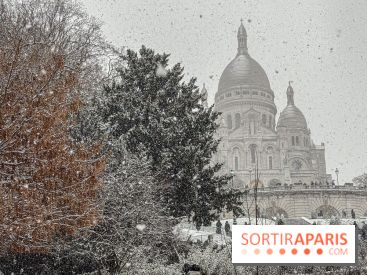
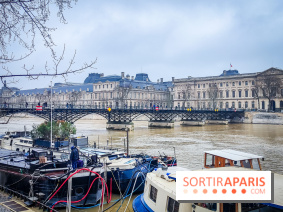
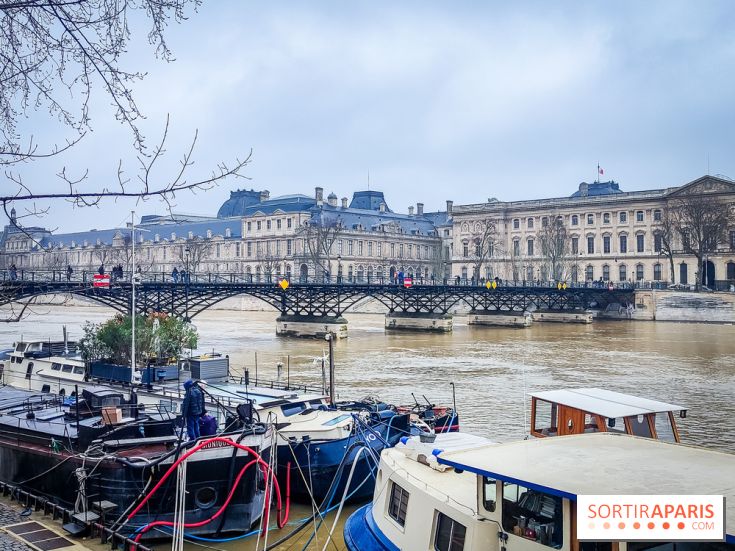
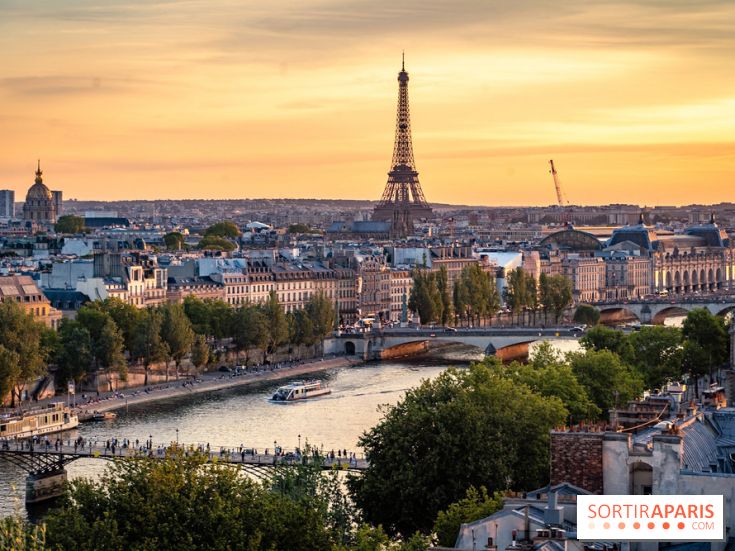
Parisians will be able to enjoy this spectacle without any special equipment. No binoculars or telescope are needed to admire this December supermoon. The moon will be particularly high in the sky in the Northern Hemisphere, making it easy to observe even in the heart of the capital. For the best experience, head to the heights of Montmartre, the Buttes-Chaumont, or the banks of the Seine, where the clear horizon will allow you to fully appreciate this natural spectacle.
This phenomenon occurs when the Earth, Sun, and Moon are perfectly aligned, with our natural satellite on the opposite side of the Earth from the Sun. This positioning of the celestial bodies has a scientific name: syzygy. But what makes this supermoon truly special is that it is also at its perigee, the point in its orbit closest to our planet.
The moon's orbit is not a perfect circle but an ellipse, which causes the distance between the Earth and its satellite to vary from 356,410 kilometers to 406,740 kilometers. This particular configuration, coupled with the end of the 18-year lunar cycle, explains why we haven't seen such a supermoon sinceDecember 2006. Other supermoons are expected between now and 2042, with the next one coming in January 2026, but they will not be as spectacular.
If you look up at the sky over the Paris region this Thursday evening, you'll be able to see much more than just the supermoon. Jupiter, the brightest planet in the night sky after the moon, will be easily visible in the constellation Gemini, shining brightly from dusk onwards. The star Aldebaran, the brightest in the constellation Taurus, will also be visible near the moon. Astronomy enthusiasts can also try to spot Betelgeuse, the red giant in the Orion constellation.
The big question for residents of the Paris region remains the weather. According to Météo-France forecasts, the evening of Thursday, December 4, is expected to be fairly mild for observing this exceptional supermoon. After a rainy front in the early afternoon, the sky should clear up at the end of the day. Temperatures will be around 7 to 8°C in the evening, with a fairly light southerly wind. The weather is expected to be generally cloudy, but clear spells should allow the moon to be seen, especially after midnight.
To give yourself the best chance of seeing it, choose areas with a clear horizon and, if possible, get away from light pollution. If clouds spoil the party in the early evening, don't worry: the Moon will remainvisible all night until dawn, giving you several opportunities to admire it in all its splendor.
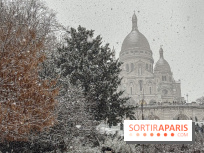
Although this supermoon will be visible everywhere in Paris and Île-de-France, certain spots offer a privileged viewing experience. In the capital, the Sacré-Cœur and its surroundings, the Parc des Buttes-Chaumont, and the banks of the Seine offer unobstructed views. In the inner suburbs, the parks of Sceaux in the Hauts-de-Seine, Saint-Cloud, and the forest of Fontainebleau in Seine-et-Marne offer optimal conditions, far from light pollution.
In short, it's time to look up! Turn your eyes to the sky this Thursday evening. This exceptional supermoon won't be back until 2042, so don't miss this spectacular celestial event.