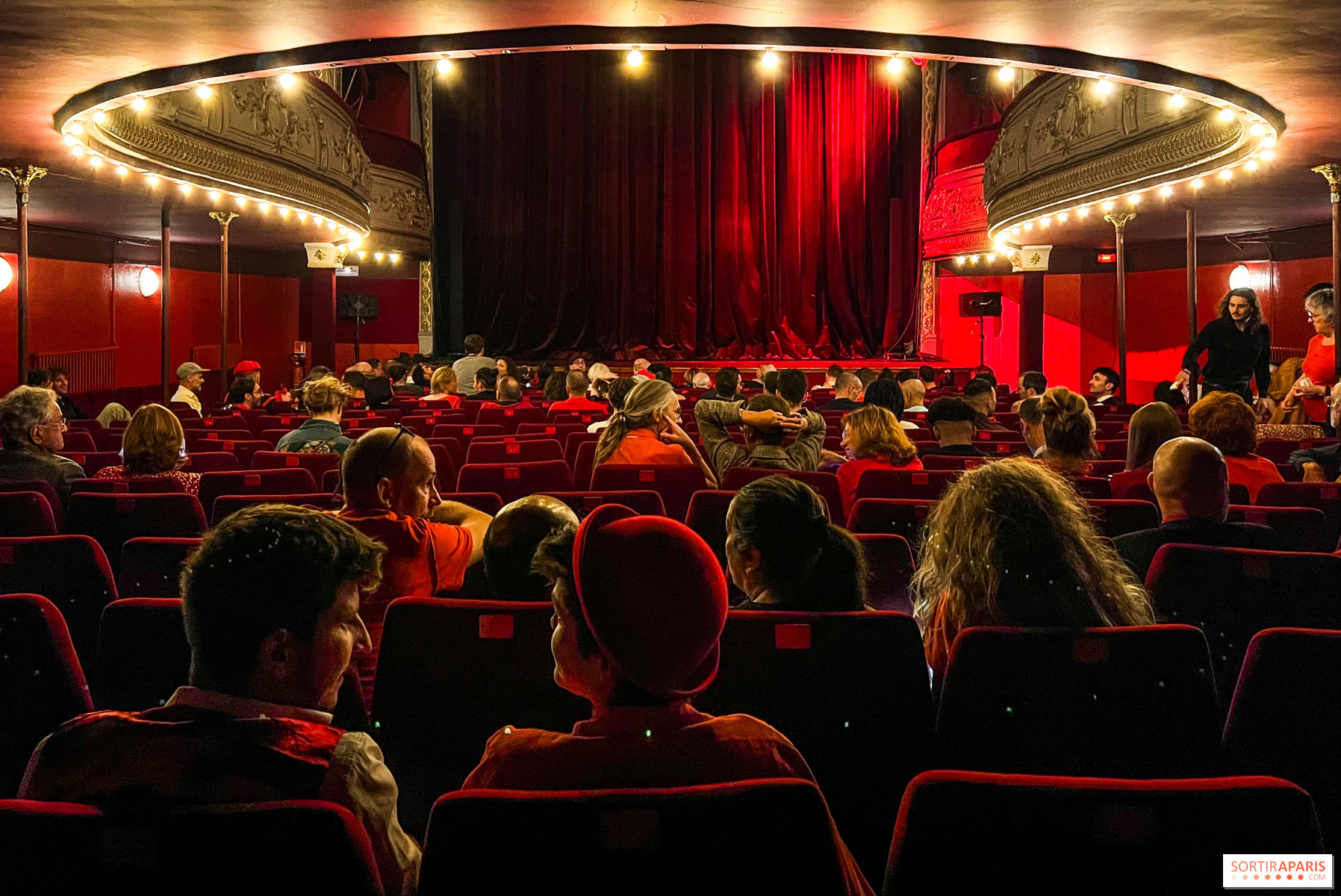
In the 19th century, Boulevard du Temple, located in today’s 3rd and 11th arrondissements of Paris, earned the nickname Boulevard of Crime. This moniker arose from the rapid rise of popular theaters that hosted spectacular melodramas daily — featuring romantic plots, kidnappings, revenge stories, and false murders as staples of their repertoire.
Why was the Boulevard du Temple in Paris formerly known as the "Boulevard of Crime"?
Why was the Boulevard du Temple in Paris once known as the "Boulevard of Crime"? A look back at the fascinating history of this bustling street, once the heart of the theater scene in the 19th century, famous for its bloody melodramas and blockbuster shows. [Read more]
Among the venues were renowned halls such as the Théâtre des Funambules, the Théâtre de la Gaîté, the Théâtre Lyrique, as well as the Folies-Dramatiques and Délassements-Comiques.
In 1862, as part of the sweeping urban renewal projects driven by Baron Georges‑Eugène Haussmann, most of the Boulevard du Temple was demolished to make way for a wider road and the development of the Place de la République.
This demolition led to the closure or disappearance of most of the venues that had built the boulevard’s reputation. However, some theaters did not disappear entirely; instead, they were rebuilt or relocated elsewhere either before or after these renovations:
La Gaîté Theatre was rebuilt in 1862 on Papin Street, near Square des Arts et Métiers, to host the same company. This later building would eventually become known as La Gaîté Lyrique.
The Ambigu‑Comique Theatre, although older than the Boulevard du Crime, was reconstructed outside the boulevard following a fire in the early 19th century, before continuing its story elsewhere in Paris. It was permanently closed in 1966.
However, other venues, such as the Théâtre des Funambules, missed out on this opportunity: they were simply demolished during major redevelopment projects and weren't relocated or rebuilt elsewhere.
Among all these venues, only one escaped physical destruction along the boulevard: the Théâtre Déjazet, located at 41 Boulevard du Temple. This can be explained by a practical detail of the city's urban development: during the renovation works, only the even-numbered side of the street was extensively remodeled, while the odd side — where the theater is situated — remained intact and was not demolished.
Established in the mid-19th century and renamed in 1859 in honor of the actress Virginie Déjazet, this historic theater still hosts performances today. It stands as the last remaining relic of the famous Boulevard du Crime.

While most of the theaters once lining the boulevard have either been demolished or relocated, the Déjazet Theatre remains the only venue still operating at its original site on the historic Boulevard du Crime. The Théâtre Déjazet is not just the last remaining survivor of the Boulevard du Crime—it also holds significant architectural and cultural heritage value. The building has been listed as a Historical Monument since December 6, 1990, highlighting its importance to Paris’s architectural and cultural patrimony.
At first glance, the theater's façade may seem modest, hidden behind the row of Haussmannian buildings lining the boulevard. Yet, this unassuming exterior conceals centuries of architectural history. The current structure is built upon the remains of an ancient real tennis court constructed in 1770 by architect François‑Joseph Bélanger, commissioned by the Count of Artois (the future King Charles X). Originally, this building was not designed as a theater but as a space dedicated to playing the game of real tennis, a prestigious aristocratic sport of the 18th century.
The successive transformations of the venue—initially a real tennis court, then a bathhouse during the Revolution, followed by a café-concert, and finally a theater—have left their mark on the interior architecture. Meanwhile, the building’s façade has gradually evolved to reflect changing styles and functions over the years.
Inside, the theater retains the layout of an Italian-style hall, a classic design typical of traditional European performance venues, which promotes a close connection between the stage and the audience. This configuration features a deep stage, an orchestra pit, and tiered balconies, ensuring that a large audience can enjoy an unobstructed view of the performance.
The original decor — although altered over time — still evokes the aesthetic of 19th-century theaters, with wooden paneling, velvet details, and decorative elements that recall the historic performance halls of Paris.
The room is also home to frescoes attributed to Honoré Daumier, the renowned 19th-century caricaturist and painter, which further elevates its artistic and historical significance. These figurative murals contribute to the unique ambiance of the space, blending popular humor, live performance, and cultural memory.
Throughout its history, the theater has undergone several internal transformations, notably when it was converted into a cinema in 1939 — during which some balconies and boxes were closed or altered — and later during its renovation as a performance hall in the 1970s and 1980s. Despite these functional updates, the original supporting structure and historic spatial volumes have been preserved, allowing visitors today to still experience the continuity of theatrical traditions dating back to the 19th century.
This page may contain AI-assisted elements, more information here.


























 Why was the Boulevard du Temple in Paris formerly known as the "Boulevard of Crime"?