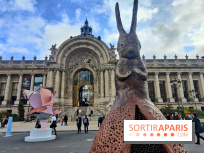
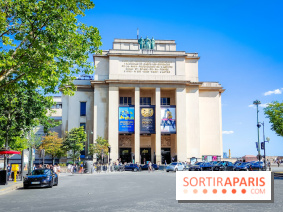
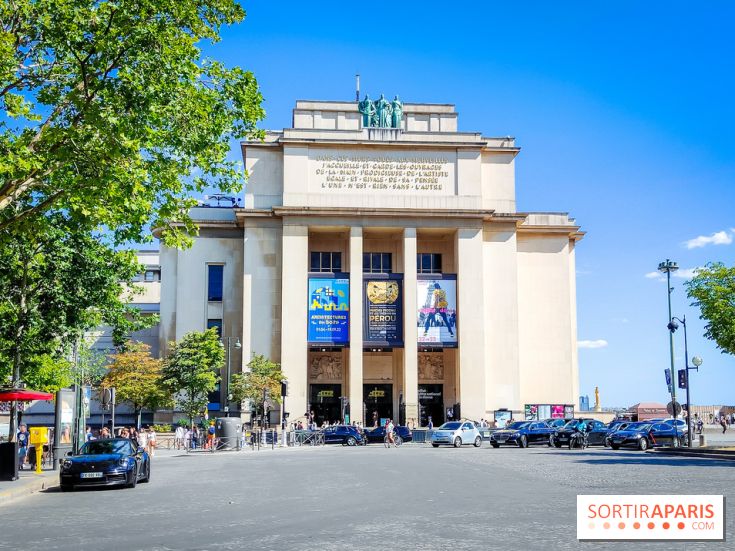
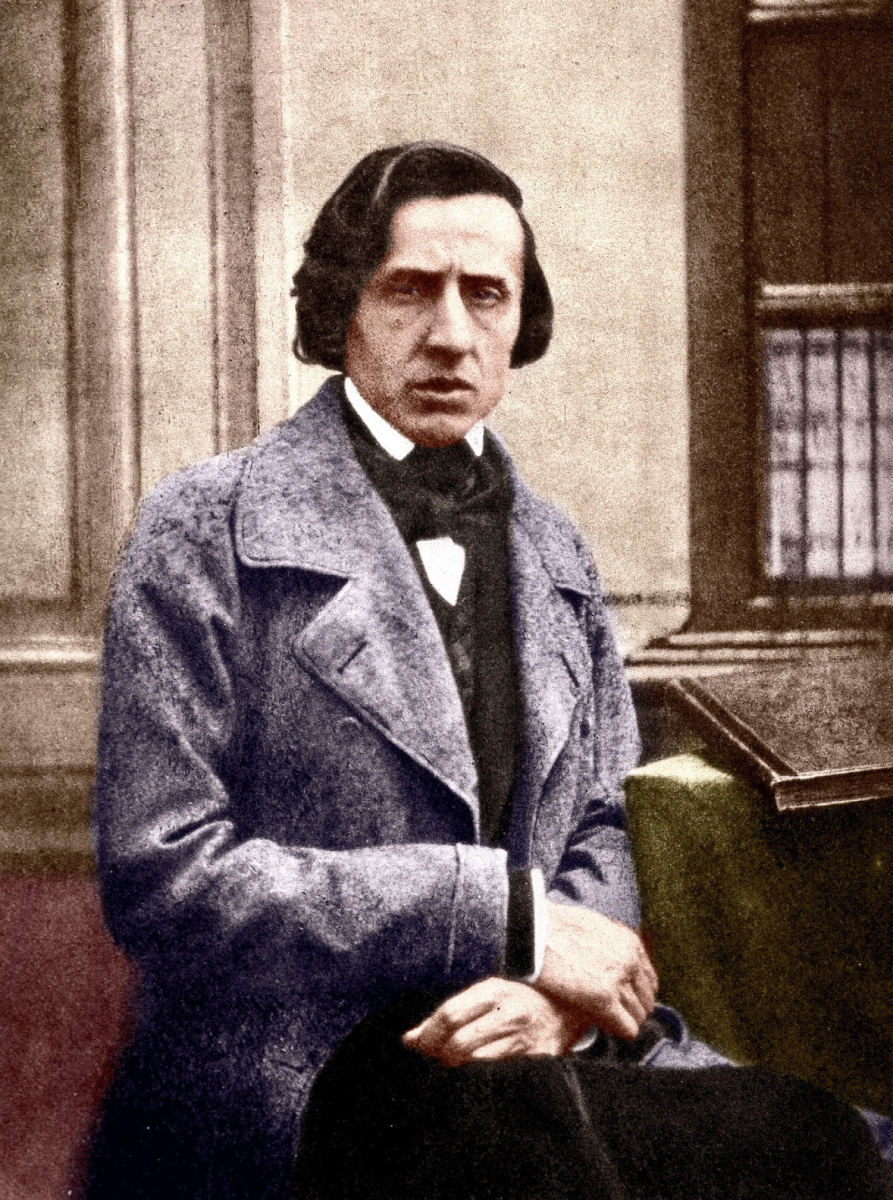
At 11 a.m., the Madeleine is draped in black banners. In the imposing neoclassical church freshly consecrated only a few years earlier, artists, musicians, aristocrats, members of the Polish community and admirers come to pay tribute to Frédéric Chopin, who died at just 39. On October 30, 1849, the pianist’s funeral takes the form of a meticulously prepared musical ceremony, to the point of creating an unusual situation: to respect one of his last wishes, they had to bend the church’s rules.
Chopin passed away in the night of October 16–17, around 2 a.m., in his last Paris apartment at 12 place Vendôme. Very frail for months, he had moved there at the end of September with help from loved ones. His sister Ludwika, who had traveled from Poland, was by his side during his final weeks. After nearly 18 years spent mainly in France, the composer dies at the heart of Paris, the city where he had built the bulk of his European career.
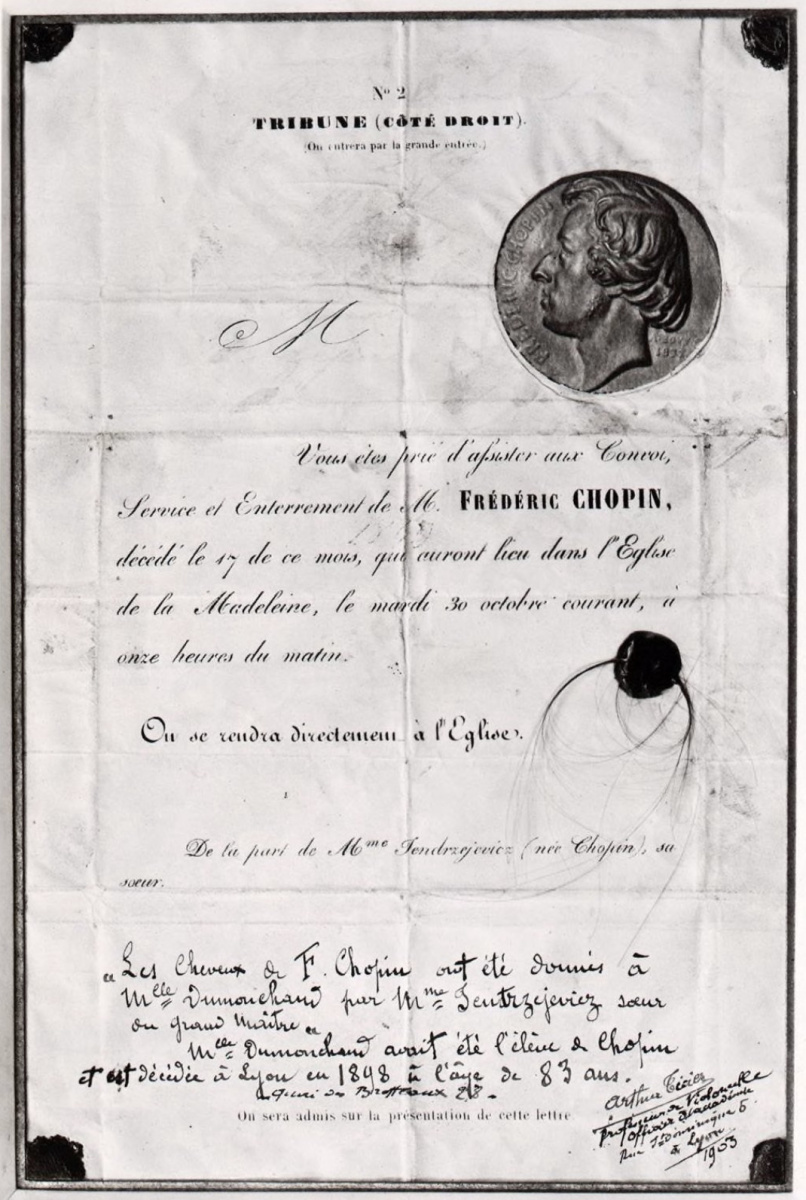
Shortly before his death, Frédéric Chopin voiced a precise wish: he wanted Mozart's Requiem to be performed at his funeral. The choice was far from incidental. He deeply admired Mozart and insisted that this work accompany his departure. But the request presents a problem for La Madeleine: Mozart's Requiem contains sections for female voices, while female singers are not normally admitted into the church choir.
An exceptional permit is finally granted. The female vocalists may participate, provided they stay hidden behind a curtain. Among the soloists are Pauline Viardot and soprano Jeanne-Anaïs Castellan, alongside tenor Alexis Dupont and the Italian bass Luigi Lablache. This difficulty helps explain the unusually long delay between the death of the musician and his funeral.
Chopin’s music also accompanies the coffin. His famous 'Funeral March', taken from the Piano Sonata No. 2 in B-flat minor, is performed in an orchestration prepared for the occasion by Napoléon-Henri Reber. At the organ of La Madeleine, Louis Lefébure-Wély also plays two Chopin preludes, the ones in E minor and in B minor.
The Mozart Requiem is performed by the orchestra and choir of the Society of Concerts at the Conservatoire, conducted by Narcisse Girard. In this monumental church, inaugurated only in 1842 after nearly 80 years of construction, music thus becomes the through-line of the farewells to one of the most famous pianists of his era.

The ceremony drew a crowd, with 3,000 people inside the building, turning that day into one of Paris’s first major venues dedicated to paying tribute to an artistic figure. A tradition that would outlive Chopin, continuing with funerals and tributes to Camille Saint-Saëns, Gabriel Fauré, Édith Piaf, and, much later, Johnny Hallyday.
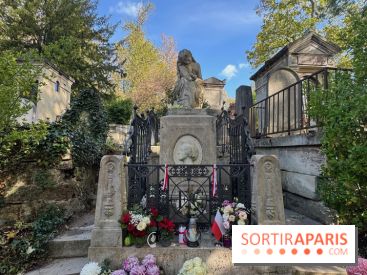
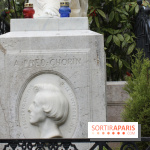
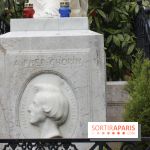
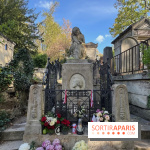
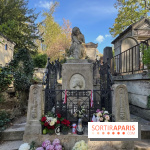
After the ceremony, the procession departs from the Place de la Madeleine and heads to the Père-Lachaise Cemetery, where Chopin is buried. His body remains in Paris, but not his heart! True to his wish, his sister Ludwika brings it back to Poland. Preserved in an urn, it will be set into a pillar of Warsaw’s Church of the Holy Cross, marking a striking separation between the Paris where the composer lies and the Poland to which he remained deeply devoted.

Paris proved pivotal in Chopin’s life from the moment he arrived in 1831. There he rubbed shoulders with Franz Liszt, Eugène Delacroix and Hector Berlioz, the aristocratic salons and the milieux artistiques of the capital. It was there that he also met George Sand, with whom he would share several years of his life.
To learn more:
Following in Frédéric Chopin's footsteps in Paris, from the salons to the Polish library
Explore the Parisian landmarks associated with Frédéric Chopin, from his modest apartment to the salons of society and the historic tributes he paid. The composer left his mark on the capital. [Read more]
On Île Saint-Louis, the Polish Library of Paris not only holds a remarkable collection of literary works but also features three intimate museums dedicated to Chopin, Mickiewicz, and Bolesław Biegas—perfect for those eager to explore France's rich cultural ties with Poland. [Read more]
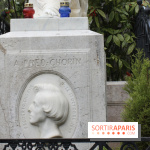
Composer Frédéric Chopin is buried in the Père-Lachaise cemetery in Paris, but an essential part of him lies... in Warsaw! Discover the incredible story of his heart, secretly transferred to his homeland. [Read more]
The Eglise de la Madeleine as we know it today is the one Napoleon I imagined. Except that, at the time, the building was not intended to be a church, but a Temple of Glory dedicated to the Grande Armée. Its Greco-Roman architecture remains fascinating to this day. [Read more]
The Polish community in Paris has left its mark on iconic places that are still visible today. Exploring the neighborhoods, libraries, and churches, we can read the story of a diaspora that has managed to put down roots while remaining true to its identity. [Read more]
This page may contain AI-assisted elements, more information here.
Dates and Opening Time
On October 30, 2026
Location
Madeleine Church
Place de la Madeleine
75008 Paris 8
Route planner
Accessibility info
Official website
lamadeleineparis.fr



























 Following in Frédéric Chopin's footsteps in Paris, from the salons to the Polish library


 Paris: On the Île Saint-Louis, this library hides three museums, one of which is dedicated to Chopin.
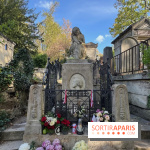
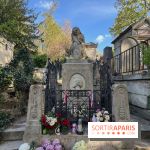 Did you know? The composer Frédéric Chopin lies in Paris... without his heart!


 The Church of La Madeleine, an ancient temple in the very heart of Paris.