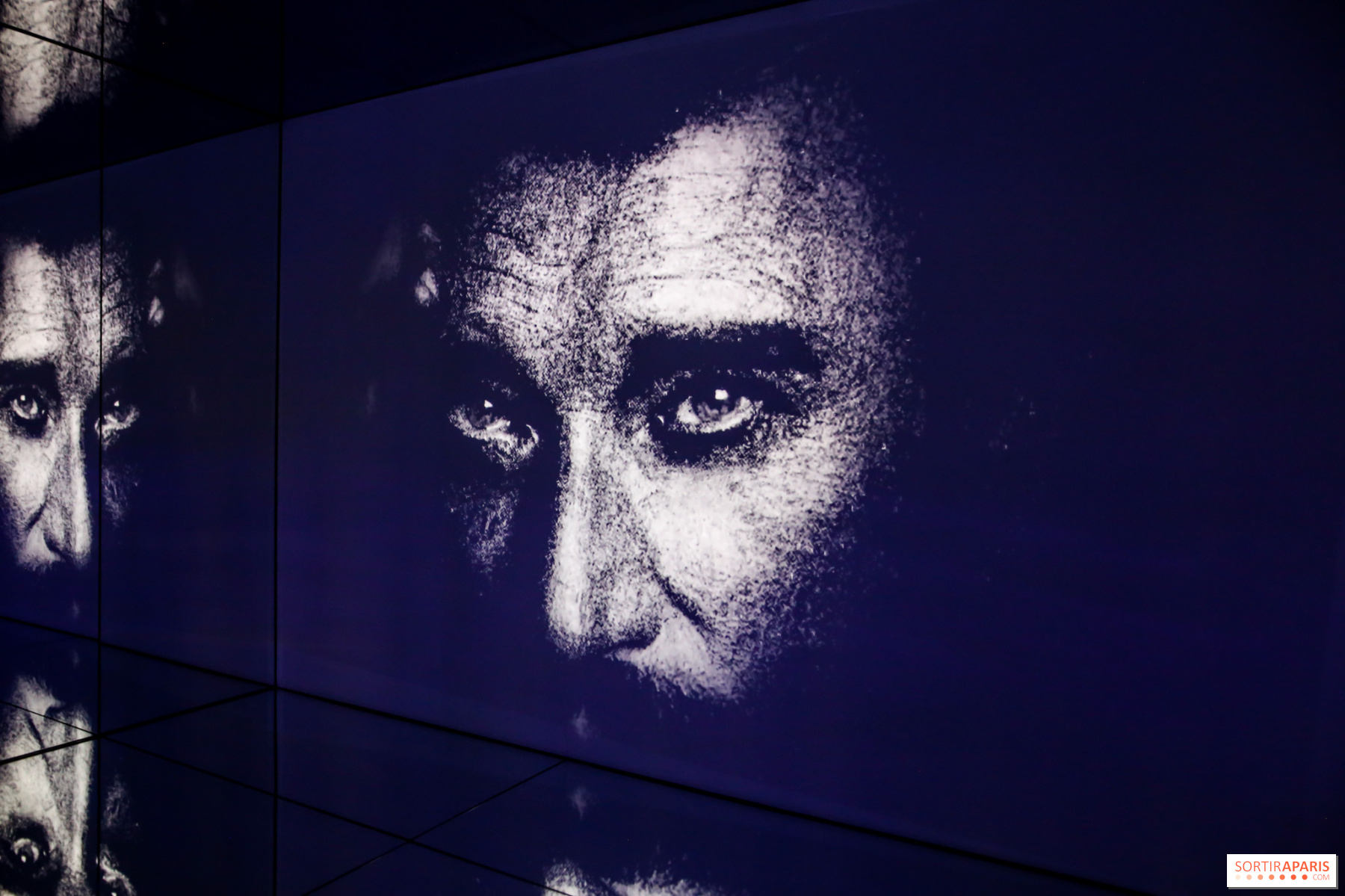
In Paris, Johnny Hallyday is never really far away. All you have to do is look up at a plaque, or push open the door of a theatre, to see a fragment of his life resurface. Before the packed stadiums, the motorcycles, the guitars, and the almighty concerts, there was, in fact, a young boy named Jean-Philippe Smet. His Parisian story begins on a quiet street in the 9th arrondissement and continues through the rock temples, the major recording studios, and the most impressive venues the capital can boast. A perfect walk to trace, step by step, the birth of an idol.
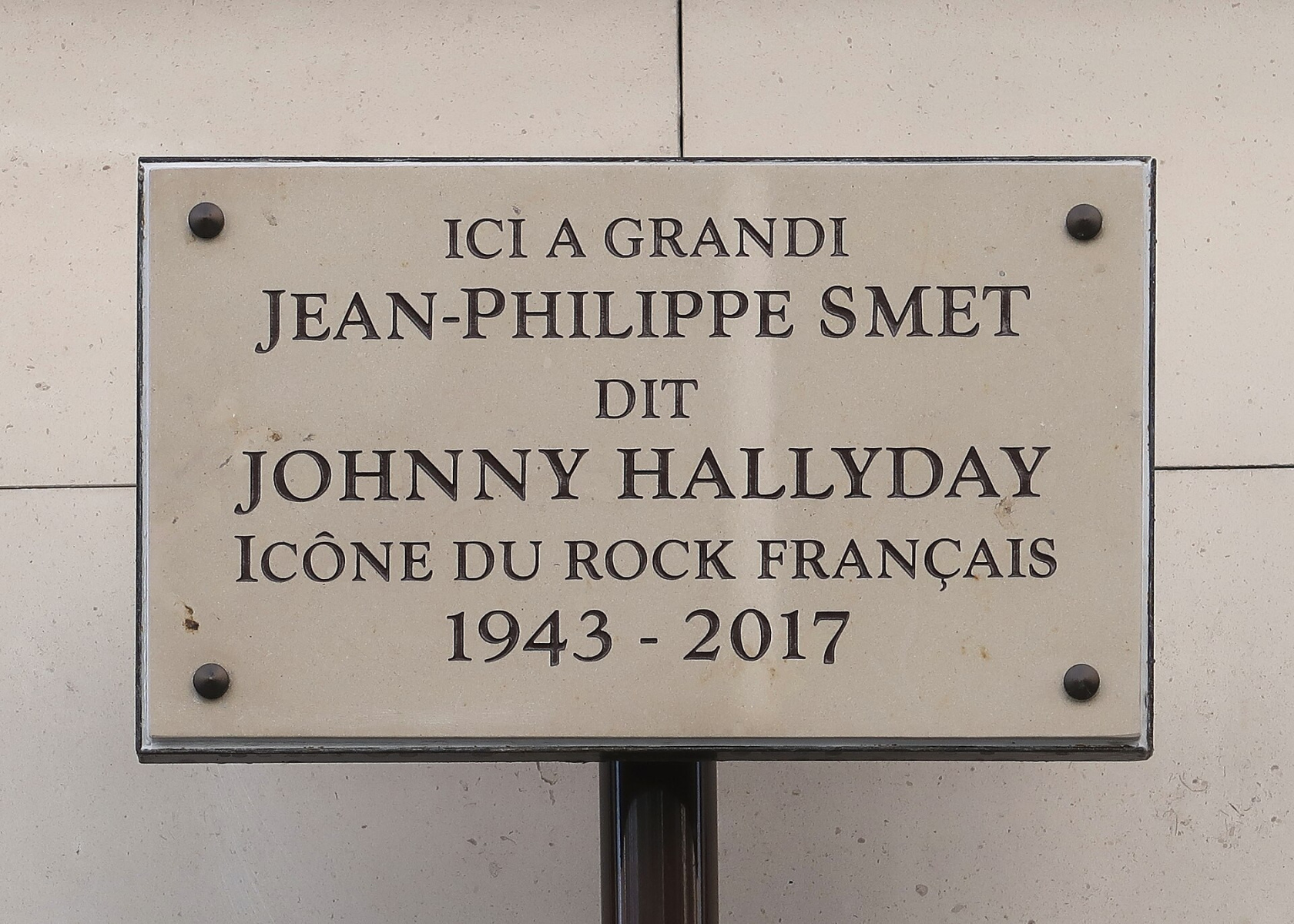
Before Johnny, there was Jean-Philippe. The future singer spent part of his childhood at 13, rue de la Tour-des-Dames, in the 9e arrondissement, with his aunt Hélène Mar and his cousins Desta and Menen. In this world populated by artists, dancers and shows, the young boy discovered early on a passion for the stage. He was also shaped by Lee Halliday, Desta’s partner, an American artist who fed his imagination. His stage name would take its cue from this surname, to which a spelling error would later add a second “y.” Today, a commemorative plaque marks the singer’s presence on this elegant and peaceful street.
Le Golf-Drouot: when Paris first discovers rock'n'roll
Then head to Drouot Street, just a short walk away. That’s where the legendary Golf-Drouot stood, often hailed as the temple of French rock. Originally, the venue was a miniature golf course perched above a café. But by the late 1950s, the golf clubs gradually gave way to American records, electric guitars, and youths dreaming of looking like Elvis Presley.
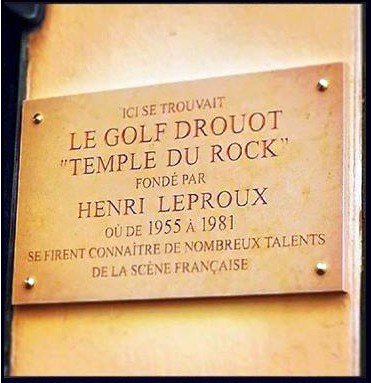
Johnny rubbed shoulders with a whole generation of future artists. Eddy Mitchell, Dick Rivers, and many budding bands also passed through this venue that became legendary. People came to hear songs still rare in France, take part in contests, and dance to the rock. Golf-Drouot no longer exists today, but a plaque marks its former location at 2 Rue Drouot.
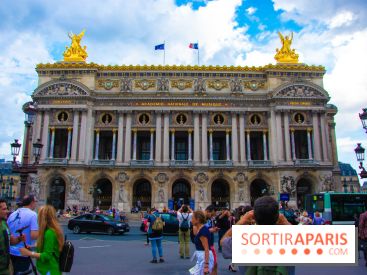
A few streets away, the journey continues at the Olympia. For Johnny Hallyday, this venue is more than just a stopover: it accompanies almost his entire career. He performs there from the early 1960s and returns regularly. The Olympia becomes one of the stages where the Johnny phenomenon truly takes off.
The venue remains relatively intimate compared with the stadiums he would go on to fill. Olympia marks a turning point, turning the boy from rue de la Tour-des-Dames into more than just a teenage idol. He would establish himself as a lasting figure among the giants of French song.
Let's step out from the spotlight and head to the 20th arrondissement and the studio Davout, another iconic hub of Parisian music. For decades, this studio has hosted countless French and international artists. Its large main room and exceptional acoustics make it a venue for recording everything from orchestras to pop and rock albums.
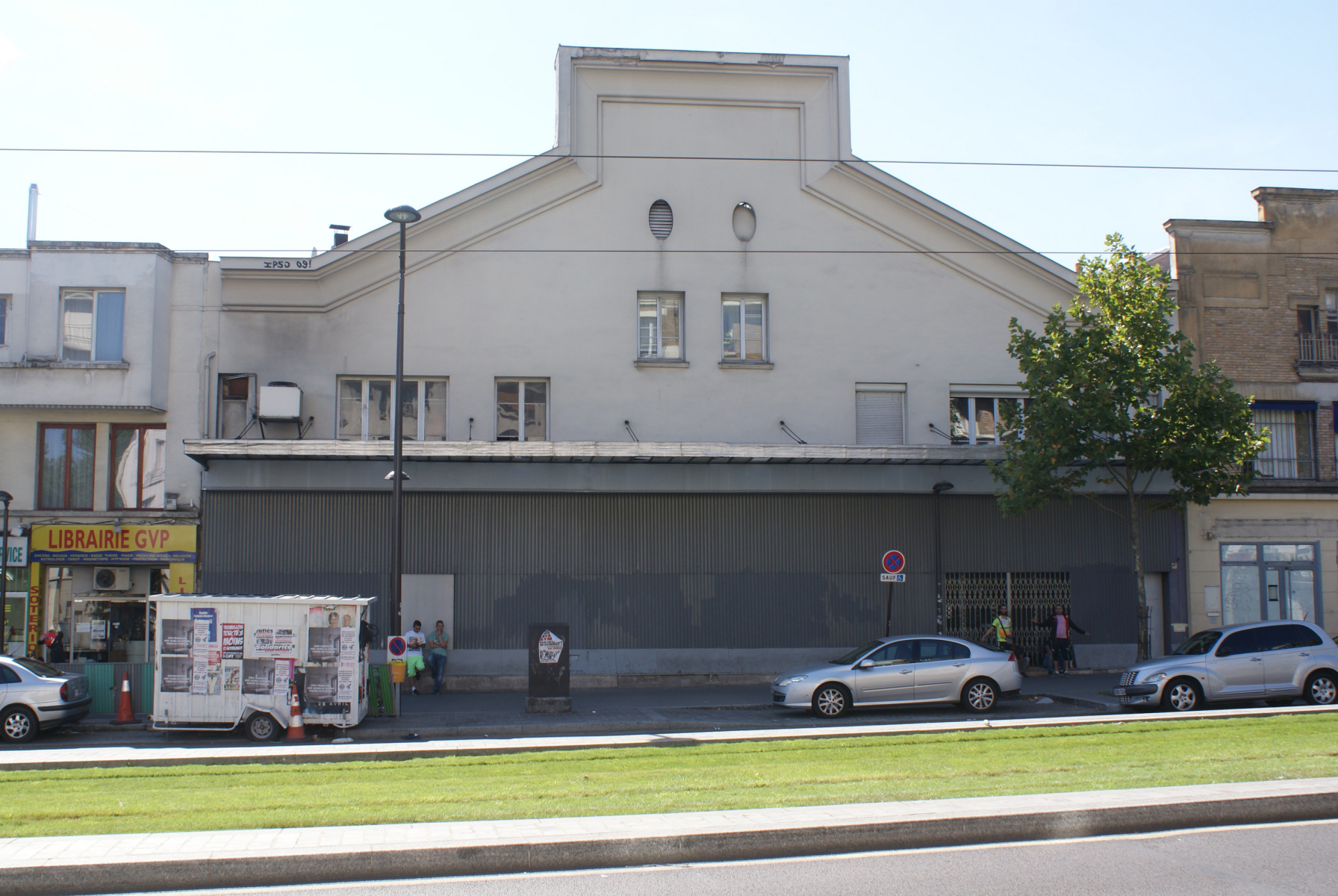
Johnny Hallyday also spent time there over the course of his career. It’s often said that he possessed an almost instinctive energy while recording. Studio Davout closed its doors in April 2017, just a few months before the death of the legendary rock star.
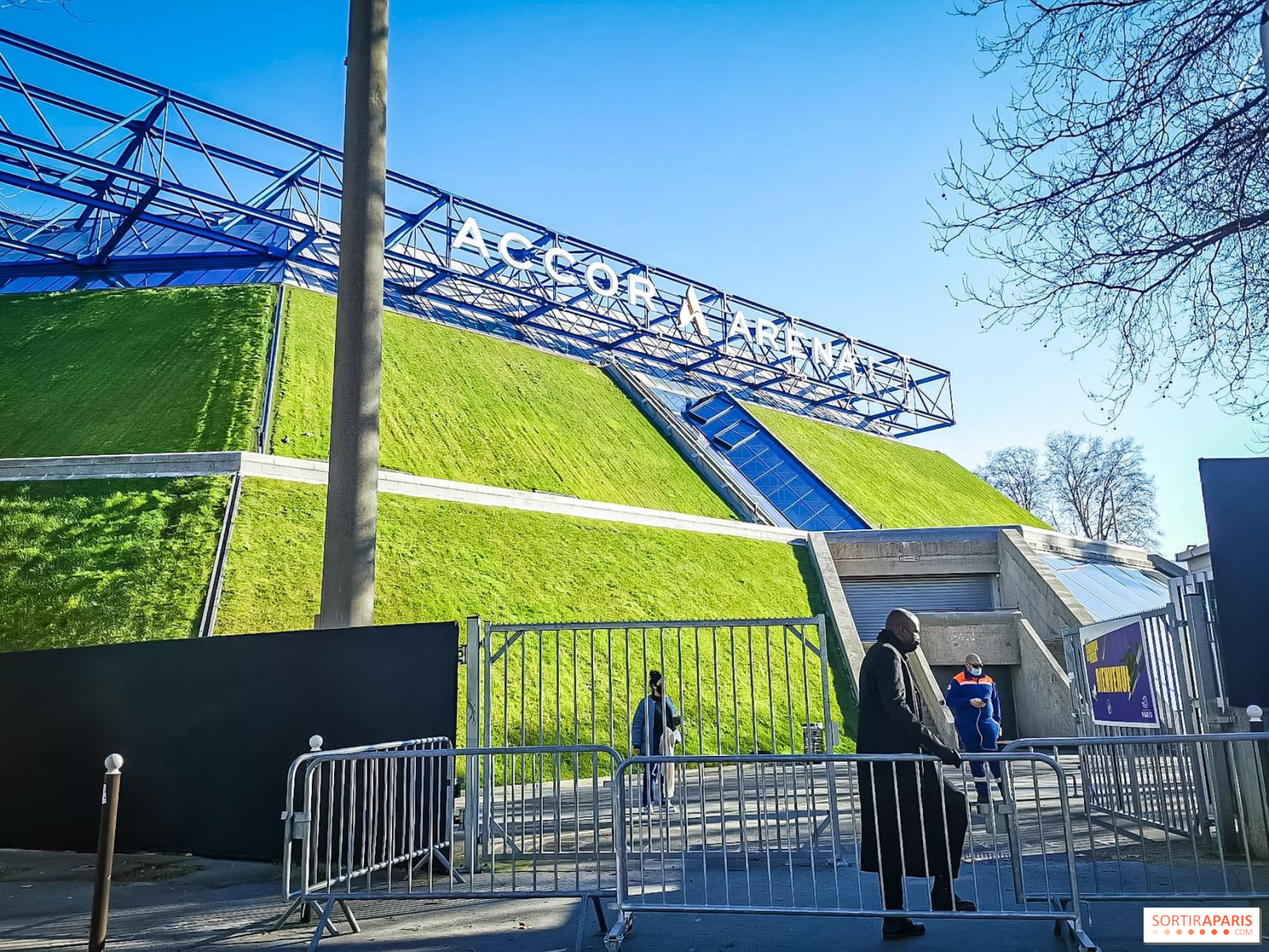
When he arrives at Bercy, Johnny raises the stakes. The Palais omnisports becomes one of his go-to venues and the backdrop for a multitude of shows. Here, a simple microphone on the center of the stage won’t do. Johnny thrives on spectacular entrances, motorcycles, catwalks, flames, giant screens, and sets capable of turning a concert hall into a full-blown movie theater. As the tours progress, his productions grow ever more ambitious, and the crew often has to pull off remarkable feats to make his ideas a reality.
Parc des Princes: a triumphant ushering in the age of stadiums
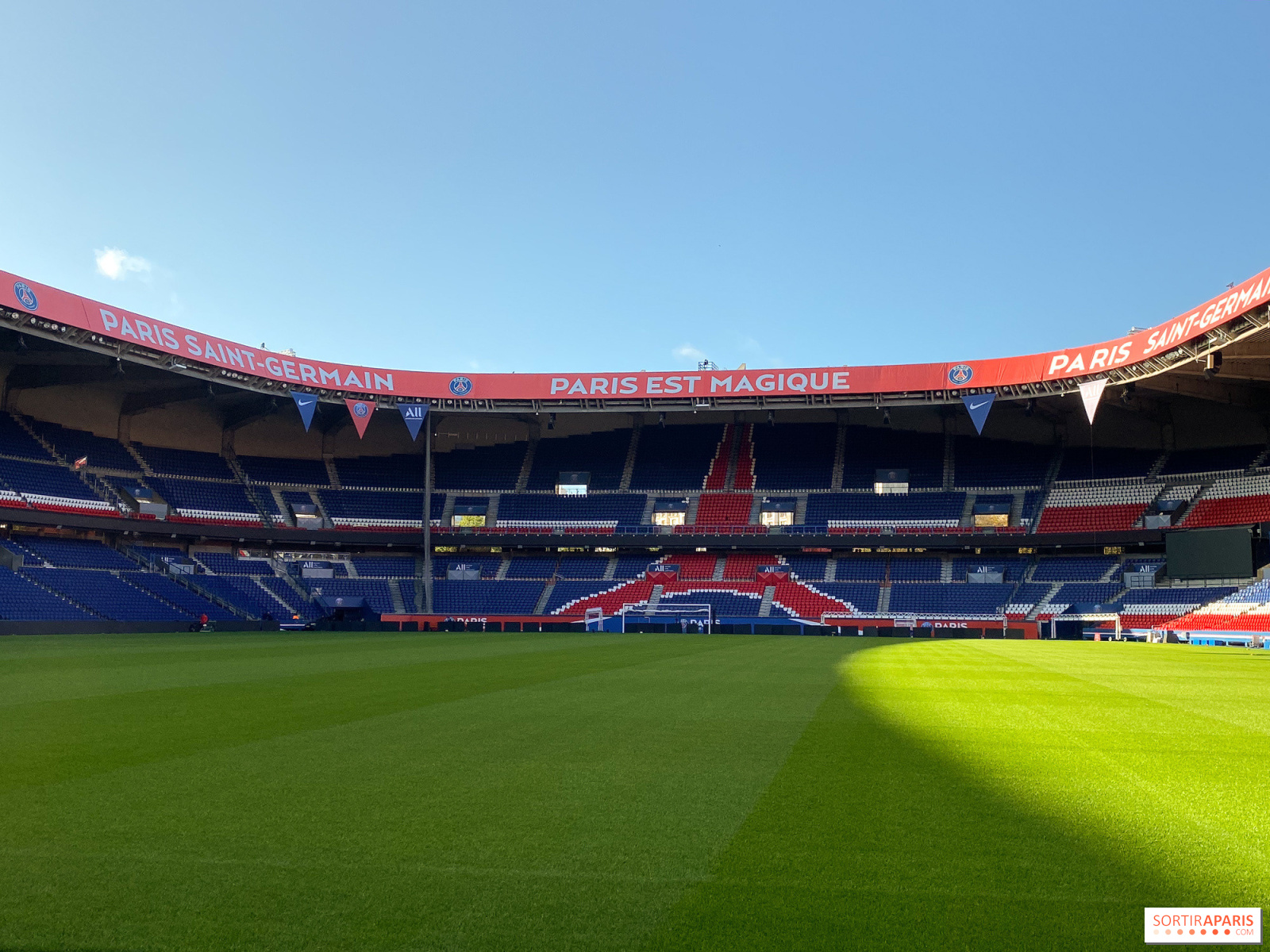
In 1993, Johnny Hallyday celebrated his fiftieth birthday at the Parc des Princes. For the occasion, he didn’t hold back. His entrance quickly became legendary: the singer waded through the crowd to reach the stage. The concert soon ranked as one of the defining moments of his career. The show was colossal, yet it rested on a simple idea: Johnny marking his birthday surrounded by his fans.
After the Parc des Princes, Johnny aims even higher. In 1998, he performs at the Stade de France, opened a few months earlier. The concerts must contend with unusually capricious weather. Some dates were postponed because of heavy rains, but Johnny ultimately took the stage to deliver a monumental show.
His helicopter arrival remains one of the most striking images from those concerts. Hovering above the stage, he appears in the air before coming down to his audience. Johnny would later return to the Stade de France, notably in 2009, during a tour billed as his farewell to the stage. A pledge he would ultimately struggle to keep: when you love concerts as much as he did, permanently shelving the microphone isn’t that simple.
On December 9, 2017, Paris looked different. A few days after Johnny Hallyday’s death, a massive crowd gathered to pay their final respects. The funeral procession rolled down the Champs-Élysées, flanked by several hundred motorcyclists. Along the route, fans cheered, sang, and waved portraits. Some had travelled far to say goodbye to the man whose songs soundtracked their youth, their romances, and their car journeys.
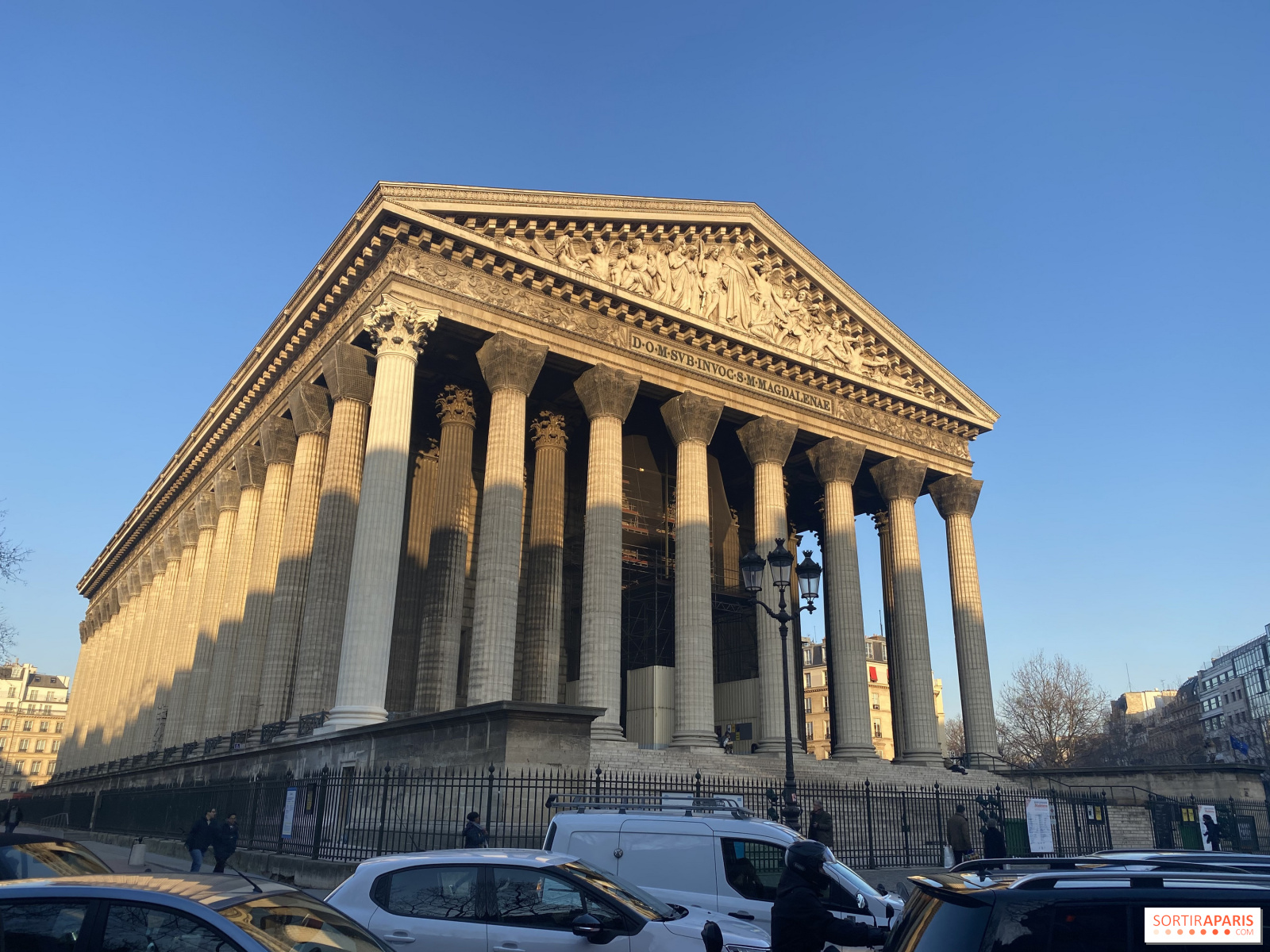
The ceremony continues at the Church of the Madeleine, with his family, friends, numerous dignitaries and government representatives in attendance. That day, the capital does not merely pay tribute to a singer; it salutes an artist who has entered the collective memory.
Since 2021, the Paris-Bercy forecourt has borne the name the Johnny Hallyday Esplanade. The site choice seems obvious: Bercy has played a central role in the singer’s career. The esplanade also hosts a work by Bertrand Lavier entitled « Something of… », a nod to the famous song Something of Tennessee.
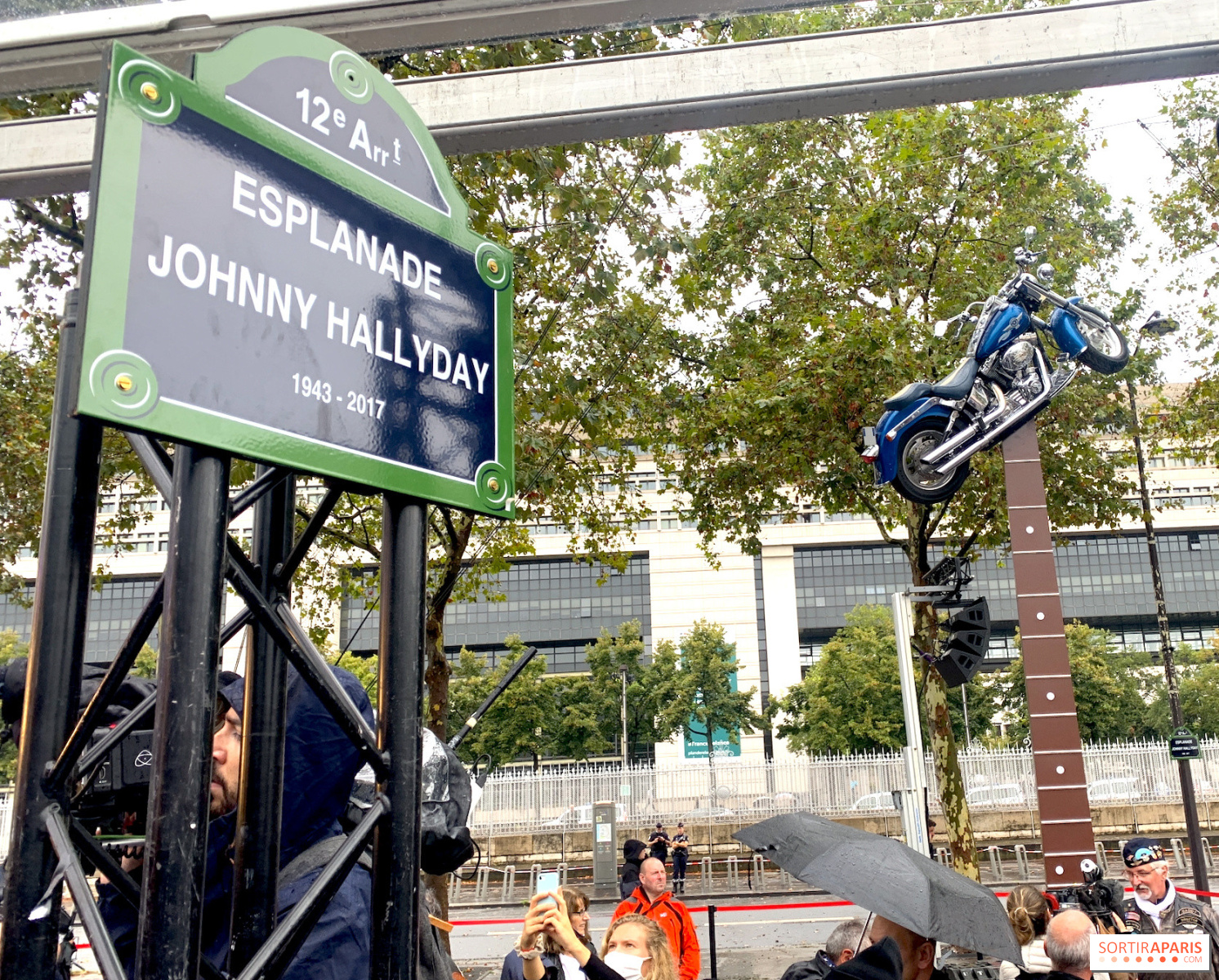
Contrary to what some visitors might imagine, this is not a statue of Johnny. The piece consists of an enormous guitar neck crowned by a Harley-Davidson that belonged to the singer. When it was unveiled, the work drew mixed reactions. Some fans would have preferred a more traditional portrait of their idol, while others praised the symbolic pairing of two elements inseparable from his image: rock and the open road.
Today, fans regularly stop by to pay their respects, lay flowers, or snap a photo. The tour can end here, in front of that curious guitar reaching up to the sky.
From the quiet Rue de la Tour-des-Dames to the vast stages of the Stade de France, Paris traces the full arc of Johnny Hallyday's career. That of a boy surrounded by artists who became a rock star, then a beloved figure celebrated well beyond music. A memory-filled stroll, with a guitar's riffs forming the backdrop.
This page may contain AI-assisted elements, more information here.