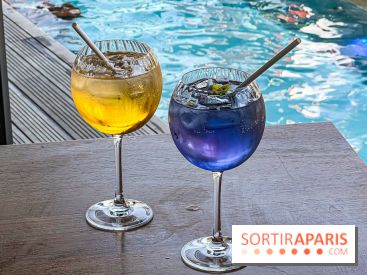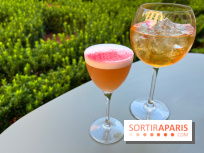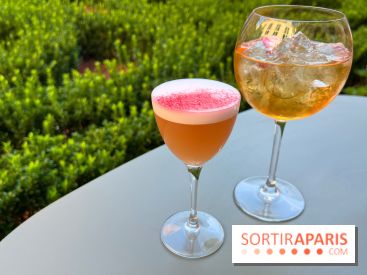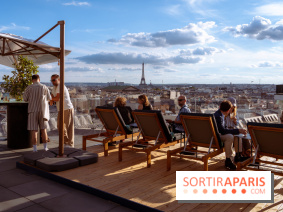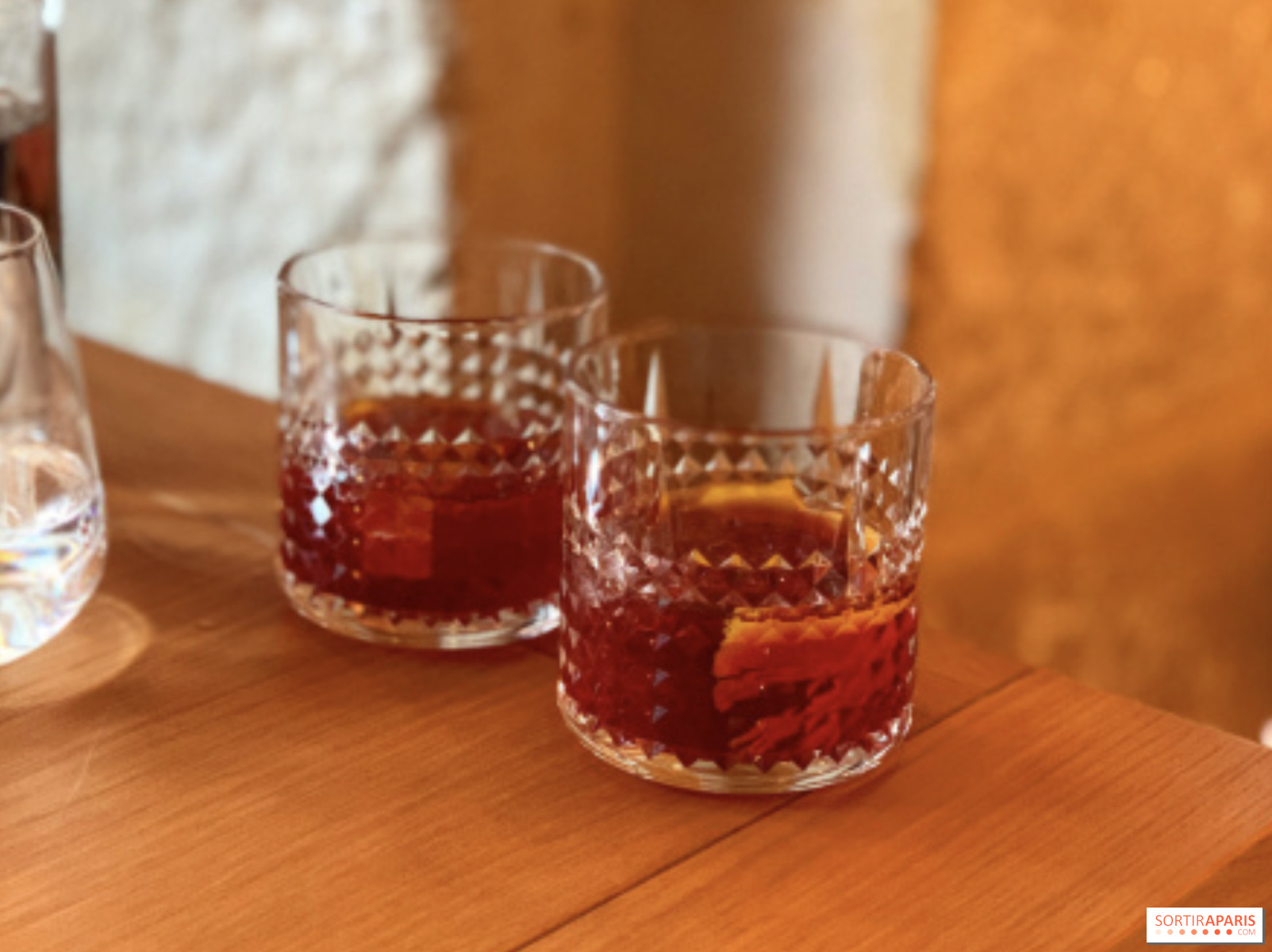
Did you know that several famous cocktails owe their existence to Parisian bars? Among them, the Bloody Mary, the Boulevardier, the French 75, the Monkey Gland or even the Blue Lagoon, all born in Parisian bars during the 20ᵉ century.
A century of existence and elegance that tells a certain story of mixology, intimately linked to the cultural and literary circles of the time. Much more than mere recipes, these cocktails carry with them the history of Paris, its salons, cafés, artists and legends.
Let's set off together (and always in moderation) in search of the cocktails that have been invented in Parisian cocktail bars.
During the Années Folles, Paris became a cultural and artistic hotbed where writers and artists gathered in cocktail bars to exchange ideas about their creations. Such was the case at Harry's New York Bar, the stronghold of American expatriates and bohemian writers.
It's said that Harry's New York Bar was the birthplace of many of the cocktails that are still classics today. At 5 rue Daunou, in Paris's 2nd arrondissement, many of these recipes were born in the shaker of - among others - Harry MacElhone.
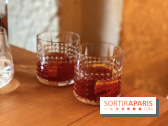
The bartender and founder of the establishment invented the Boulevardier in 1927, a tribute to the American writer Erskine Gwynne, based on bourbon whisky, Campari and sweet vermouth. Initially little-known, it enjoyed a revival in the 2000s and was recognized as an official cocktail by the IBA (International Bartenders Association) in 2020.
The French 75 (named after the French 75 mm cannon) was born around 1915, in a first experimental form based on absinthe, gin and lemon juice, before acquiring its definitive recipe in the 1920s, composed of gin, champagne, lemon and sugar.
The same goes for Between the Sheets, which takes the base of the famous Sidecar (cognac, triple sec, lemon), but adds a touch of white rum, giving it a more playful and... suggestive character. Its name, literally "between the sheets", evokes a seductive, provocative cocktail from the inter-war years, perfect for Parisian nights in subdued light. What does it taste like? Powerful, lemony, dry and slightly sweet.
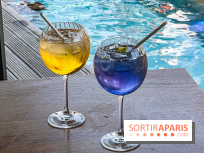
The Monkey Gland, a curious combination of gin, orange juice, absinthe and grenadine, was created in the 1920s by the same Harry MacElhone to evoke the experiments of French surgeon Serge Voronoff; or the Blue Lagoon, a creation by Andy MacElhone (Harry's son) in the 1960s, combining vodka, blue curaçao and lemon juice - colors typical of the pop and graphic fashions of the 60s - and the White Lady, also invented by Harry MacElhone's son and composed of gin, triple sec and lime.
Finally, among the cocktails that are still so successful today, the Bloody Mary is said to have been invented at Harry's New-York Bar around 1921. It was bartender Fernand Petiot who came up with this drink by marrying two atypical ingredients for the time: vodka and tomato juice. The original version was minimalist; it was only later, when Petiot went to work at the King Cole Bar in New York, that he enriched the recipe with Tabasco, celery salt, Worcestershire sauce, black pepper and lemon juice for balance.
The cocktail became a worldwide classic, often associated with brunch and difficult mornings. As for its nickname, it comes from Mary Tudor, nicknamed "Bloody Mary" for her... bloodthirsty reputation!
The bar at the Ritz Paris also saw a host of mixology creations, all the work of the hotel's star bartender, Frank Meier. Among his most prestigious cocktails was the Mimosa - a veritable totem of contemporary brunches - a blend of champagne and fresh orange juice served in a flute, whose creation dates back to 1925.
The bar of the Hotel Ritz, its counter and its tutelary figure never far from the glasses... thewriter Ernest Hemingway, who was living in the capital at the time. It was here that the author took up the shaker to make Death in the Afternoon, a cocktail of his own invention, the recipe for which he had devised during a stay in Havana. Named in homage to his eponymous book(Death in the Afternoon, 1932), it's made with absinthe and champagne, and is a favorite among lovers of bubbles with an aniseed aftertaste.
The Dry Martini, king of minimalist cocktails and emblem of English chic, wasn't strictly speaking born in Paris, but it became a living myth there, particularly in the 1920s-1930s. Composed of gin and dry vermouth, sometimes twisted with lemon zest or an olive, it is considered one of the world's most emblematic cocktails.
But its exact origins remain unclear: some attribute it to San Francisco in the 1860s, others to New York, but it was in Paris, in the bars of the Ritz, the Crillon and Harry's New York Bar, that the Dry Martini found a worldly and literary aura. Hemingway, Fitzgerald and Gertrude Stein were all fans of this dry, elegant and terribly sophisticated cocktail. It became the symbol of a Paris of the night, hushed and cosmopolitan.
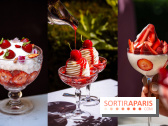
Cocktail bars in Paris, our top picks for aesthetes
Fancy a good cocktail in Paris? The capital is full of cocktail bars where mixology rhymes with creativity. With a cozy atmosphere, tailor-made recipes, and revisited classics, discover these great Parisian cocktail bars. [Read more]
Alcohol abuse is dangerous for your health, please drink responsibly.
This page may contain AI-assisted elements, more information here.
Dates and Opening Time
Next days
Thursday:
from 12:00 p.m. to 02:00 a.m.
Friday:
from 12:00 p.m. to 02:00 a.m.
Saturday:
from 12:00 p.m. to 02:00 a.m.
Sunday:
from 05:00 p.m. to 01:00 a.m.
Monday:
from 12:00 p.m. to 02:00 a.m.
Tuesday:
from 12:00 p.m. to 02:00 a.m.
Wednesday:
from 12:00 p.m. to 02:00 a.m.
Location
Harry's New York Bar
5, Rue Daunou
75002 Paris 2
Route planner
Accessibility info
Official website
www.harrysbar.com



















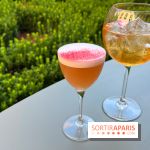 Cocktail bars in Paris, our top picks for aesthetes