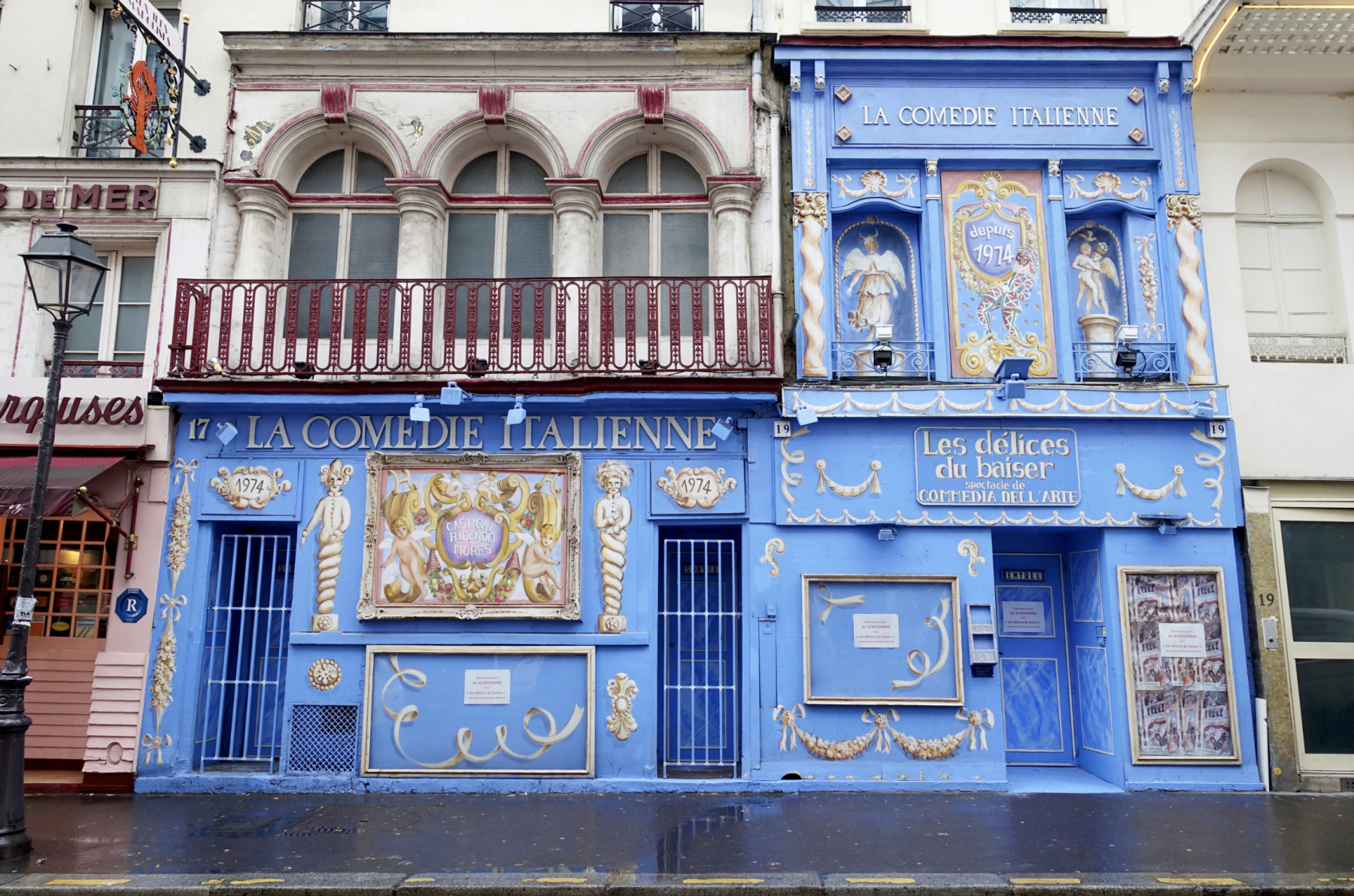
Nestled on rue de la Gaîté, in the heart of Paris's 14ᵉ arrondissement, the Comédie Italienne is a little theater apart, a colorful setting where the spirit of commedia dell'arte continues to vibrate. Founded in 1980 by Italian director Attilio Maggiulli, this singular venue has made it its mission to bring Italian theater to life in Paris through works by classic and contemporary authors.
With just a few dozen seats, its unmistakable blue baroque façade and intimate atmosphere, the Comédie Italienne defends a popular, artisanal and passionate vision of the performing arts. More than just a performance venue, it's a repertory theater and an invitation to travel between two theatrical traditions.
A theatrical tradition that has spanned the centuries since the troupes of Italian comedians in the 17ᵉ century, the Comédie-Italienne (or Théâtre-Italien) refers, in the history of Paris, to the Italian troupes who, under royal patronage, performed comedies, fragments of commedia dell'arte or operas in Italian, then, later, in hybrid Franco-Italian forms.
Under Louis XIV, Italian comedians performed at venues such as the Hôtel de Bourgogne and the Petit-Bourbon, sometimes sharing the stage with Molière. In 1680, the name Comédie-Italienne was officially granted to distinguish the Italian troupe from the newly-formed Comédie-Française. The Italians sang in their native tongue, improvising according to sketches, but gradually integrating songs and scenes with French dialogue.
In 1697, theLa Fausse Prude affair led to the dispersal of the troupe and the banning of certain performances. The troupe returned under the Regency in 1716 thanks to Luigi Riccoboni, who modernized the tradition: plays were no longer purely improvised, but became fully-fledged written comedies performed by specialized actors. The merger with theOpéra-Comique in 1762 weakened theItalian identity, and in 1801 the name disappeared when the company was unified with the Théâtre Feydeau.
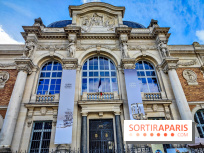
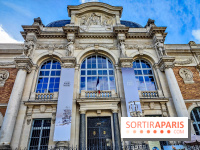
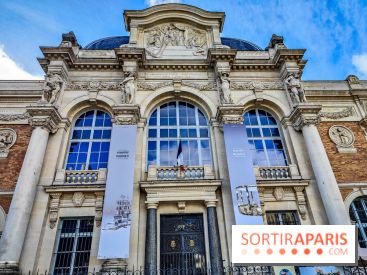
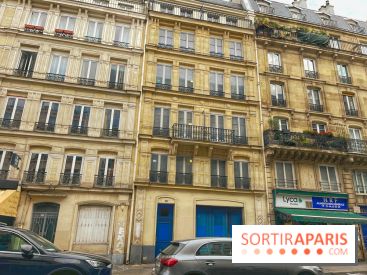
The Comédie Italienne's blue façade makes it one of the most recognizable buildings in the Montparnasse district. It immediately evokes the world of popular Italian theater, with its bright colors, baroque ornamentation and stage-like appearance frozen in time.
Entirely hand-painted, the façade is a deep azure blue, in stark contrast to the other, more sober buildings on the street. This blue, a color historically associated with nobility, fantasy and stage illusion, is not insignificant: it evokes the magic of theater, the enchantment of play and the blurred boundary between the real street and the fictitious world of the stage.
The facade is adorned with trompe-l'œil painted directly onto the wall: faux Corinthian columns, garlands of foliage, stylized frames, balustrades and niches, sometimes featuring comedy masks and figures. The whole gives the impression of a miniature Baroque theater, halfway between an Italian noble house and an opera stage. The whole is deliberately theatrical, almost excessive, in keeping withthe spirit of commedia dell'arte.
Designed by the theater's founder, Attilio Maggiulli, this façade is not just decorative: it's a manifesto. It asserts, right from the street, that theater is a total, visual, immersive art form, and that it begins right at the front!
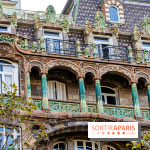
Unusual and beautiful buildings to discover in Paris
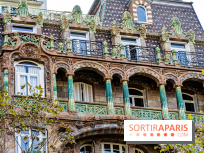
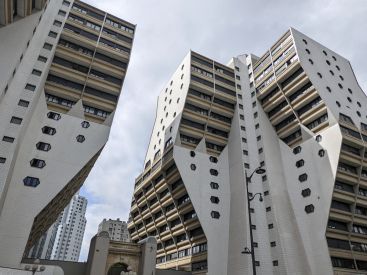
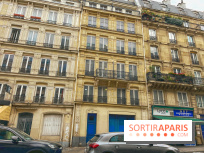
How about discovering some of the most beautiful buildings in Parisian architectural history? Unusual facades to discover all over the capital. The editorial team invites you on an aesthetic journey through the heart of the City of Light, from medieval splendor to Art Nouveau and contemporary boldness, revealing an unusual Paris that is sometimes unsuspected. [Read more]
Location
Italian comedy
17, rue de la Gaîté
75014 Paris 14
Official website
www.comedie-italienne.fr




 Unusual and beautiful buildings to discover in Paris