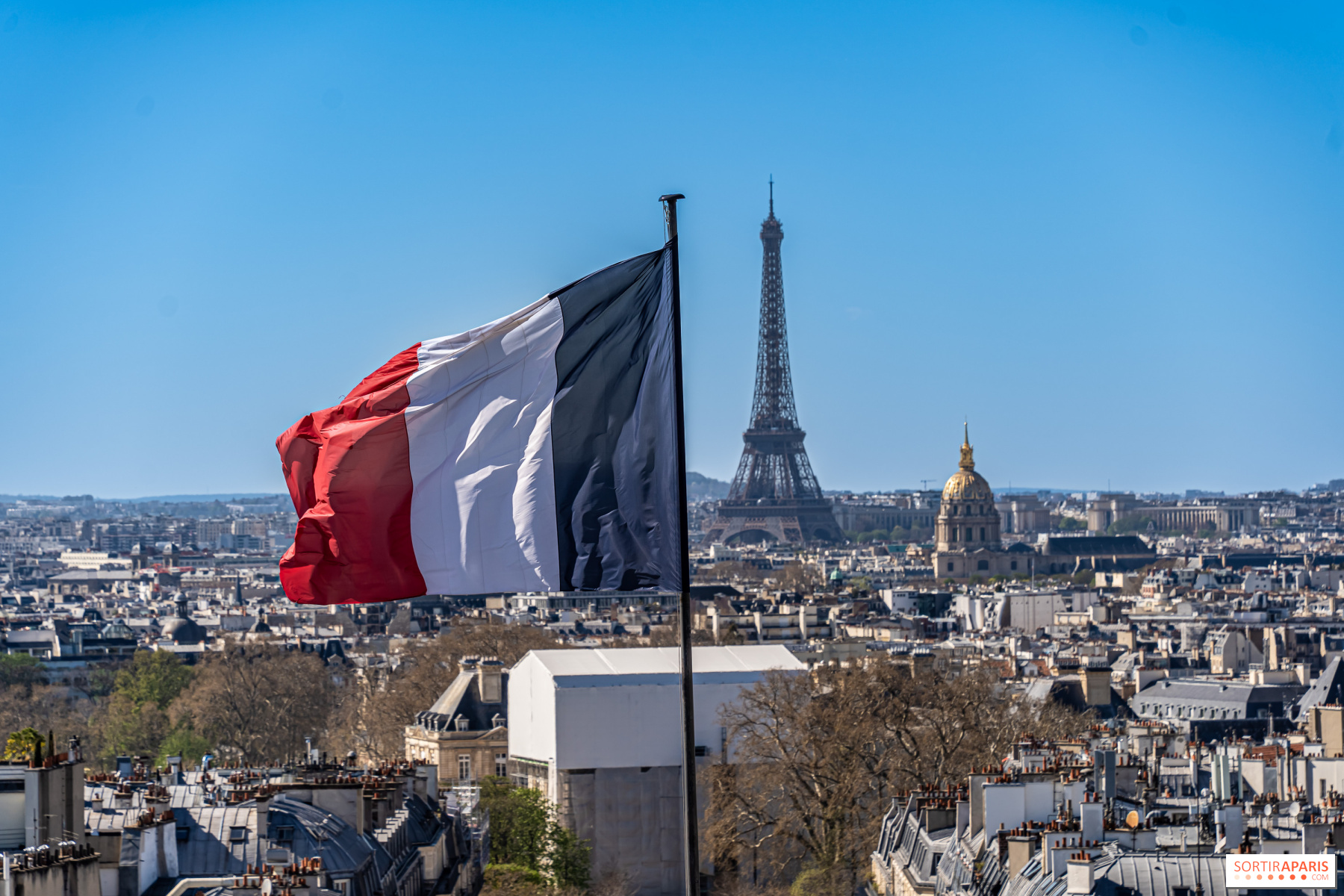
"Arise, children of the Fatherland..." thus begin the opening notes of the La Marseillaise. Sung at official ceremonies, during sports events or national commemorations, it has accompanied the French for more than two centuries. Yet few know that this national hymn was born in a single night, in the midst of war and Revolution, before its story becomes a turbulent one of bans, rehabilitations and symbols.
The story of La Marseillaise begins in the night of April 25–26, 1792, in Strasbourg. A few days earlier, Revolutionary France had declared war on Austria. The city’s mayor, Baron Philippe-Frédéric de Dietrich, then asks an engineering officer, Claude Joseph Rouget de Lisle, to compose a song capable of galvanizing the troops.
Inspired by the patriotic mood of the time, Rouget de Lisle writes and composes the "War Song for the Army of the Rhine". The song quickly becomes a massive hit and is heard across the nation.
Contrary to what one might assume, La Marseillaise wasn't written in Marseille.
A few months after its creation, volunteers from Marseille head for Paris to defend the Revolution. Along the way, they sing this new anthem with enthusiasm. Parisians quickly associate the song with these southern soldiers and begin to nickname it "La Marseillaise".
The name will forever be tied to this revolutionary song.
The fate of La Marseillaise is far from a smooth ride. In 1795, the Convention proclaims it the national anthem of the Republic. But under Napoleon I, it is gradually sidelined in favor of other songs better suited to the imperial regime. Under the Restoration, after the return of kings Louis XVIII and then Charles X, it is even banned because it recalls revolutionary ideals too strongly.
She regains popularity during the July Revolution of 1830, notably thanks to Eugène Delacroix's famous painting La Liberté guidant le peuple, which symbolizes this surge of patriotism. However, it takes until 1879, under the Third Republic, for La Marseillaise to officially become France's national anthem. Since then, it has been enshrined in the French Constitution.
While most French people know the famous opening verse and chorus, La Marseillaise actually has seven verses, plus a "Children's Verse" written a bit later. Here is the portion most commonly sung, comprising the first verse and the first chorus:
To arms, citizens (form your battalions)
Your battalions
Let us march, let us march
That impure blood
water our fields
What does this horde of slaves
From traitors, from conjured kings?
For whom these vile shackles
These irons long prepared? (Bis)
Frenchmen! For us, oh what an outrage!
What ardours it must stir;
They dare to plot to restore us
To ancient slavery!
REFRAIN
What! Foreign cohorts
Would rule in our homes!
What! Mercenary phalanxes
Would trample our brave warriors! (Bis)
God! Our hands would be chained!
Our brows would bow under the yoke!
Vile despots would become
The masters of our destinies!
REFRAIN
Tremble, tyrants and you, perfidious ones,
The scorn of all factions!
Tremble! Your parricidal plots
Will finally pay the price. (Bis)
Everything is a soldier ready to fight you.
If they fall, our young heroes,
New ones will spring from the soil
Ready to strike against you.
REFRAIN
Frenchmen, in magnanimous combat
Let us spare or hold our blows!
Spare these sad victims
Who, regretfully, take up arms against us! (Bis)
But this bloody despot!
But these Bouillé’s accomplices!
All these tigers, mercilessly
Tearing the breast of their mother!
REFRAIN
Sacred love of the Fatherland
Lead, sustain our vengeful arms!
Freedom! Beloved Freedom,
Fight with your defenders! (Bis)
Under our banners let Victory
Hasten to your manly accents!
May your dying enemies
See your triumph and our glory!
REFRAIN
COUPLET DES ENFANTS
We will step onto the field,
When our elders are no longer there;
We will find their dust there
And the trace of their virtues. (Bis)
Not so eager to outlive them
As to share their tomb
We shall feel the sublime pride
Of avenging them or following in their steps.
These words reflect the exceptionally tense atmosphere of 1792, as the young Republic faced threats from the European monarchies. Phrases like the infamous "sang impur" continue to spark debate today. Historians insist they must be read in their historical context: they refer to foreign armies battling the Revolution, not to any notion of superiority among peoples.
Today, La Marseillaise is performed at numerous official ceremonies and stands as one of the French Republic's key symbols.
It is, in particular, sung:
It is also performed during official visits by foreign heads of state, alongside the host country's anthem.
Over the centuries, La Marseillaise has moved beyond its mere status as a military anthem to become one of the symbols of the Republic, on a par with the Tricolour flag or the motto "Liberty, Equality, Fraternity".
At major sporting events, it is often sung with fervor by thousands of fans. After the 2015 attacks, it also rang out in many countries as a sign of solidarity with France, proving that this anthem now transcends national borders.
More than two centuries after its creation, La Marseillaise remains a symbol of the history, struggles, and values of the French Republic. Behind its occasionally martial words lies, above all, the testimony of an era when the nation defended its very existence, turning this anthem into one of the most famous in the world.
This page may contain AI-assisted elements, more information here.