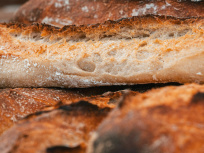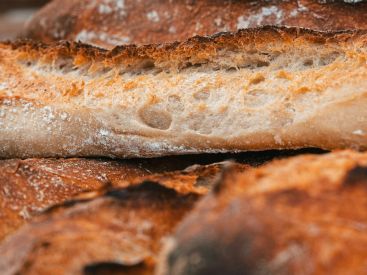
Ah, the French baguette! The quintessential symbol of gastronomic France, it seems to have always existed... and yet its history is far more recent (and controversial) than you might think. This emblematic bread, which we imagine to be ancient, has its roots in Paris in the early 20ᵉ century, the fruit of Viennese influences, legal constraints and a need for urban efficiency.
The French baguette is much more than just a loaf of bread: it's the culmination of an historic evolution, infused with myth, shaped by legislation, preserved by craftsmanship, and today celebrated as a cultural emblem the world over. It's a modest delicacy, but one that's steeped in history, and one that we'd like to share with you today!
Contrary to popular belief, the baguette did not originate in the Middle Ages. The breads of yesteryear were rather round, dense, heavy, sometimes weighing several kilos. It wasn't until the early 20ᵉ century that the baguette as we know it today began to spread in Paris.
Viennese origins are often mentioned, introduced to France in the 1830s by August Zang, an Austrian who opened a bakery in Paris, where he used the first steam ovens. This type of baking produced a more airy bread with a thin, crisp crust, different from rustic French breads and appreciated by the aristocracy. But this was only the beginning.
With theabolition of taxes on white bread, this luxury product became accessible to working people: Viennese bread gradually lengthened, until it took on the symbolic shape of a baguette, stored in wicker baskets designed to maintain its elongated profile.
Several mythical tales contribute to the legend of the baguette. One claims that Napoleon I demanded a bread that was easy for his soldiers to carry, changing the round balls into thin, space-saving sticks. Another version places the invention on Paris metro construction sites in the early 20ᵉ century, where knives are said to have been banned to avoid fights between workers: the baguette, broken by hand, becomes a practical solution.
Although the elongated shape of the bread already existed under the name "flûte", it was around the 1920s that the baguette began to establish itself in Parisian bakeries. Several factors explain its success.
One of the most frequently cited is a 1919 law, implemented in 1920, prohibiting bakers from working before 4am. But to bake a traditional large loaf, you had to start much earlier! The baguette, thanks to its slim shape, required less time to rise and bake. As a result, bakers were able to comply with the law while continuing to supply Parisians with fresh bread every morning.
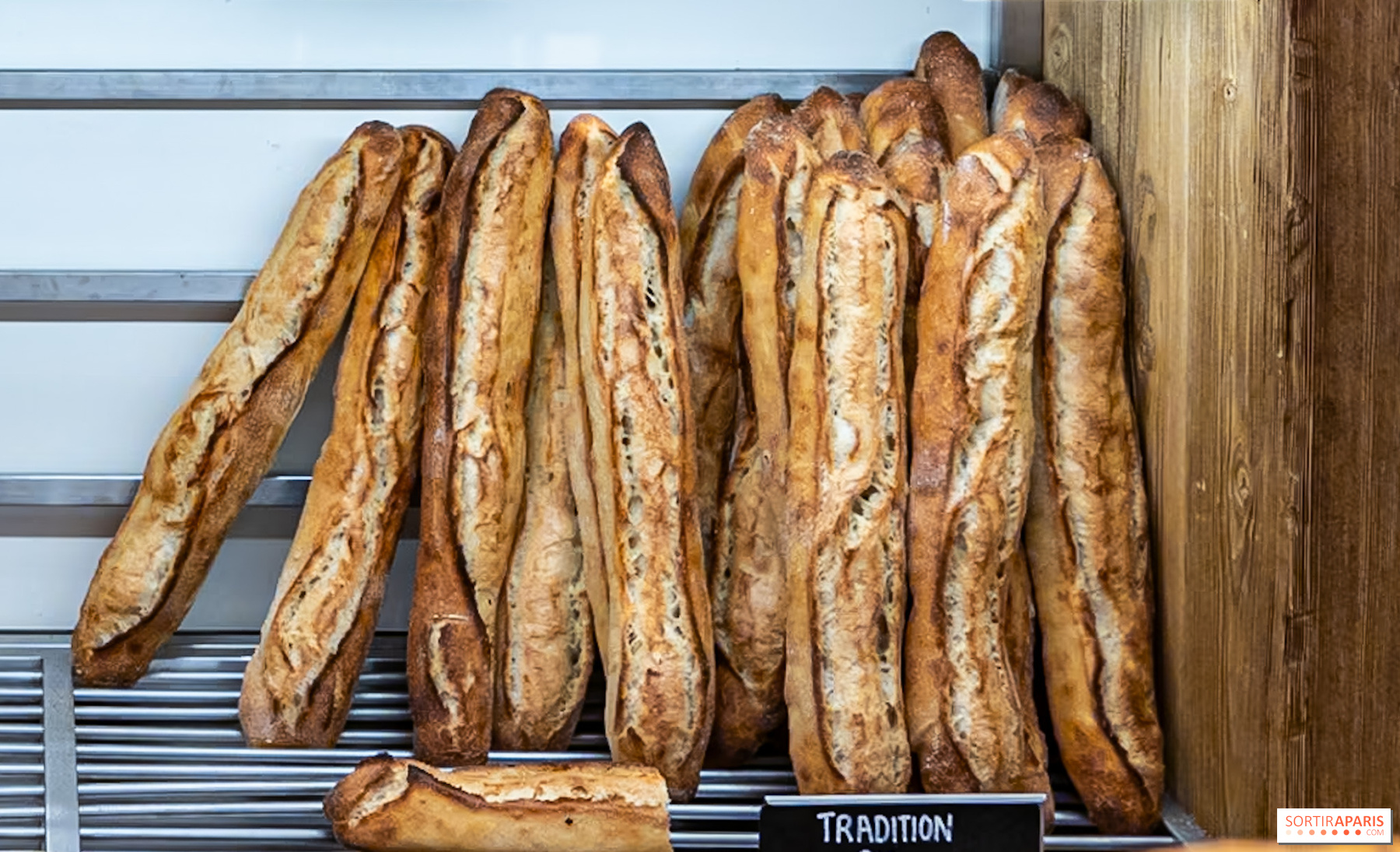
The word"baguette" formally appeared around 1920 to designate this long, thin, crusty bread with pointed ends. Sometimes mentioned in patents as early as 1902, it was regulated by the Seine Prefecture in August 1920 to fix its size (max length ~40 cm, min weight ~80 g) and price.
In the 1930s, baguettes gained in quality and popularity. In those days, baguettes were bought twice a day, as they quickly became stale: no additives, no preservatives! After the Second World War, however, baguette production became increasingly industrialized, with standardization, the use of less noble flours and mass distribution.
Official recognition began in 1993, with decree no. 93-1074, requiring only four ingredients - flour, water, salt, yeast or sourdough - and banning additives or preservatives. The bread must be entirely produced on site(kneaded, shaped and baked in the bakery), which guarantees an artisanal baguette in keeping with French traditions.
In November 2022, UNESCO inscribed the culture and know-how of the French baguette as an intangible cultural heritage of humanity, underlining its role in the living heritage of French gastronomy and the daily lives of the French.
A symbol of simplicity, sharing and conviviality, it represents theFrench art of living, often mentioned alongside wine and cheese. Every day, millions of baguettes leave bakeries, attesting to a gastronomic attachment deeply rooted in our habits and collective imagination.
The Paris region through its terroir : Discover the culinary specialties of Île-de-France
You think you know the Paris region like the back of your hand, but how well do you know its terroir? Don't delay in discovering the culinary specialties of Île-de-France! [Read more]
This page may contain AI-assisted elements, more information here.







 The Paris region through its terroir : Discover the culinary specialties of Île-de-France