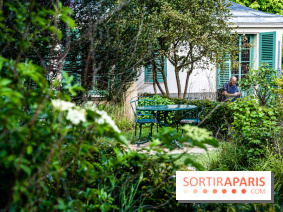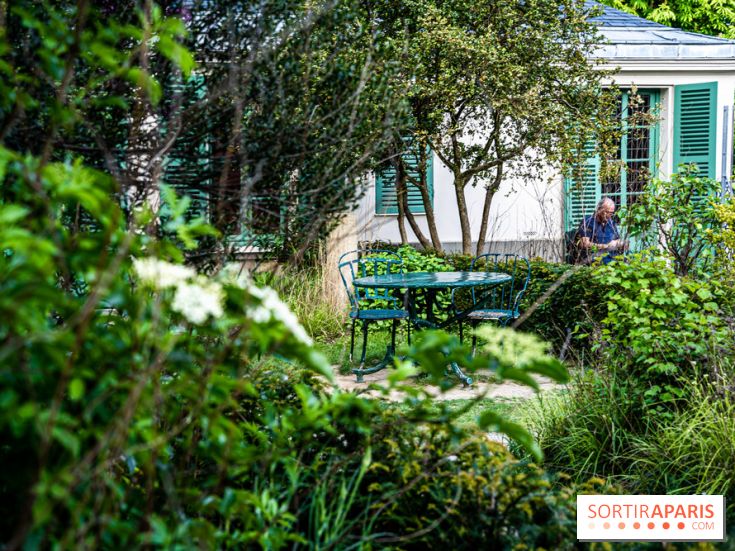
What Paris hotspot lets you encounter, beneath the arches of an old church, a suspended airplane, vintage cars, automata, and a pendulum demonstrating the rotation of the Earth? The answer lies at the Conservatoire national des arts et métiers, better known by its acronym Cnam!
Based in the 3ᵉ arrondissement of Paris, near the Marais and the place de la République, this establishment occupies a large part of the former priory of Saint-Martin-des-Champs. The site is so closely tied to the history of science and technology that it has given its name to an entire neighborhood, as well as to the Arts et Métiers metro station.
Behind its stone façades, nearly 1,000 years of history unfold. Benedictine monks lived there before the buildings were transformed, after the French Revolution, into a vast conservatory designed to showcase inventions useful to agriculture, industry and the trades.
The National Conservatory of Arts and Crafts was founded in 1794, during the French Revolution, at the initiative of Abbé Henri Grégoire. Its aim was decidedly modern: to bring together machines, models, tools and inventions capable of driving technical progress. The institution was not meant to be a mere warehouse of curious objects!
It is conceived as a hub for knowledge transfer where artisans, engineers, industrialists and citizens can observe innovations, understand how they work and draw inspiration from them. In 1798, the former priory of Saint-Martin-des-Champs was assigned to the Conservatoire to host its premières collections.
The complex gradually becomes a true "temple of technology". In 1819, the first three academic programmes are inaugurated there: applied mechanics to the arts, applied chemistry to the arts, and industrial economics. Today, the CNAM remains a major public institution of higher education and research, notably specializing in professional and continuing education. It welcomes tens of thousands of students in France and abroad.

Well before the arrival of machinery, the site was home to a religious establishment. A sanctuary is believed to have stood here since the Late Middle Ages. The monastery was destroyed during the Norman invasions, then rebuilt from the 11th century onward. In 1079, the estate was entrusted to the Order of Cluny and became the Priory of Saint-Martin-des-Champs.
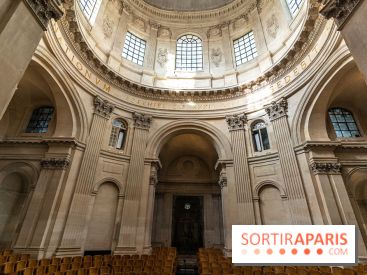
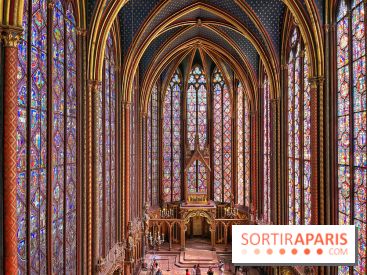
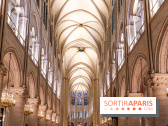
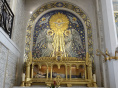
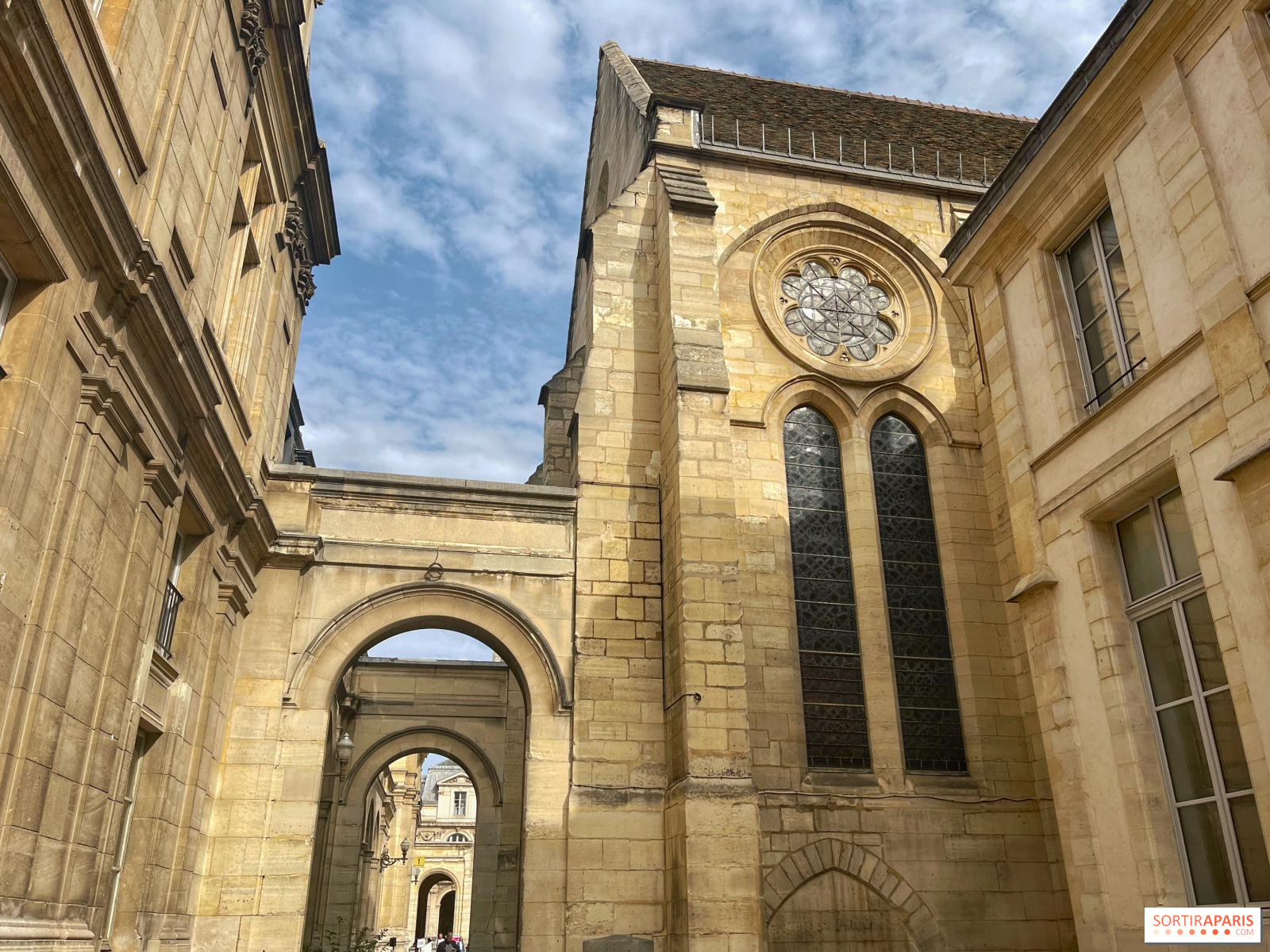
The former priory church, visible along the route of the Musée des Arts et Métiers, preserves Romanesque and Gothic elements. Its nave, choir and vaults today provide a particularly spectacular backdrop that houses the exhibited machines. This fusion of religious architecture and industrial heritage is one of the site’s signatures: modern inventions have literally taken over a medieval monument.
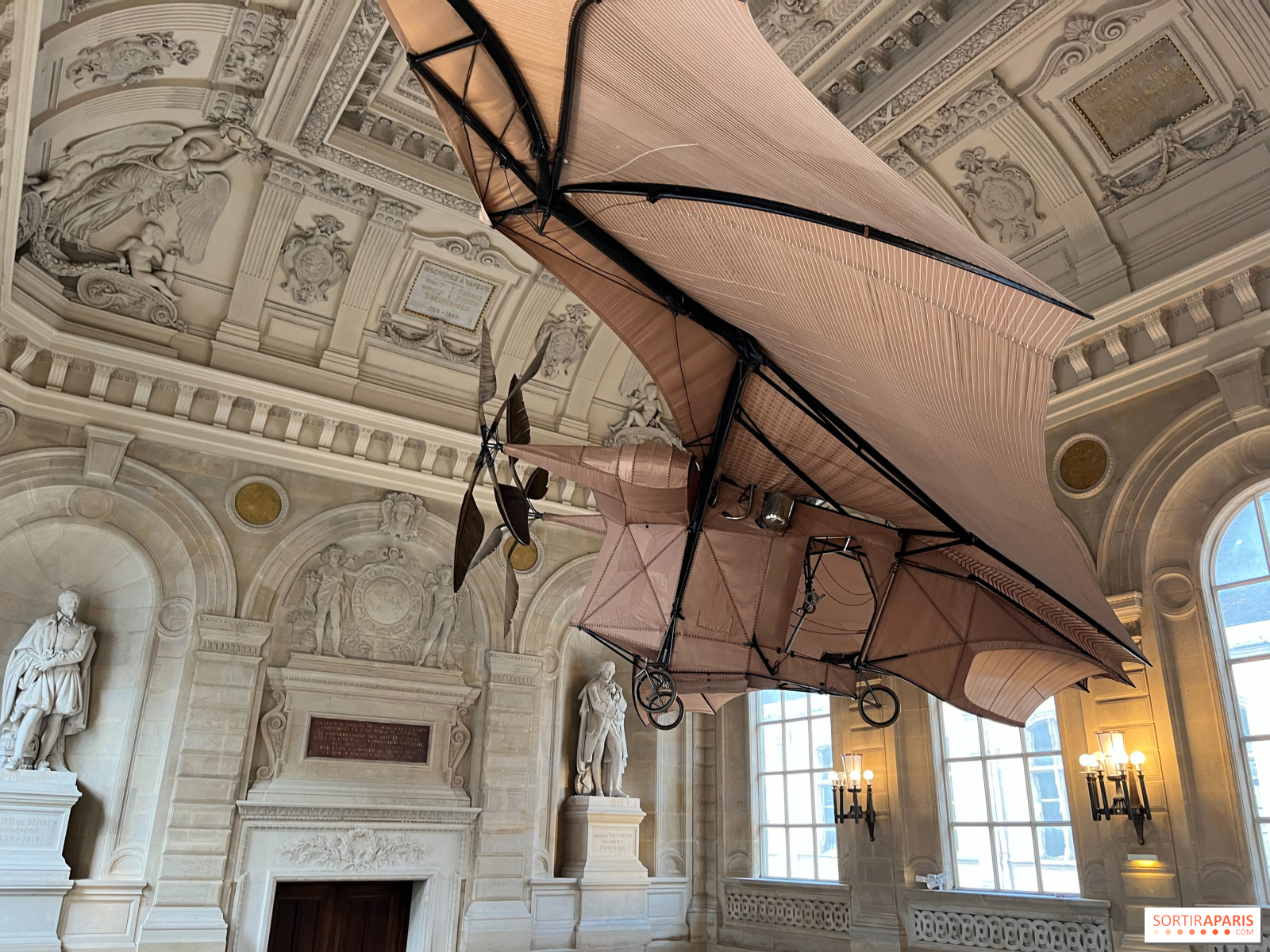
In the old church of Saint-Martin-des-Champs, angels have left a portion of the ceiling to the pioneers of aviation. Visitors can especially admire, suspended above the nave, Clément Ader’s Avion No. 3. Designed at the end of the 19th century, this bat-winged aircraft marks France’s early forays into powered flight.
Other historic vehicles fill the church, among which vintage automobiles and machines that have shaped the history of transport. The contrast is striking: beneath arches that are centuries old, mechanical propulsion, aviation and industrial inventions seem to form a strange scientific procession.
One of the Conservatoire's most famous objects is the true pendulum of Foucault. In 1851, the French physicist Léon Foucault conducted a spectacular experiment that made the rotation of the Earth visible. The principle seems simple: a heavy mass suspended from a long cable swings in a direction that appears to gradually shift relative to the floor. In reality, it isn't the pendulum's plane of swing that rotates, but the Earth beneath it.
A version of the pendulum is on display in the former church, while a modern replica has hung in the Panthéon since 1995. Demonstrations and guided tours regularly help the public understand the phenomenon, alongside other major inventions preserved by the museum. The object has also found its way into literature thanks to Umberto Eco’s novel The Foucault Pendulum, part of whose plot unfolds at the Conservatoire.
The Musée des Arts et Métiers houses around 80,000 objects and several thousand technical drawings, though only a portion is shown in the permanent route. Its collections are organized around seven major domains: scientific instruments, materials, construction, communication, energy, mechanics, and transport. Among its treasures are the weaving looms and the mechanisms linked to Jacques de Vaucanson, the famed 18th‑century automata inventor.
The museum also preserves part of the laboratory of Antoine Lavoisier, considered one of the founders of the modern chemistry. Its instruments evoke a time when precisely measuring masses and chemical reactions already signified a scientific revolution. Calculating machines, early photographic devices, telegraphs, astronomical instruments, engines and automobiles trace centuries of human ingenuity.

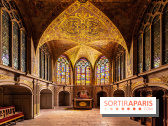
One of the finest spaces at the Cnam remains méconnu du grand public: its bibliothèque centrale. Since the mid-19th century, the salle de lecture occupies the former refectory of the priory, built around 1230. Stretching over more than 40 meters, this gothique space is lit by tall, twin-light bays topped with rosaces. The long work tables and shelves packed with books have replaced the monks’ silent meals.
The site has nevertheless preserved its medieval architecture, to the point of being regarded as one of Paris's most remarkable libraries. The library is, above all, a workspace and research hub. Its former refectory, however, hosts exceptional guided tours, especially during the European Heritage Days.
Yes, but you have to keep the museum separate from the university spaces. The Musée des Arts et Métiers is open to the public year-round, Tuesday to Sunday, with a Friday evening slot. The admission ticket grants access to the permanent collections, the temporary exhibitions, and the historic church of Saint-Martin-des-Champs. Guided tours, science demonstrations, and family activities are also on offer.
We can, for example, watch the Foucault pendulum, explore Vaucanson’s machines, or delve into the history of transport without waiting for a special opening. The Conservatoire national des arts et métiers thus boasts a rare edge among Parisian institutions: much of its patrimony is accessible year-round. No engineering degree is required to step inside—just a touch of curiosity to journey from medieval cloisters to the earliest flying machines.
However, the teaching rooms, administrative offices and certain historic parts of the CNAM are not part of the usual tourist route. The former medieval refectory, now a library, is notably accessible during occasional tours and European Heritage Days.
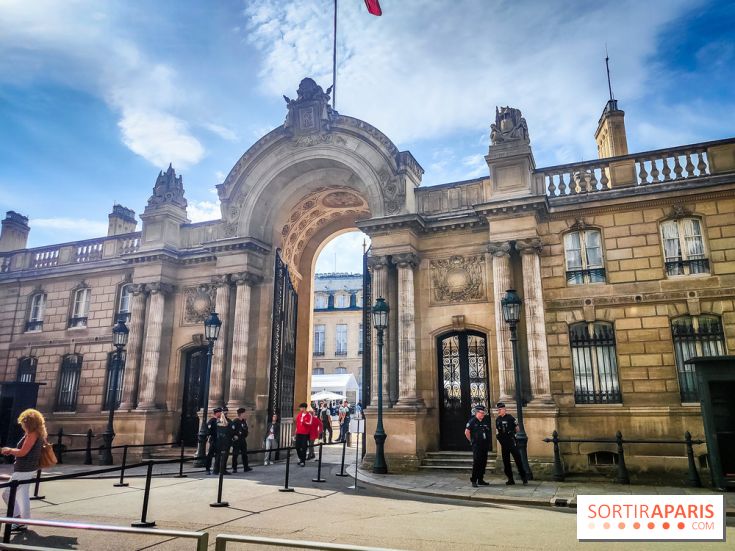
These Paris spots people think are closed… but you can actually visit them (and here’s how).
Discover these iconic Parisian sites that many assume are off-limits to the public, reserved for institutions or officials, yet they actually open their doors to visitors. The Élysée Palace, the Hôtel de Matignon, the Senate, religious monuments… Here’s when and how to visit. [Read more]
Dates and Opening Time
Next days
Saturday:
from 12:00 a.m. to 11:59 p.m.
Sunday:
from 12:00 a.m. to 11:59 p.m.
Monday:
from 12:00 a.m. to 11:59 p.m.
Tuesday:
from 12:00 a.m. to 11:59 p.m.
Wednesday:
from 12:00 a.m. to 11:59 p.m.
Thursday:
from 12:00 a.m. to 11:59 p.m.
Friday:
from 12:00 a.m. to 11:59 p.m.
Location
Conservatoire national des arts et métiers
292 Rue Saint-Martin
75003 Paris 3
Route planner
Accessibility info
Official website
www.cnam.fr







 These Paris spots people think are closed… but you can actually visit them (and here’s how).